





F-winged Barklouse
Graphopsocus cruciatus
The F-winged Barklouse is a tiny insect that loves to live on tree bark. It has special wings that look like a beautiful fan, making it unique among insects!
Habitat: Forests
The F-winged Barklouse is a small, soft-bodied insect, typically pale yellow to light brown. It has delicate, transparent wings marked with a distinctive dark F-shaped pattern, which it holds tent-like over its back. These unique wing markings help distinguish it.
Category
InsectsRarity
Common
Danger
1/5 · Very low
Snaps
4
Baby barklice, called nymphs, look like mini adults but often don't have wings yet!
Some barklouse species tap their abdomens on leaves to communicate with each other!
Their delicate wings are surprisingly strong, allowing them to flutter quickly between leaves.
These tiny tree dwellers are more closely related to true bugs than actual lice!
F-winged Barklouse can break down tiny bits of dead plants and fungi because of specialized mouthparts that help them clean tree surfaces.
F-winged Barklouse can create protective silken webs because of glands near its mouth that help them build shelters for their colonies.
F-winged Barklouse has a dappled body and patterned wings that help them blend perfectly with tree bark to avoid watchful predators.
These tiny insects munch on fungi, algae, and dead plant matter, helping to clean up trees.
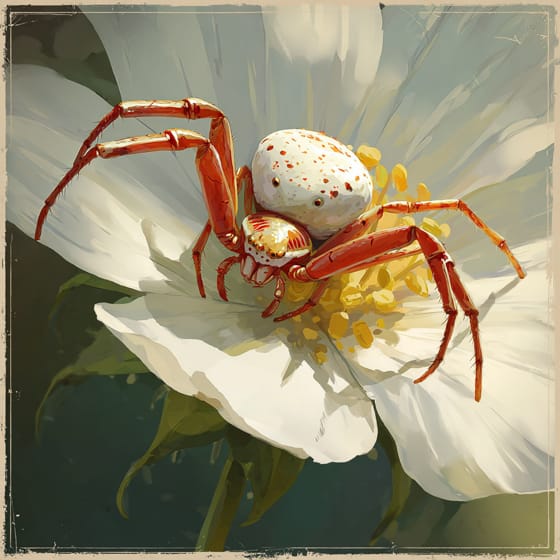
Misumena vatia
A common predator that ambushes barklice on foliage.
%2C_Parc_de_Woluw%C3%A9%2C_Brussels_(13042792905).jpg&width=800)
Parus major
A common bird that forages for insects on tree bark.
Xanthoria parietina
Feeds on this widespread lichen growing on tree bark.
Alternaria alternata
Grazes on spores and hyphae of this ubiquitous mold.
Solitary animals live alone for most of their lives, only interacting with others for mating or parental care.
Colorful describes organisms or objects displaying a wide range of bright and distinct colors.
This trait characterizes organisms whose diet consists entirely or primarily of plant material.
Describes organisms that break down dead organic material, recycling nutrients back into the ecosystem.

Forest habitats are terrestrial environments dominated by dense tree cover, supporting a high diversity of plant and animal life.

Diurnal animals are primarily active during daylight hours, typically resting or sleeping at night.

Pertaining to species that are significantly smaller than typical or average for their kind.

Describes organisms that transfer pollen, enabling the fertilization and reproduction of plants.
No aliases listed yet.
Danger
1/5 · Very low
These little insects are harmless, so you can watch them without worry!
The easiest way to identify F-winged Barklouse is to use the Snappit nature identifier app.
5-12 mm
2-5 mm
30-90 days
1-5 km/h
These tiny insects munch on fungi, algae, and dead plant matter, helping to clean up trees.
Forests
Foraging
Zoom in to split clusters and explore where this object has been snapped.

North Carolina, US
You might spot Northern Cardinal, Carolina Wren, and Tufted Titmouse.
View guide →

Washington, US
You might spot Western Skunk Cabbage, Thimbleberry, and Barred Owl.
View guide →

New Jersey, US
You might spot Garlic Mustard, Eastern Redcedar, and Spotted Lanternfly.
View guide →

Massachusetts, US
You might spot Common Eastern Bumble Bee, Huron Skipper, and Song Sparrow.
View guide →
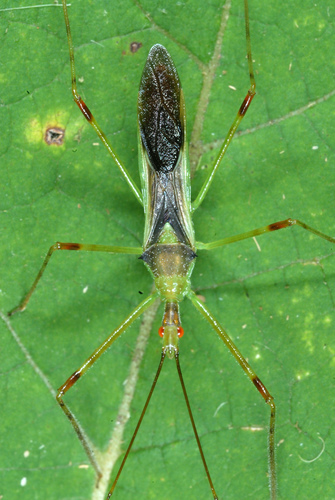
Virginia, US
You might spot Pale Green Assassin Bug and Asian Lady Beetle.
View guide →
Take the discovery with you
Snap it with Snappit to identify it, learn what makes it special, and add the discovery to your collection.







.jpg&width=800)


