





Black-and-gold Bumble Bee
Bombus auricomus
The Black-and-gold Bumble Bee is a fuzzy insect that loves to visit flowers! They help plants grow by spreading pollen while they collect nectar to eat.
Habitat: Grasslands
The Black-and-gold Bumble Bee is a large, fuzzy insect with a distinctive pattern of black and deep golden-yellow bands. Its head is mostly black, followed by a wide golden-yellow band on its thorax. The abdomen is primarily black, often with a final segment of golden-yellow.
Category
InsectsRarity
Common
Danger
1/5 · Very low
Snaps
13
Bumble bees are very important for pollinating crops like blueberries and tomatoes.
Bumble bees create small wax pots to store enough honey and pollen for their growing colony.
Only queen bumble bees survive winter, sleeping underground to start a new colony in spring!
Their wings beat so fast, over 200 times per second, they make their distinctive buzzing sound!
Black-and-gold Bumble Bee can vibrate flowers rapidly (buzz pollination) because of powerful wing muscles that helps them shake out hidden pollen.
Black-and-gold Bumble Bee has a fuzzy body and ability to shiver that helps them warm up and fly in cooler temperatures than many other bees.
Black-and-gold Bumble Bee has a long, straw-like tongue (proboscis) that helps them reach sweet nectar deep inside tubular flowers.
They drink sweet nectar for energy and collect pollen to feed their growing colony of baby bees.

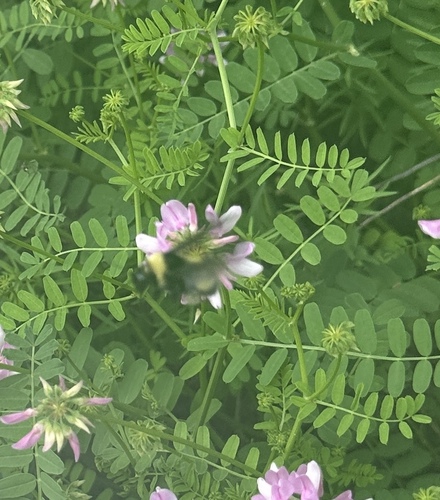
Trifolium pratense
helps plant make seeds
Helianthus annuus
gathers nectar and pollen
Bombus ashtoni
takes over their nests
_Misumena_vatia_male.jpg&width=800)
Misumena vatia
ambushes bees on flowers
Furry describes animals possessing a dense covering of soft hair or fur.
Social animals live in organized groups, cooperating for survival benefits such as foraging, defense, and raising offspring.
Grassland habitats are terrestrial biomes dominated by grasses and herbaceous plants, supporting a variety of grazing animals.
This trait characterizes organisms whose diet consists entirely or primarily of plant material.

Describes plants that are particularly attractive and beneficial to a wide range of pollinating organisms.

Diurnal animals are primarily active during daylight hours, typically resting or sleeping at night.

Describes a species whose presence and role have a disproportionately large effect on its environment.

Describes organisms that transfer pollen, enabling the fertilization and reproduction of plants.
Danger
1/5 · Very low
Bumble bees are usually friendly, but it's best to stay calm and not swat at them.
The easiest way to identify Black-and-gold Bumble Bee is to use the Snappit nature identifier app.
25-45 mm
10-23 mm
14-365 days
20 km/h
They drink sweet nectar for energy and collect pollen to feed their growing colony of baby bees.
Grasslands
Foraging
Zoom in to split clusters and explore where this object has been snapped.
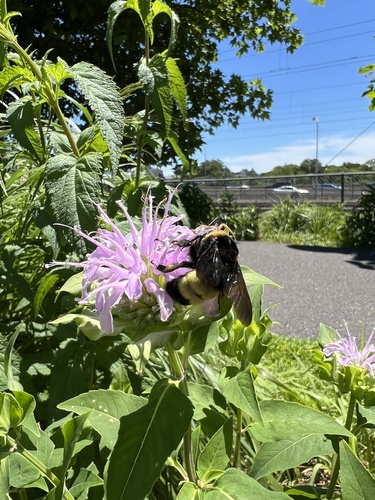
Jun 16, 2026
Photo attribution
(c) Eric Baratta, some rights reserved (CC BY)
License: CC BY 4.0 ↗
Image may be shown cropped inside the card frame.
Jun 15, 2026
Mitchell Park Horticultural ConservatoryPhoto attribution
no rights reserved
License: CC0 1.0 ↗
Image may be shown cropped inside the card frame.

Iowa, US
You might spot Common Eastern Bumble Bee and Eastern Cottontail.
View guide →

Minnesota, US
You might spot Common Eastern Bumble Bee and Turkey.
View guide →

Missouri, US
You might spot Eastern Carpenter Bee, Duck, and American Robin.
View guide →

Wisconsin, US
You might spot Common Eastern Bumble Bee, Red-Belted Bumble Bee, and Duck.
View guide →

Wisconsin, US
You might spot Common Eastern Bumble Bee, Bee, and Monarch.
View guide →

Ohio, US
You might spot Royal Catchfly and Black-and-Gold Bumble Bee.
View guide →
Take the discovery with you
Snap it with Snappit to identify it, learn what makes it special, and add the discovery to your collection.





.jpg&width=800)



