.jpg&width=800)





field bindweed
Convolvulus arvensis
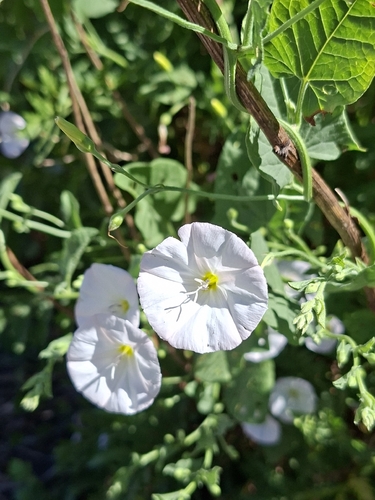
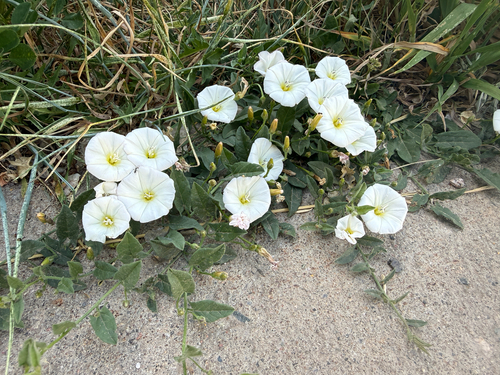
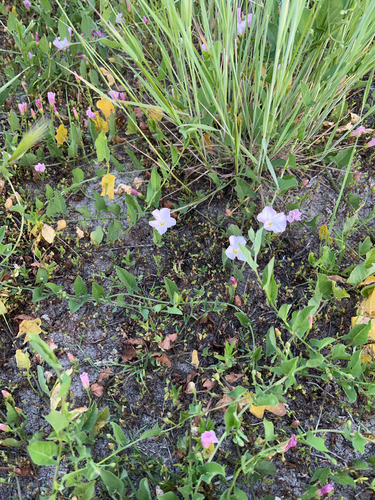
Field bindweed is a climbing plant with pretty white or pink flowers. It loves to twine around other plants and can grow in many places, making it a familiar sight in fields and gardens.
Habitat: Grasslands
The field bindweed has slender, twining stems and arrow-shaped green leaves. Its small, funnel-shaped flowers are typically white or pale pink, often with five faint stripes. It can be visually distinguished by its creeping, mat-forming growth.
Category
PlantsRarity
Common
Danger
1/5 · Very low
Snaps
35
A single field bindweed plant can produce hundreds of seeds in just one season!
It's a "morning glory" relative, with flowers that typically close by afternoon!
Its incredibly deep roots can stretch more than two meters underground!
The delicate bell-shaped flowers of bindweed only stay open for a single day!
Field bindweed can send roots over two meters deep to find water and nutrients, helping it survive drought.
Field bindweed has flexible stems that coil around other plants to climb, reaching sunlight above its competitors.
Field bindweed seeds can remain dormant in the soil for decades, allowing new plants to emerge over many years.
Apis mellifera
Collects nectar and pollen from flowers.
Galeruca rufa
Larvae and adults feed on bindweed leaves.
Crocidosema plebejana
Larvae tunnel into stems and roots.
Climbing or vine plants are characterized by a growth habit that allows them to ascend upwards by twining, tendrils, or adhesive roots.
Flowering plants are any plants that produce flowers as part of their reproductive cycle.
Summer blooming plants produce their flowers during the summer season, often providing vibrant color when many other plants have finished.
Grassland habitats are terrestrial biomes dominated by grasses and herbaceous plants, supporting a variety of grazing animals.

Describes plants that are particularly attractive and beneficial to a wide range of pollinating organisms.

Rapid growing plants exhibit accelerated growth rates, quickly increasing in size and biomass within a short period.

Invasive species are non-native organisms that cause harm to the environment, economy, or human health.
No aliases listed yet.
Danger
1/5 · Very low
While field bindweed is not harmful, it's best to look and not touch wild plants without asking an adult.
The easiest way to identify field bindweed is to use the Snappit nature identifier app.
10-100 cm
100-300 cm
1.5-2.5 cm
Summer
No
Mild
Perennial
Zoom in to split clusters and explore where this object has been snapped.
Jun 13, 2026
Veterans FieldPhoto attribution
(c) Chris Reardon, some rights reserved (CC BY)
License: CC BY 4.0 ↗
Image may be shown cropped inside the card frame.
May 27, 2026
Main Avenue Historic DistrictPhoto attribution
(c) Michelle Pustka, some rights reserved (CC BY)
License: CC BY 4.0 ↗
Image may be shown cropped inside the card frame.
Jun 19, 2025
Box Butte County CourthousePhoto attribution
no rights reserved
License: CC0 1.0 ↗
Image may be shown cropped inside the card frame.

Michigan, US
You might spot Eastern Gray Squirrel, Tree-Of-Heaven, and House Sparrow.
View guide →

California, US
You might spot Monarch, Canada Goose, and Western Gull.
View guide →

California, US
You might spot Redwood, Pacific Trillium, and Evergreen Huckleberry.
View guide →

Michigan, US
You might spot Monarch, Canada Goose, and Eastern Gray Squirrel.
View guide →

New York, US
You might spot American Robin, Pond Slider, and Northern Cardinal.
View guide →

Michigan, US
You might spot Monarch, Canada Goose, and Eastern Gray Squirrel.
View guide →
Take the discovery with you
Snap it with Snappit to identify it, learn what makes it special, and add the discovery to your collection.








.jpg&width=800)


_001.jpg&width=800)




