





Field madder
Sherardia arvensis
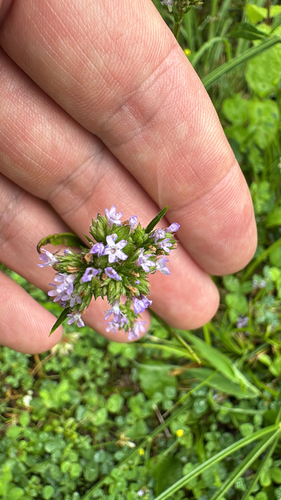
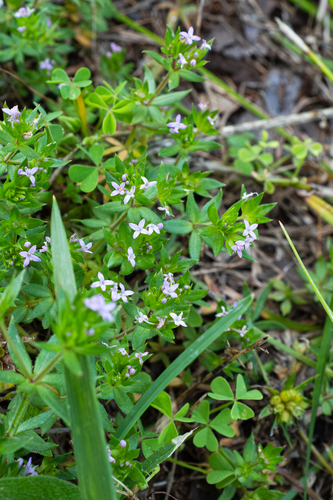
Field madder is a small, pretty plant that grows in fields and meadows. It has tiny, star-shaped flowers that can be pink or white, and it loves sunny places!
Habitat: Grasslands
The Field madder is a low-growing plant with square stems and tiny, pale lilac to pink, four-petaled flowers often clustered at the stem tips. Its leaves are small, narrow, and arranged in whorls around the stem, giving it a somewhat prickly appearance compared to softer groundcovers.
Category
PlantsRarity
Common
Danger
1/5 · Very low
Snaps
19
Each little flower produces bristly seeds that stick to animal fur for travel.
Its scientific name, Sherardia, honors an English botanist, James Sherard.
Some say its root used to make a red dye, like its larger madder relatives.
This tiny plant is part of the coffee family, though it doesn't make coffee!
Field madder can grow close to the ground, allowing it to survive being trodden on and outcompete taller plants for light.
Field madder has a long blooming season, helping it produce many seeds and increase its chances of successful reproduction.
Field madder can thrive in many soil types, which helps it colonize diverse environments and expand its range.
Apis mellifera
Visits its small flowers for nectar and pollen.
Bombus terrestris
Helps transfer pollen between Field madder flowers.

Helix aspersa
Feeds on the leaves and tender shoots of the plant.
Myzus persicae
Sucks sap from the stems and leaves, affecting growth.
Flowering plants are any plants that produce flowers as part of their reproductive cycle.
Summer blooming plants produce their flowers during the summer season, often providing vibrant color when many other plants have finished.
Medicinal plants possess chemical compounds that can be used for therapeutic purposes to treat illnesses or maintain health.
Edible plants are those parts of a plant that are considered safe for human consumption.

Grassland habitats are terrestrial biomes dominated by grasses and herbaceous plants, supporting a variety of grazing animals.

Describes plants that are particularly attractive and beneficial to a wide range of pollinating organisms.

Rapid growing plants exhibit accelerated growth rates, quickly increasing in size and biomass within a short period.
No aliases listed yet.
Danger
1/5 · Very low
Always look but don't pick plants unless you have permission from an adult.
The easiest way to identify Field madder is to use the Snappit nature identifier app.
5-40 cm
10-50 cm
0.2-0.4 cm
Late spring to early fall
Yes
None
Annual
Zoom in to split clusters and explore where this object has been snapped.
May 28, 2026
Tennessee AquariumPhoto attribution
(c) charlie olson, some rights reserved (CC BY)
License: CC BY 4.0 ↗
Image may be shown cropped inside the card frame.
May 24, 2026
Dickerson Park ZooPhoto attribution
(c) Nathan Aaron, some rights reserved (CC BY)
License: CC BY 4.0 ↗
Image may be shown cropped inside the card frame.

Georgia, US
You might spot Common Vetch, Tiny Bluet, and Carolina Crane's-Bill.
View guide →

Alabama, US
You might spot Muscovy Duck and Gulf Longear Sunfish.
View guide →

Kansas, US
You might spot American Robin, Monarch, and Italian Wall Lizard.
View guide →

Kentucky, US
You might spot Bird's-Eye Speedwell and Barn Swallow.
View guide →

Tennessee, US
You might spot American Robin and Eastern Gray Squirrel.
View guide →

Missouri, US
You might spot Giraffes, African Lion, and Tiger.
View guide →
Take the discovery with you
Snap it with Snappit to identify it, learn what makes it special, and add the discovery to your collection.








.jpg&width=800)



_001.jpg&width=800)



