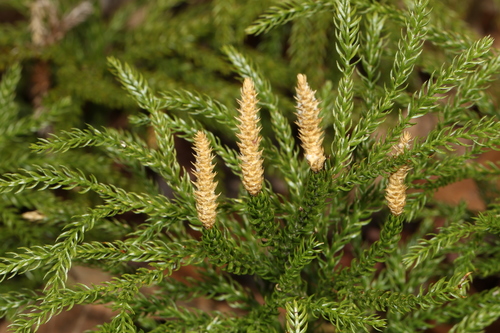


Flat-Branched Tree-Clubmoss
dendrolycopodium obscurum
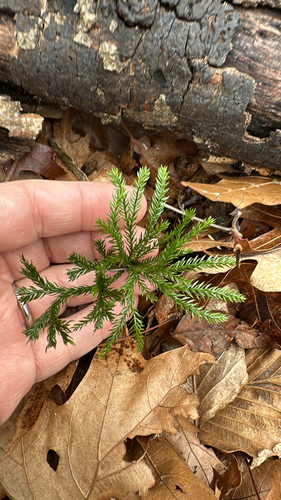
The Flat-Branched Tree-Clubmoss is a captivating, primitive vascular plant that blankets the forest floors of eastern North America. Resembling a miniature coniferous forest, this ancient survivor belongs to an evolutionary lineage that pre-dates the dinosaurs, once growing as massive trees during the Carboniferous period. Today's clubmosses are much smaller, but they retain their primitive charm with rich, evergreen foliage and a unique reproductive cycle that relies on spores rather than seeds. Stumbling upon a patch of these vibrant, tree-like plants on a forest walk feels like discovering a secret, prehistoric world. Highly valued for their architectural beauty, they play a quiet but vital role in their ecosystems, helping to bind the soil, retain moisture, and provide critical ground-level microhabitats for tiny forest invertebrates.
Habitat: Thrives in moist, acidic soils of deciduous and mixed coniferous forests, often under the shade of hemlocks, oaks, and pines.
This species typically grows between 10 to 30 centimeters tall, featuring upright, woody stems that branch repeatedly to form a flat-topped, fan-like crown resembling a tiny pine tree. The scale-like leaves are needle-like, glossy, and deep green, arranged in six distinct ranks along the branches. In late summer, fertile stems produce erect, candle-like spore cones (strobili) at their tips, which turn a dusty yellowish-brown when mature. The plants spread via creeping horizontal rhizomes that run just beneath the leaf litter, often creating dense, uniform carpets.
Category
PlantsRarity
Common
Danger
1/5 · Very low
Snaps
5
Despite looking like miniature pine trees or mosses, clubmosses belong to an entirely distinct evolutionary lineage of lycophytes, which are primitive vascular plants.
The spores are so hydrophobic that coating your hand in them allows you to dip your hand into water and pull it out completely dry.
The spores of this plant, known as lycopodium powder, were once used by early photographers as flash powder and by pharmacists to coat pills to prevent them from sticking.
Dry spores contain high amounts of flammable oils, allowing them to ignite instantly when suspended in the air, a physical trait that aids in rapid wind dispersal.
Spreads aggressively using subterranean rhizomes, allowing a single genetic individual to survive, expand, and colonize large areas even when spore reproduction fails.
The underground gametophyte stage is completely non-photosynthetic and relies entirely on symbiotic mycorrhizal fungi to obtain organic nutrients for several years.
As a photosynthetic plant, it generates its own food using sunlight, water, and carbon dioxide, while extracting essential mineral nutrients from the soil.
Age differences: The subterranean gametophyte stage is entirely non-photosynthetic and parasitic on mycorrhizal fungi, whereas the mature sporophyte stage is photosynthetic.
Rhizophagus irregularis
Forms an obligate symbiotic relationship where the fungus provides nutrients to the developing clubmoss gametophyte.
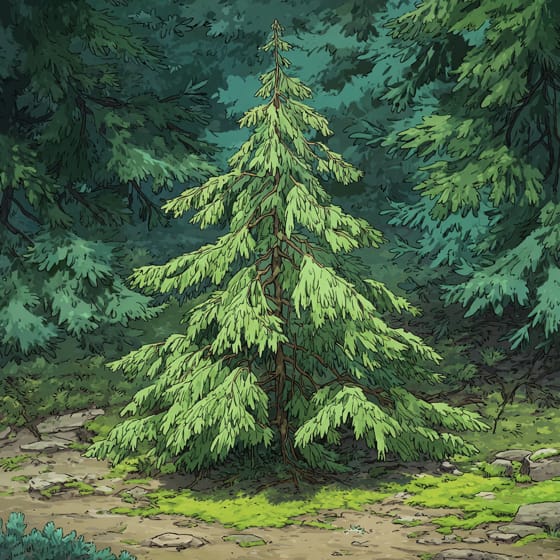
Tsuga canadensis
Grows alongside and competes for floor space, soil moisture, and filtered sunlight in mature eastern forests.
No trait badges are assigned for this object yet.
No aliases listed yet.
Collections for this object will appear here as more themes are added.
Danger
1/5 · Very low
No special safety notes yet.
The easiest way to identify Flat-Branched Tree-Clubmoss is to use the Snappit nature identifier app.
10-30 cm
5-20 years
As a photosynthetic plant, it generates its own food using sunlight, water, and carbon dioxide, while extracting essential mineral nutrients from the soil.
Thrives in moist, acidic soils of deciduous and mixed coniferous forests, often under the shade of hemlocks, oaks, and pines.
Zoom in to split clusters and explore where this object has been snapped.
Jan 15, 2026
Oak Knoll Wildlife SanctuaryPhoto attribution
(c) John Baur, some rights reserved (CC BY)
License: CC BY 4.0 ↗
Image may be shown cropped inside the card frame.

New Hampshire, US
You might spot Eastern Red-Backed Salamander and Eastern Newt.
View guide →
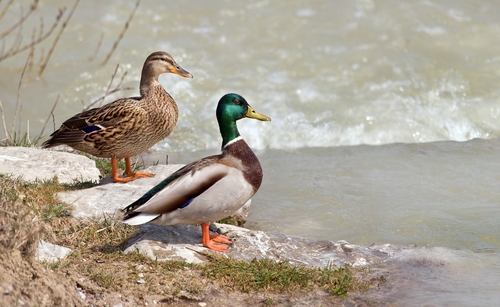
Maryland, US
You might spot Duck, American Toad, and Eastern Bluebird.
View guide →

Massachusetts, US
You might spot Eastern Skunk Cabbage and Sweet Pepperbush.
View guide →
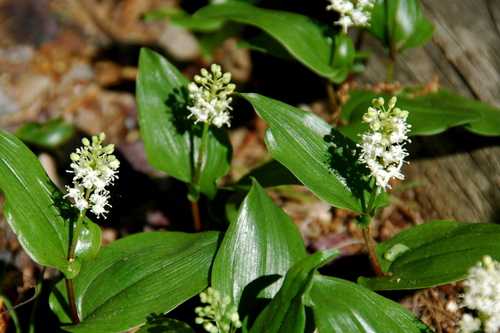
Connecticut, US
You might spot Canada Mayflower and Eastern White Pine.
View guide →

Connecticut, US
You might spot Striped Wintergreen and Pink Lady's Slipper.
View guide →
Take the discovery with you
Snap it with Snappit to identify it, learn what makes it special, and add the discovery to your collection.











.jpg&width=800)



_001.jpg&width=800)




