





Four-spotted Chaser
Libellula quadrimaculata
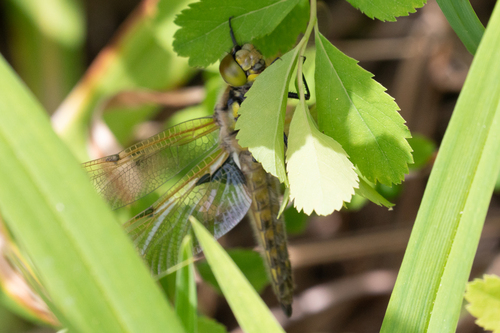
The Four-spotted Chaser is a dragonfly with four dark spots on its wings. They are fast and love to dart around water!
Habitat: Wetlands and ponds
The Four-spotted Chaser is a medium-sized dragonfly with a yellowish-brown body. Its transparent wings are distinctive, each featuring two prominent dark brown spots, giving it its unique four-spotted name. The leading edge of its wings often shows a striking yellow streak.
Category
InsectsRarity
Common
Danger
2/5 · Low
Snaps
12
Wow! A baby chaser can live underwater for up to three years!
Wow! Dragonflies were flying before the dinosaurs even existed!
Wow! These dragonflies can migrate across entire continents!
Wow! They catch flying insects mid-air using their spiky legs!
Four-spotted Chasers can fly forwards, backwards, and hover because of their independently moving wings that allow incredible agility.
Four-spotted Chasers have huge compound eyes that give them a nearly 360-degree view, helping them spot tiny prey far away.
Young Four-spotted Chasers (nymphs) live underwater and have dull, mottled bodies that help them blend in with pond debris.
These speedy hunters catch and eat other small insects in the air to fuel their darting flight.
Age differences: Larvae eat aquatic invertebrates and small vertebrates; adults hunt flying insects.
Aedes aegypti
Helps control mosquito populations.
Rana temporaria
Nymphs can be prey for amphibians.
Falco tinnunculus
Adults are sometimes hunted by birds.
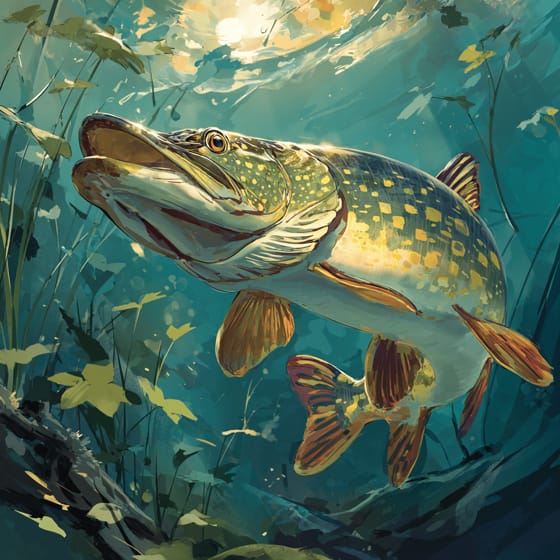
Esox lucius
Fish prey on dragonfly nymphs.
Wildlife encompasses all undomesticated animal and plant life existing in their natural habitats.
Aerial creatures spend a significant portion of their lives airborne, utilizing flight for various activities such as hunting, migration, or nesting.
Colorful describes organisms or objects displaying a wide range of bright and distinct colors.
This trait identifies organisms whose diet primarily consists of insects and other small invertebrates.

This habitat trait identifies species found in wetlands, which are areas of land saturated with water, either permanently or seasonally, including marshes, swamps, and bogs.

Diurnal animals are primarily active during daylight hours, typically resting or sleeping at night.

This trait identifies organisms that exhibit exceptional swiftness in movement for hunting, escape, or travel.
Danger
2/5 · Low
Do not touch or pick up. Some insects sting or bite. Ask an adult for help.
The easiest way to identify Four-spotted Chaser is to use the Snappit nature identifier app.
65-75 mm
40-48 mm
30-60 days
45 km/h
These speedy hunters catch and eat other small insects in the air to fuel their darting flight.
Wetlands and ponds
Pursuit
Zoom in to split clusters and explore where this object has been snapped.
May 23, 2026
Harraseeket Historic DistrictPhoto attribution
no rights reserved
License: CC0 1.0 ↗
Image may be shown cropped inside the card frame.

Colorado, US
You might spot Eastern Fox Squirrel, Bee, and Duck.
View guide →
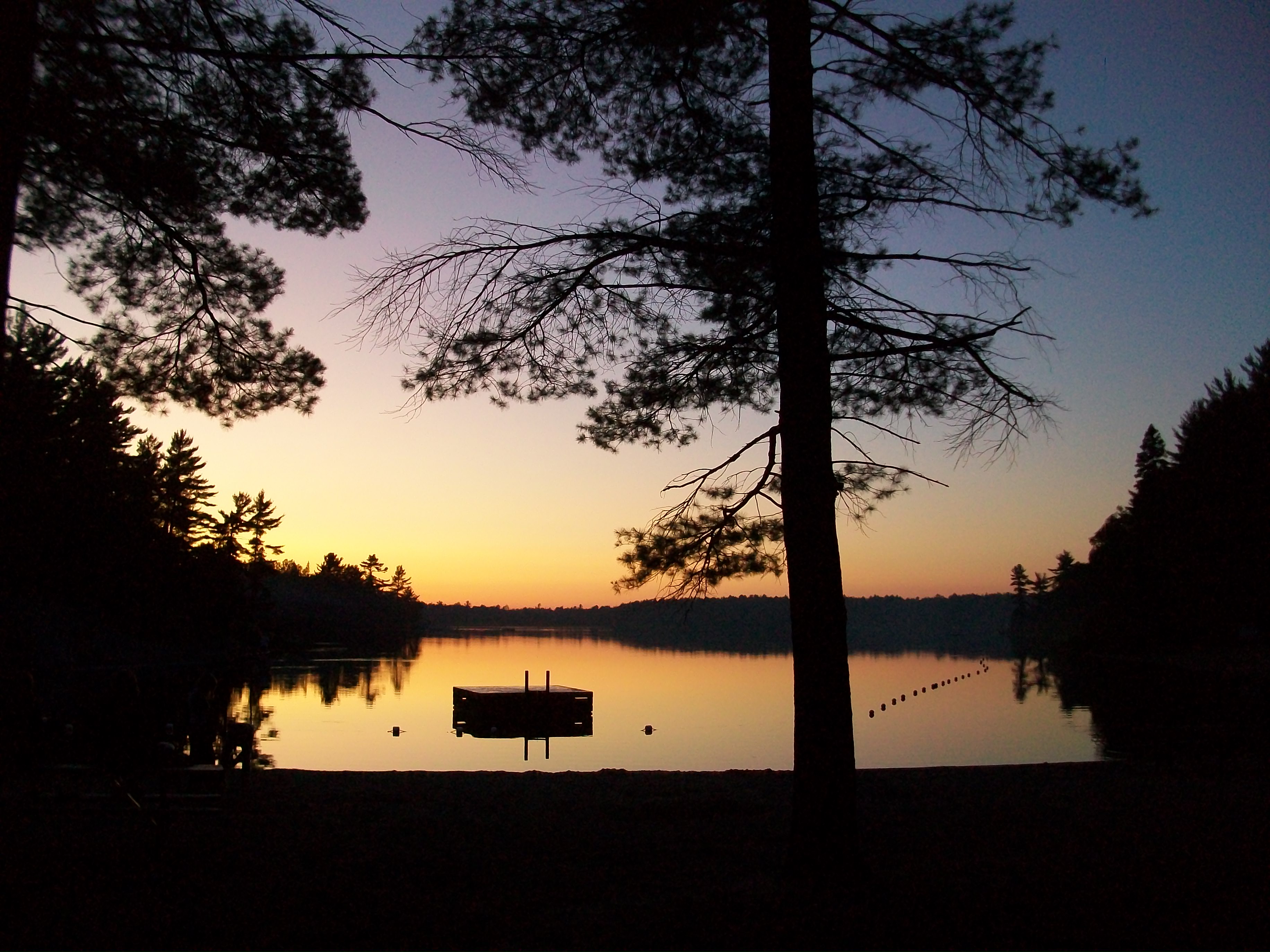
Ontario, CA
You might spot Painted Turtle, Common Watersnake, and Pickerelweed.
View guide →

Maine, US
You might spot Ghost Pipe, Pink Lady's Slipper, and Bluebead Lily.
View guide →

Wisconsin, US
You might spot Sundial Lupine, Aurora Damsel, and Lancet Clubtail.
View guide →
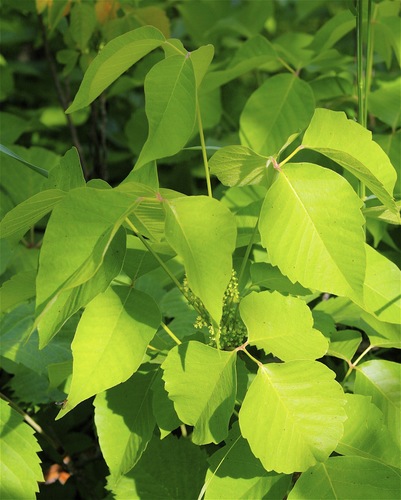
North Dakota, US
You might spot Western Poison Ivy, Wild Licorice, and Leadplant.
View guide →
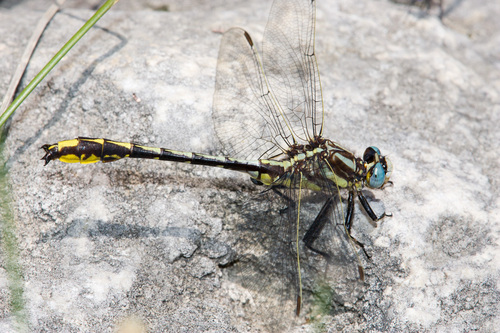
Ohio, US
You might spot Pronghorn Clubtail, Lark Sparrow, and Royal River Cruiser.
View guide →
Take the discovery with you
Snap it with Snappit to identify it, learn what makes it special, and add the discovery to your collection.









.jpg&width=800)



