





Fulvous Whistling Duck
Dendrocygna bicolor
The Fulvous Whistling Duck is a friendly bird with a beautiful brown body and a cute whistle. They love to swim and can often be seen in groups near water.
Habitat: Wetlands
The Fulvous Whistling Duck is a medium-sized bird with a long neck and legs, distinctive among ducks. It has a rich, tawny-brown to orangey-brown body, a darker back, and a noticeable white stripe along its sides. Its bill and legs are bluish-grey.
Category
BirdsRarity
Common
Danger
1/5 · Very low
Snaps
Be the first to snap!
A Fulvous Whistling Duck family can have over a dozen ducklings!
These ducks make a unique 'whistle' sound instead of a typical 'quack.'
They often fly in big, noisy flocks, especially at dawn and dusk.
They're sometimes called 'Tree Ducks' because they love perching in trees!
Fulvous Whistling Duck can dive underwater to find food, using its strong legs to propel itself through the water.
Fulvous Whistling Duck has strong feet and long legs that help them perch easily in trees, unlike most other duck species.
Fulvous Whistling Duck can feed actively at night, which helps them avoid predators and find food when others are resting.
These ducks enjoy a plant-based diet, munching on seeds, grasses, and aquatic plants.

Oryza sativa
Consumes grains and young shoots, especially in rice fields.
Typha latifolia
Feeds on seeds and tender shoots from various marsh plants.
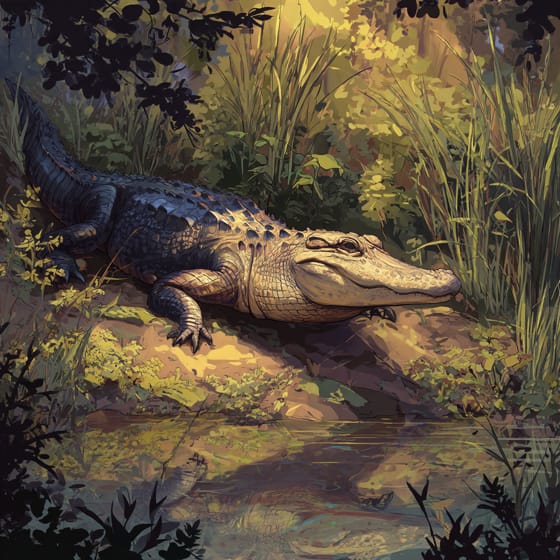
Alligator mississippiensis
Alligators prey on eggs, ducklings, and adult ducks in wetland habitats.
Crocodilus niloticus
These crocodiles hunt ducks and ducklings in African wetlands.
Feathered describes animals, primarily birds, possessing a covering of feathers.
Characterized by having toes connected by a membrane, typically aiding in swimming.
Social animals live in organized groups, cooperating for survival benefits such as foraging, defense, and raising offspring.
This trait identifies organisms whose diet includes both plant and animal matter.

This trait characterizes organisms whose diet consists entirely or primarily of plant material.

This habitat trait identifies species found in wetlands, which are areas of land saturated with water, either permanently or seasonally, including marshes, swamps, and bogs.

Diurnal animals are primarily active during daylight hours, typically resting or sleeping at night.

Aquatic habitats encompass environments where organisms live predominantly in water, including oceans, rivers, lakes, and wetlands.
No aliases listed yet.
Danger
1/5 · Very low
Always watch birds from a distance and do not try to touch or feed them.
The easiest way to identify Fulvous Whistling Duck is to use the Snappit nature identifier app.
45-53 cm
76-85 cm
0.7-1 kg
10-12 years
60 km/h
These ducks enjoy a plant-based diet, munching on seeds, grasses, and aquatic plants.
Wetlands
Zoom in to split clusters and explore where this object has been snapped.
Recent snaps will appear here as new observations are added.
Take the discovery with you
Snap it with Snappit to identify it, learn what makes it special, and add the discovery to your collection.





.jpg&width=800)








