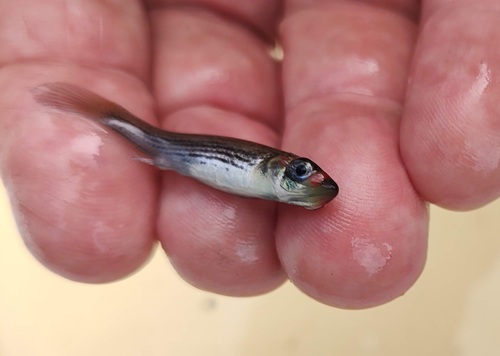


Fundulus Nottii
fundulus nottii
The Bayou Topminnow (Fundulus nottii) is a captivating little freshwater fish native to the sluggish, warm waters of the southeastern United States. Measuring only a few inches in length, this species spends most of its life hovering just beneath the water's surface, expertly navigating dense patches of duckweed and water lilies. Its specialized, upturned mouth and flattened head make it perfectly suited for skimming the water film in search of fallen insects. Far from being a plain minnow, it boasts intricate stripe patterns that provide excellent camouflage from predators looking down from above. Often found in swampy pools, bayous, and slow-flowing streams, the Bayou Topminnow plays an essential role in its wetland ecosystem by keeping insect populations, particularly mosquito larvae, in check. For nature enthusiasts and native fish aquarists alike, spotting these active, surface-dwelling beauties darting among the aquatic weeds is a rewarding glimpse into the vibrant biodiversity of southern wetlands.
Habitat: Typically found in calm, heavily vegetated waters such as bayous, swamps, sluggish streams, and shallow ponds.
The Bayou Topminnow is characterized by its small, slender, and slightly compressed body, typically reaching lengths of 5 to 7.5 centimeters. It features a distinctive flattened head with a highly upturned, terminal mouth designed for surface feeding. Its coloration consists of a pale olive to silvery-brown back fading to a creamy white belly, adorned with several prominent dark longitudinal stripes along its flanks. A defining visual identifier is the dark, vertical subocular bar—often resembling a bold 'teardrop'—running directly beneath its large, high-set eyes. During the breeding season, males exhibit striking color enhancements, displaying vibrant orange, yellow, or reddish hues on their dorsal, anal, and caudal fins, along with subtle vertical dark bars across their sides.
Category
FishRarity
Common
Danger
1/5 · Very low
Snaps
Be the first to snap!
During the breeding season, male bayou topminnows develop intense orange to reddish coloration on their fins to attract females.
The dark teardrop mark under their eye acts like a football player's eye black, reducing glare from the water's surface to improve vision.
Their eyes are positioned near the top of their head, allowing them to simultaneously hunt for insects above while watching for underwater predators.
An upturned mouth and flat head allow it to feed on insects resting on the water's surface film with high efficiency.
It can survive in warm, oxygen-depleted swamp waters by utilizing the oxygen-rich top millimeter of the water column.
The dark 'teardrop' mark under its eye reduces glare from the sun, assisting in spotting both prey and incoming aerial predators.
Feeds primarily on terrestrial insects that fall onto the water's surface, as well as small aquatic invertebrates, algae, and microcrustaceans.
Age differences: Juveniles eat smaller zooplankton such as rotifers, transitioning to larger surface insects as they mature.

Micropterus salmoides
The Largemouth Bass is a primary aquatic predator that feeds on Bayou Topminnows in swampy habitats.
Culex pipiens
The Bayou Topminnow actively hunts mosquito larvae at the water's surface, acting as a natural pest control.

Ardea herodias
Great Blue Herons wade through shallow bayou waters to hunt surface-dwelling fish like the Bayou Topminnow.
No trait badges are assigned for this object yet.
Collections for this object will appear here as more themes are added.
Danger
1/5 · Very low
No special safety notes yet.
Look at body shape, where the fins sit and their outline, mouth position, stripes and spots. Young fish and breeding adults can wear different patterns, and aquarium color varieties can look nothing like wild fish. Fish Identifier: upload a photo and compare the visible details.
4+ cm
0.002+ kg
1+ years
5 km/h
Feeds primarily on terrestrial insects that fall onto the water's surface, as well as small aquatic invertebrates, algae, and microcrustaceans.
Typically found in calm, heavily vegetated waters such as bayous, swamps, sluggish streams, and shallow ponds.
Foraging
Zoom in to split clusters and explore where this object has been snapped.
Recent snaps will appear here as new observations are added.
Take the discovery with you
Snap it with Snappit to identify it, learn what makes it special, and add the discovery to your collection.