


Giant Leather Fern
acrostichum danaeifolium
The Giant Leather Fern (Acrostichum danaeifolium) is a colossal, prehistoric-looking fern native to the wetlands, swamps, and mangrove margins of the Americas. Standing as one of the largest true ferns in the world, it brings a dramatic, ancient aesthetic to subtropical and tropical ecosystems. Its giant, leathery fronds rise majestically in dense clumps, serving as critical shelter for a variety of wetland wildlife, including young fish, wading birds, and aquatic invertebrates. Unlike many delicate, shade-loving ferns, this resilient giant thrives in bright, intense sunlight and can tolerate saline or brackish water conditions. Its presence is often a key indicator of healthy, stable wetland habitats. For plant enthusiasts and nature lovers, encountering a stand of these massive ferns is like stepping back into a carboniferous forest, offering a true sense of primeval nature.
Habitat: Found in tropical and subtropical brackish marshes, mangrove swamps, cypress domes, and wet ditches, typically in areas with high water tables and plenty of sunlight.
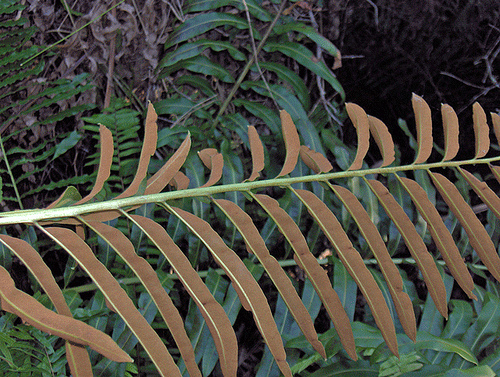
This colossal fern features erect, clumped fronds that can easily reach heights of 150 to 400 centimeters. The sterile fronds are a deep, glossy green with a robust, leathery texture, divided into numerous large, lance-shaped leaflets with smooth margins. The fertile fronds, which typically rise in the center of the clump, are even taller and morphologically distinct; their undersides are completely covered in a dense, velvety layer of reddish-brown sporangia, giving them a rusty, felt-like appearance that is an unmistakable identification mark in the wild.
Category
PlantsRarity
Common
Danger
1/5 · Very low
Snaps
Be the first to snap!
Historically, indigenous groups used the fibrous rhizomes of large wetland ferns for basket weaving and local medicinal remedies.
It is one of the largest ferns in North America, with individual fronds sometimes reaching up to 12 feet in height.
Its thick, leathery texture acts as a strong physical defense against herbivores, making it unpalatable to most plant-eating insects and mammals.
The generic name Acrostichum comes from the Greek words akros and stichos, referring to the spore-bearing structures arranged at the tips of its fronds.
It can thrive in brackish environments by utilizing specialized physiological barriers in its root system to filter out excess sodium while absorbing freshwater.
Unlike most shade-obligate ferns, its thick, leathery fronds feature a protective waxy cuticle that prevents desiccation under intense, direct tropical sunlight.
Fertile fronds allocate their entire undersides to sporangia, releasing millions of microscopic, wind-borne spores to maximize colonization success across fragmented wetlands.
As an autotrophic plant, it produces its own energy through photosynthesis, utilizing sunlight, water, carbon dioxide, and essential soil nutrients.

Alligator mississippiensis
Provides nesting sites and protective ground cover for the American Alligator in coastal marsh environments.

Rhizophora mangle
Grows in close association, often sharing and competing for space within the same brackish coastal swamp canopy.

Egretta tricolor
Provides foraging shelter and structural support for nesting wading birds.
No trait badges are assigned for this object yet.
No aliases listed yet.
Collections for this object will appear here as more themes are added.
Danger
1/5 · Very low
No special safety notes yet.
Compare frond shape, how the leaflets are arranged, the stalk, and any spore clusters you can see. A single detached leaflet often hides the plant's overall growth pattern. Fern Identifier: upload a photo and compare the visible details.
150-400 cm
10-50 years
As an autotrophic plant, it produces its own energy through photosynthesis, utilizing sunlight, water, carbon dioxide, and essential soil nutrients.
Found in tropical and subtropical brackish marshes, mangrove swamps, cypress domes, and wet ditches, typically in areas with high water tables and plenty of sunlight.
Zoom in to split clusters and explore where this object has been snapped.
Recent snaps will appear here as new observations are added.
Take the discovery with you
Snap it with Snappit to identify it, learn what makes it special, and add the discovery to your collection.


















