





Glossy Ibis
Plegadis falcinellus
The Glossy Ibis is a beautiful bird with shiny, dark feathers that shimmer in the sunlight. They love to wade in shallow waters looking for tasty insects and small fish to eat.
Habitat: Wetlands
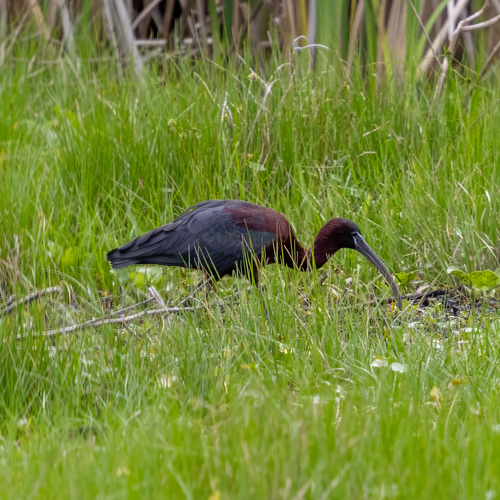
The Glossy Ibis has a striking deep bronze-maroon body with iridescent green and purple sheen on its wings and back that shifts in sunlight. It features a long, slender, downcurved bill and dark legs, making it visually distinct from other wetland birds.
Category
BirdsRarity
Common
Danger
1/5 · Very low
Snaps
11
Baby ibises have dull feathers at first, gaining their glossy sheen as they grow older.
Their dazzling feathers look bronze, purple, and green in sunlight, constantly shifting!
These birds fly in V-formations, saving energy on incredibly long migrations!
They often wade belly-deep, using their long legs and bills to find hidden snacks!
Glossy Ibises can probe deep into mud and water with their long, curved bills, helping them find hidden prey.
This ibis has feathers that flash bronze, green, and purple in sunlight, acting like natural camouflage that changes with light.
Glossy Ibises often feed in groups, which helps them find more food and stay safer from predators in open wetlands.
The Glossy Ibis can fly thousands of kilometers during migration, helped by efficient V-formation flying.
These elegant birds probe muddy waters for a varied menu of small invertebrates and aquatic creatures.
Procambarus clarkii
Frequently prey upon invasive crayfish.
Typha latifolia
Often uses dense stands for nesting sites.
Haliaeetus leucoryphus
Adults or juveniles may be hunted by large raptors.
Feathered describes animals, primarily birds, possessing a covering of feathers.
Social animals live in organized groups, cooperating for survival benefits such as foraging, defense, and raising offspring.
Aerial creatures spend a significant portion of their lives airborne, utilizing flight for various activities such as hunting, migration, or nesting.
Colorful describes organisms or objects displaying a wide range of bright and distinct colors.

Filter feeders obtain nutrients by straining suspended food particles and small organisms from water.

This trait identifies organisms whose diet primarily consists of insects and other small invertebrates.

This habitat trait identifies species found in wetlands, which are areas of land saturated with water, either permanently or seasonally, including marshes, swamps, and bogs.

Describes a species whose presence and role have a disproportionately large effect on its environment.

Migratory animals undertake seasonal movements from one region to another, typically in response to changes in climate or food availability.
Danger
1/5 · Very low
If you see a bird, watch quietly from a distance so you don't scare it away.
The easiest way to identify Glossy Ibis is to use the Snappit nature identifier app.
48-66 cm
80-105 cm
0.485-0.78 kg
14-20 years
50 km/h
These elegant birds probe muddy waters for a varied menu of small invertebrates and aquatic creatures.
Wetlands
Zoom in to split clusters and explore where this object has been snapped.
Apr 26, 2026
AfricatownPhoto attribution
(c) Dan Vickers, some rights reserved (CC BY)
License: CC BY 4.0 ↗
Image may be shown cropped inside the card frame.

US
You might spot Monarch, Ipsilon Dart Moth, and Canada Goose.
View guide →

Rhode Island, US
You might spot Tundra Bean Goose, Tansy, and Osprey.
View guide →

Maine, US
You might spot Pink Lady's Slipper, Wood Lily, and Great Blue Heron.
View guide →

US
You might spot Common Eider and American Herring Gull.
View guide →

Alabama, US
You might spot Red Buffalo-Bur, Eastern Box Turtle, and Anole.
View guide →

New Jersey, US
You might spot Common Loon, Laughing Gull, and Ring-Billed Gull.
View guide →
Take the discovery with you
Snap it with Snappit to identify it, learn what makes it special, and add the discovery to your collection.




.jpg&width=800)








