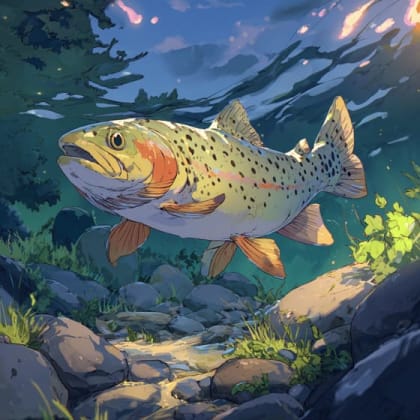
Gomphosus varius
Gomphosus varius
The Rainbowfish is a colorful fish found in warm waters. It loves to swim around coral reefs and is known for its bright, beautiful colors that can change as it grows.
Habitat: Coral reefs
The Gomphosus varius, also known as the Bird Wrasse, has a distinctively long, pointed snout resembling a bird's beak. Males are often vibrant green with pink accents, while females and juveniles are reddish-brown to mottled green with scattered spots.
Category
FishRarity
Common
Danger
1/5 · Very low
Snaps
3
Did you know the Bird Wrasse uses its long snout like tweezers to grab tiny crabs and snails from tight spots?
Males of this fish are often bright green, while females can be reddish-brown, making them look like different species!
These amazing fish are born female and can change into males later in life, a real gender-bending superpower!
They sleep buried in the sand or among rocks at night to stay safe from predators, popping out when the sun rises.
Gomphosus varius can pluck tiny creatures from reef crevices because of its extra-long, pointy snout that helps them reach hidden snacks.
Gomphosus varius has strong teeth that help them crush shells and spines, allowing them to eat tough-shelled prey hidden in the coral.
Gomphosus varius can change its colors dramatically as it grows, transforming from mottled brown to brilliant green, surprising anyone who sees it!
This fish uses its unique snout to find and munch on small creatures hiding in the reef.
Epinephelus fuscoguttatus
A larger reef predator that hunts many reef fish.
Ophiocoma pica
Its pointed snout is perfect for extracting brittle stars.
Pocillopora damicornis
Hides in coral branches to avoid predators or sleep.
Social animals live in organized groups, cooperating for survival benefits such as foraging, defense, and raising offspring.
Colorful describes organisms or objects displaying a wide range of bright and distinct colors.
This trait characterizes organisms whose diet consists entirely or primarily of plant material.
This trait identifies organisms whose diet consists entirely or primarily of animal tissue.

Diurnal animals are primarily active during daylight hours, typically resting or sleeping at night.

Aquatic habitats encompass environments where organisms live predominantly in water, including oceans, rivers, lakes, and wetlands.

Marine habitats encompass all saltwater environments of the Earth's oceans, supporting an immense diversity of aquatic life.
No aliases listed yet.
Danger
1/5 · Very low
Always watch your step when near water to stay safe.
The easiest way to identify Gomphosus varius is to use the Snappit nature identifier app.
15-30 cm
0.1-0.5 kg
5-10 years
This fish uses its unique snout to find and munch on small creatures hiding in the reef.
15 km/h
Coral reefs
Foraging
Zoom in to split clusters and explore where this object has been snapped.

Hawaii, US
You might spot Yellow ʻilima, Red-Tailed Tropicbird, and White Leadtree.
View guide →

Hawaii, US
You might spot Spathoglottis Plicata, Thatch Screwpine, and Brown Anole.
View guide →

Hawaii, US
You might spot Red-Crested Cardinal and Zebra Dove.
View guide →
Take the discovery with you
Snap it with Snappit to identify it, learn what makes it special, and add the discovery to your collection.