.jpg&width=800)





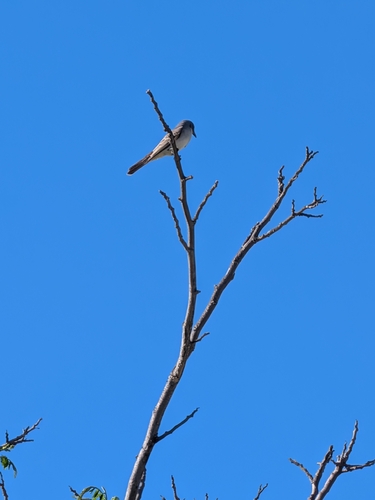
Gray Kingbird
Tyrannus dominicensis
The Gray Kingbird is a cheerful bird with a gray body and a black cap on its head. It loves to catch insects in mid-air and can often be seen perched on a branch, waiting for its next meal.
Habitat: Coastal areas
The Gray Kingbird has a pale gray head and back, with a distinctive dark mask through its eyes. Its underside is whitish, and it sports a heavy, dark bill and a slightly notched tail, making it look sleek.
Category
BirdsRarity
Common
Danger
1/5 · Very low
Snaps
5
During migration, these birds can cross large stretches of ocean without stopping!
Gray Kingbirds often build their cup-shaped nests near water, sometimes even over it!
Its scientific name, 'Tyrannus dominicensis', means 'tyrant' due to its bold nature!
They have a loud, distinctive 'pee-cheer-weee' call that carries surprisingly far!
Gray Kingbird can spot tiny insects from a high perch because of its excellent eyesight, helping it catch food.
Gray Kingbird can fiercely chase off much larger birds, like hawks, because it's a brave defender of its nest.
Gray Kingbird can quickly dart and hover mid-air, allowing it to snatch flying insects with amazing precision.
Feasts on flying insects caught mid-air, but also enjoys berries and small fruits!
Anax junius
Kingbirds often catch these large dragonflies mid-flight.
Apis mellifera
A common insect prey for kingbirds, snatched from the air.
Ficus aurea
Kingbirds also enjoy the small, sweet fruits of this tree.
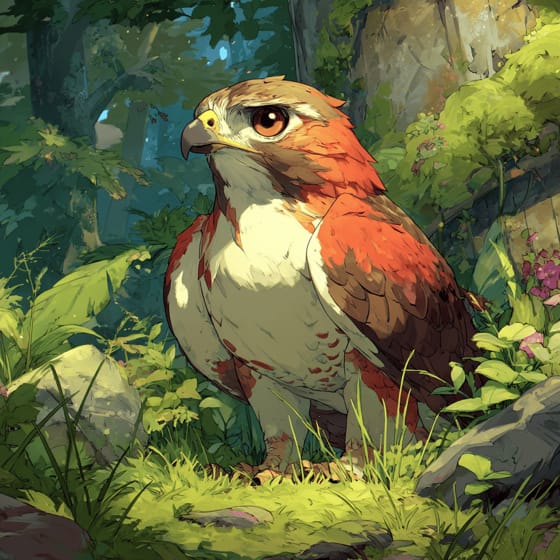
Buteo jamaicensis
A larger raptor that may prey on adult kingbirds or their young.

Rhizophora mangle
Nests are frequently built in the protective branches of mangroves.
Feathered describes animals, primarily birds, possessing a covering of feathers.
Social animals live in organized groups, cooperating for survival benefits such as foraging, defense, and raising offspring.
Aerial creatures spend a significant portion of their lives airborne, utilizing flight for various activities such as hunting, migration, or nesting.
Singing animals produce complex vocalizations, often for purposes of attracting mates, defending territory, or communicating within their species.

This trait identifies organisms whose diet primarily consists of insects and other small invertebrates.

Coastal habitats are dynamic environments located along the interface between land and sea, influenced by tides, waves, and saltwater.

Diurnal animals are primarily active during daylight hours, typically resting or sleeping at night.
No aliases listed yet.
Danger
1/5 · Very low
Enjoy watching birds from a distance and don't try to touch them.
The easiest way to identify Gray Kingbird is to use the Snappit nature identifier app.
20-24 cm
38-42 cm
0.035-0.05 kg
4-8 years
45 km/h
Feasts on flying insects caught mid-air, but also enjoys berries and small fruits!
Coastal areas
Zoom in to split clusters and explore where this object has been snapped.
May 15, 2026
Collins Waterfront Architectural DistrictPhoto attribution
no rights reserved
License: CC0 1.0 ↗
Image may be shown cropped inside the card frame.

US
You might spot Laughing Gull, Brown Anole, and Green Iguana.
View guide →

US
You might spot Nurse Shark, Sea Turtle, and Cownose Ray.
View guide →

Florida, US
You might spot Brown Anole, Laughing Gull, and Green Iguana.
View guide →

US
You might spot Osprey, Laughing Gull, and Willet.
View guide →

Florida, US
You might spot Laughing Gull, Brown Anole, and Green Iguana.
View guide →

US
You might spot Brown Anole and Green Iguana.
View guide →
Take the discovery with you
Snap it with Snappit to identify it, learn what makes it special, and add the discovery to your collection.




.jpg&width=800)









