





gray pine
Pinus sabiniana
The gray pine is a tall tree with long, slender needles that can be grayish-green. It grows in sunny places and provides shade for animals and people alike.
Habitat: Mountain regions
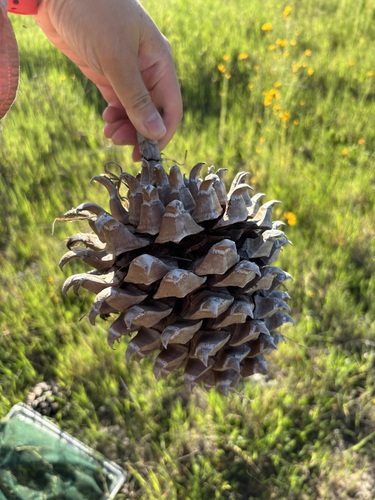
The gray pine has a distinctive open, sparse canopy with long, grayish-green needles grouped in threes. Its bark is thick and deeply furrowed, appearing gray to dark brown. It is most recognizable by its exceptionally large, heavy cones, which can be up to 30 cm long.
Category
PlantsRarity
Common
Danger
1/5 · Very low
Snaps
6
Its massive cones are the largest of any pine native to California, weighing up to 2 kg!
Native Americans used the gray pine's sap as glue and medicine, and its needles for baskets!
The gray pine is sometimes called 'digger pine' because people used to dig up its tasty nuts.
This hardy tree can live for over 100 years, standing tall through many tough seasons!
Gray pine can grow in very dry, rocky soil by sending super-long roots deep down to find hidden water!
Gray pine has enormous, tasty seeds inside its cones that help animals spread new pine trees far and wide.
Gray pine has incredibly thick, protective bark that helps it survive even intense forest fires.

Sciurus griseus
Feasts on the large pine nuts

Aphelocoma californica
Consumes and helps disperse seeds
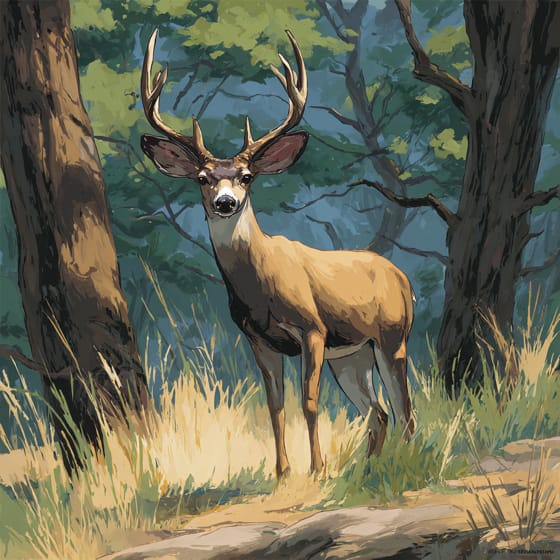
Odocoileus hemionus
Browses young seedlings and shoots
Dendroctonus brevicomis
Bores into bark, weakening the tree
Shade tolerant plants are adapted to grow and thrive in areas with low light levels, requiring less direct sunlight.
Broadleaf trees are angiosperms characterized by flat, wide leaves that are typically shed annually in temperate climates.
Coniferous plants are typically evergreen, bearing needles or scales and reproductive cones.
Evergreen plants retain their foliage throughout the year, never shedding all their leaves at once.

Nut bearing plants produce hard-shelled fruits, commonly known as nuts, which contain a single seed and are a valuable food source.
Timber refers to wood that has been prepared for use in building and carpentry.

This habitat trait identifies species found in mountainous regions, characterized by high elevation, steep slopes, and varying climate zones.

Describes organisms that transfer pollen, enabling the fertilization and reproduction of plants.
No aliases listed yet.
Danger
1/5 · Very low
Stay on paths when exploring near trees and watch for falling branches.
The easiest way to identify gray pine is to use the Snappit nature identifier app.
900-2000 cm
400-1000 cm
Spring
Yes
None
Perennial
Wind
Zoom in to split clusters and explore where this object has been snapped.
Mar 14, 2026
San Joaquin Experimental RangePhoto attribution
(c) Nina S. Zhao, some rights reserved (CC BY)
License: CC BY 4.0 ↗
Image may be shown cropped inside the card frame.

California, US
You might spot Toyon, Mule Deer, and White Globe Lily.
View guide →

California, US
You might spot Gray Pine, Gambel Oak, and Caterpillar Scorpionweed.
View guide →

California, US
You might spot White Globe Lily, California Buckeye, and Rose Campion.
View guide →
Take the discovery with you
Snap it with Snappit to identify it, learn what makes it special, and add the discovery to your collection.









.jpg&width=800)


_001.jpg&width=800)


