Grey Cross Spider
larinioides sclopetarius
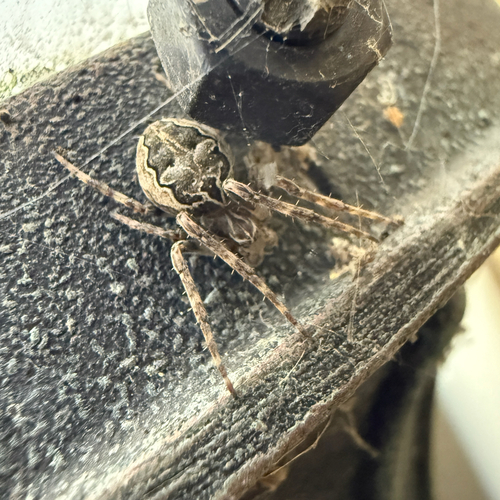
The Grey Cross Spider has a beautiful cross pattern on its back! It loves to spin webs and catch tiny bugs for lunch.
Habitat: Gardens, forests, and grassy areas.
The Grey Cross Spider is typically greyish-brown with a distinct, often intricate, cross-shaped pattern on its abdomen. It often displays a darker stripe down its back, contrasting with lighter markings. Its slender legs are mottled, helping it blend into its surroundings.
Category
InvertebrateRarity
Common
Danger
1/5 · Very low
Snaps
3
Baby Grey Cross Spiders can 'balloon' on silk threads to travel far distances on the wind!
Male Grey Cross Spiders are much smaller than the females, sometimes only half their size!
Their amazing orb webs are made from silk tougher than steel for its weight!
These spiders often build their webs near outdoor lights, creating a perfect insect trap at night!
Grey Cross Spiders can build strong, intricate orb webs to catch flying insects because of specialized silk glands.
Grey Cross Spiders has specialized spinnerets that produce various silks for safety lines, egg sacs, and wrapping prey.
Grey Cross Spiders can subtly change their body colour to better match their background, helping them hide from predators.
They primarily munch on flying insects caught in their super sticky webs!
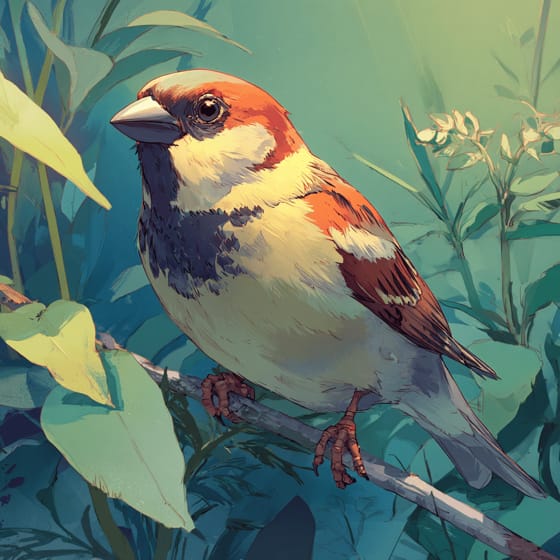
Passer domesticus
Common birds often prey on these spiders.
Musca domestica
Main prey caught in their orb webs.
Culex pipiens
Often found near water, they catch mosquitoes.
Sceliphron caementarium
Mud dauber wasps sometimes capture spiders.
Solitary animals live alone for most of their lives, only interacting with others for mating or parental care.
Arboreal animals live primarily in trees, utilizing them for shelter, food, and protection from predators.
Camouflaged describes organisms that possess coloring or patterns that allow them to blend into their environment.
Forest habitats are terrestrial environments dominated by dense tree cover, supporting a high diversity of plant and animal life.

This trait identifies organisms whose diet consists entirely or primarily of animal tissue.
Danger
1/5 · Very low
Always observe spiders from a distance!
The easiest way to identify Grey Cross Spider is to use the Snappit nature identifier app.
0.8 cm
3 cm
1 years
They primarily munch on flying insects caught in their super sticky webs!
Gardens, forests, and grassy areas.
Ambush
Zoom in to split clusters and explore where this object has been snapped.
Mar 27, 2026
Glen Echo ParkPhoto attribution
(c) Carrie Seltzer, some rights reserved (CC BY)
License: CC BY 4.0 ↗
Image may be shown cropped inside the card frame.

Maryland, US
You might spot Common Pawpaw and Feather-Edged Petrophila.
View guide →
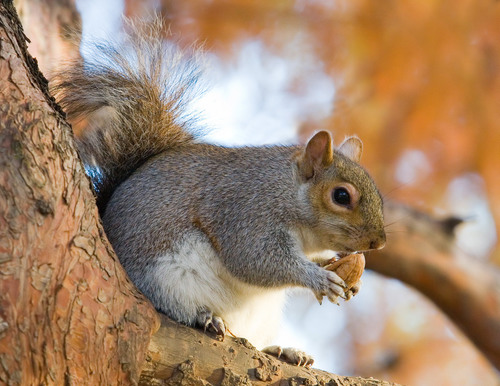
Illinois, US
You might spot Eastern Gray Squirrel, Duck, and Canada Goose.
View guide →

Illinois, US
You might spot American Robin, Great Blue Heron, and Duck.
View guide →
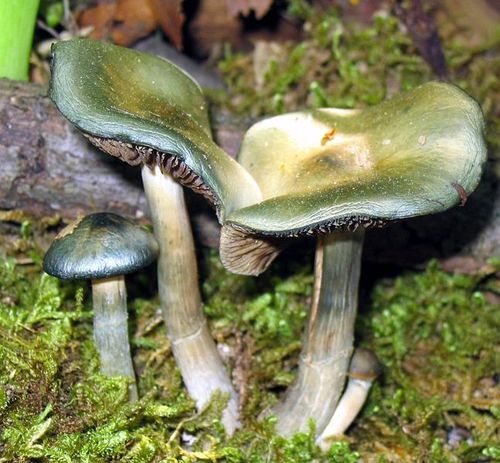
Ohio, US
You might spot Psychedelic Ovoid Mushroom and Sycamore.
View guide →

Massachusetts, US
You might spot Grey Cross Spider, Common Milkweed, and Roses.
View guide →
Take the discovery with you
Snap it with Snappit to identify it, learn what makes it special, and add the discovery to your collection.