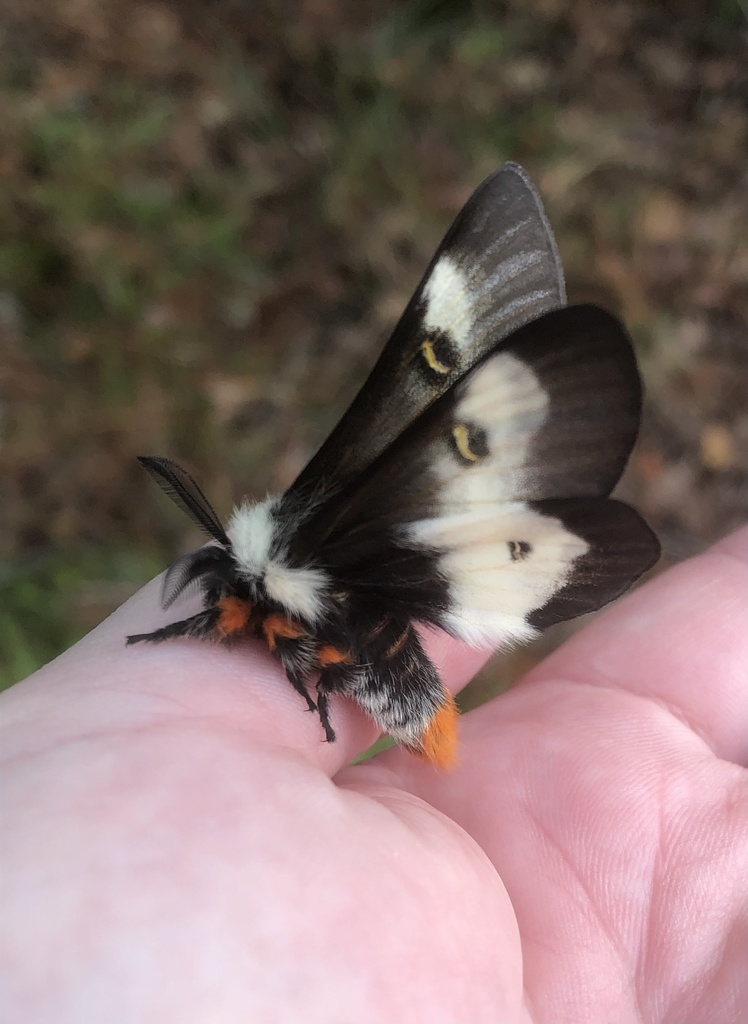





Gulf Coast Buck Moth
Hemileuca orleans
The Gulf Coast Buck Moth is a beautiful insect with big, fluffy bodies and striking colors. They are often seen fluttering around in the warm coastal areas, especially during the fall.
Habitat: Coastal areas
The Gulf Coast Buck Moth has striking yellow forewings with a prominent black band, often edged in fiery orange or red. Its hindwings are solid black, contrasting sharply with a yellow margin. This daytime flyer has a furry black body and distinctive antennae, making it stand out against green foliage.
Category
InsectsRarity
Common
Danger
1/5 · Very low
Snaps
1
Adult moths don't eat at all! They live off stored energy.
Its caterpillars eat specific marsh grasses, becoming spiny and colorful!
Males have feathery antennae to sniff out females from far away!
They fly only in late autumn and early winter afternoons!
Gulf Coast Buck Moth can fly during the day because of its adaptation to active flight in sunlight, that helps them find mates when many predators are active.
Gulf Coast Buck Moth has bright contrasting colors that help them warn predators they are unpalatable or toxic, deterring attacks.
Gulf Coast Buck Moth can emerge and fly in late fall/early winter because of its specialized life cycle, that helps them avoid competition and some predators.
Adults don't eat, but their spiny caterpillars munch on marsh grasses!
Age differences: Adult moths do not feed, relying on energy stored from their plant-eating caterpillar stage.
Furry describes animals possessing a dense covering of soft hair or fur.
Solitary animals live alone for most of their lives, only interacting with others for mating or parental care.
Colorful describes organisms or objects displaying a wide range of bright and distinct colors.
This trait characterizes organisms whose diet consists entirely or primarily of plant material.

Describes plants that are particularly attractive and beneficial to a wide range of pollinating organisms.

Coastal habitats are dynamic environments located along the interface between land and sea, influenced by tides, waves, and saltwater.

Diurnal animals are primarily active during daylight hours, typically resting or sleeping at night.

Describes organisms that transfer pollen, enabling the fertilization and reproduction of plants.
No aliases listed yet.
Danger
1/5 · Very low
Moths are usually safe to watch, but it's best not to touch them.
The easiest way to identify Gulf Coast Buck Moth is to use the Snappit nature identifier app.
40-70 mm
20-35 mm
5-10 days
8 km/h
Adults don't eat, but their spiny caterpillars munch on marsh grasses!
Coastal areas
Foraging
Zoom in to split clusters and explore where this object has been snapped.

Louisiana, US
You might spot Brown Anole, White Beggarticks, and Gulf Coast Buck Moth.
View guide →
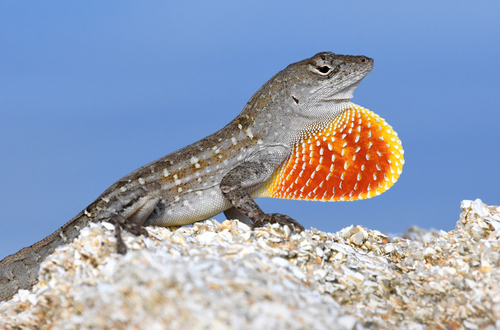
Louisiana, US
You might spot Brown Anole, White Ibis, and Black-Bellied Whistling-Duck.
View guide →
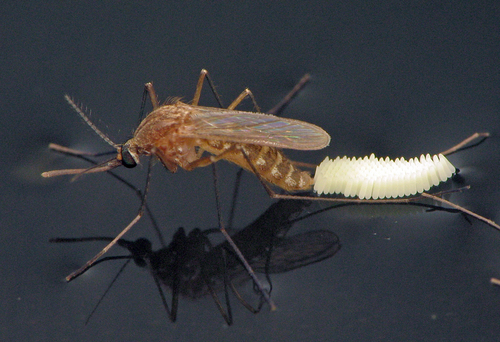
Louisiana, US
You might spot House Mosquito Complex and Yellow Fever Mosquito.
View guide →

Louisiana, US
You might spot Red-Shouldered Hawk, Green Treefrog, and Brown Anole.
View guide →

Louisiana, US
You might spot Brown Anole, White Ibis, and Gulf Coast Buck Moth.
View guide →

Louisiana, US
You might spot Northern Mockingbird and Eastern Fox Squirrel.
View guide →
Take the discovery with you
Snap it with Snappit to identify it, learn what makes it special, and add the discovery to your collection.







.jpg&width=800)



