





Hairy Tufted Jumping Spider
phidippus comatus
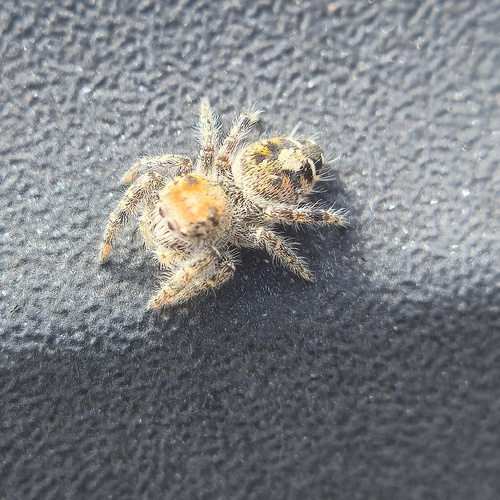
The Hairy Tufted Jumping Spider is a small, colorful spider with fluffy tufts of hair that help it blend into its surroundings. It's an amazing jumper, capable of leaping great distances to catch its prey!
Habitat: They are commonly found in gardens, meadows, and around homes in North America.
The Hairy Tufted Jumping Spider is a small, robust arachnid. Males typically feature a black body with iridescent green-blue chelicerae and distinctive bright orange-red tufts on their head. Females are often mottled brown or gray with similar iridescent mouthparts.
Category
InsectsRarity
Common
Danger
1/5 · Very low
Snaps
4
Instead of large hunting webs, they spin small silk 'retreats' for safety and molting.
These spiders clean their main eyes with tiny bristly hairs on their pedipalps!
They are intelligent hunters, capable of planning complex routes to reach hidden prey!
They use hydraulic pressure to extend their legs, allowing powerful jumps without huge muscles!
Hairy Tufted Jumping Spider can launch itself great distances to catch prey because of powerful muscles in its legs.
Hairy Tufted Jumping Spider has eight eyes, including two large forward-facing eyes, that help them see in all directions and detect tiny movements.
Hairy Tufted Jumping Spider can produce a silk dragline that helps them quickly retrieve themselves if a jump misses its target.
Tiny hunters that eat small insects they catch with powerful jumps.
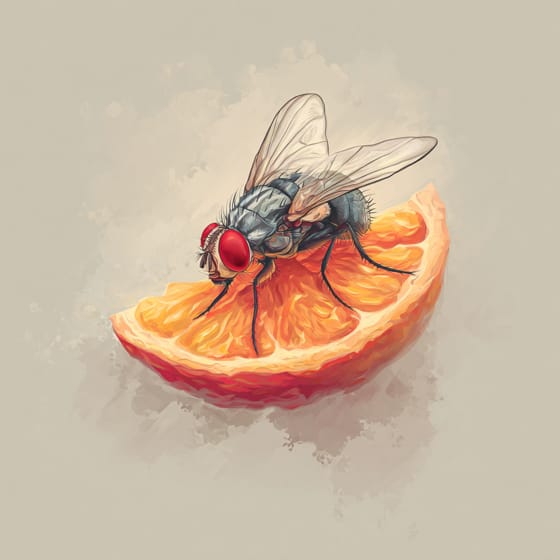
Drosophila melanogaster
A common small insect prey in their habitat.
Aphis gossypii
Important for controlling garden pests.

Sialia sialis
A small bird that preys on various arthropods.
Anolis carolinensis
Small lizards frequently consume jumping spiders.
Solitary animals live alone for most of their lives, only interacting with others for mating or parental care.
Arboreal animals live primarily in trees, utilizing them for shelter, food, and protection from predators.
Colorful describes organisms or objects displaying a wide range of bright and distinct colors.
This trait identifies organisms whose diet consists entirely or primarily of animal tissue.

Diurnal animals are primarily active during daylight hours, typically resting or sleeping at night.
Danger
1/5 · Very low
No special safety notes yet.
The easiest way to identify Hairy Tufted Jumping Spider is to use the Snappit nature identifier app.
6-10 mm
365-1095 days
Tiny hunters that eat small insects they catch with powerful jumps.
They are commonly found in gardens, meadows, and around homes in North America.
Pursuit
8
Zoom in to split clusters and explore where this object has been snapped.
May 24, 2026
James Cant RanchPhoto attribution
(c) John Clonce, some rights reserved (CC BY)
License: CC BY 4.0 ↗
Image may be shown cropped inside the card frame.

New Mexico, US
You might spot Tree Cholla, Colorado Pinyon, and House Finch.
View guide →

New Mexico, US
You might spot White-Winged Dove and Silverleaf Nightshade.
View guide →

Oregon, US
You might spot Blue Mountain Prairie Clover and Munro's Globemallow.
View guide →

Oregon, US
You might spot Balkan Toadflax, Big Sagebrush, and Western Juniper.
View guide →

California, US
You might spot Field Bindweed, White Clover, and Lesser Goldfinch.
View guide →
Take the discovery with you
Snap it with Snappit to identify it, learn what makes it special, and add the discovery to your collection.








.jpg&width=800)



