





Hoary Comma
Polygonia gracilis
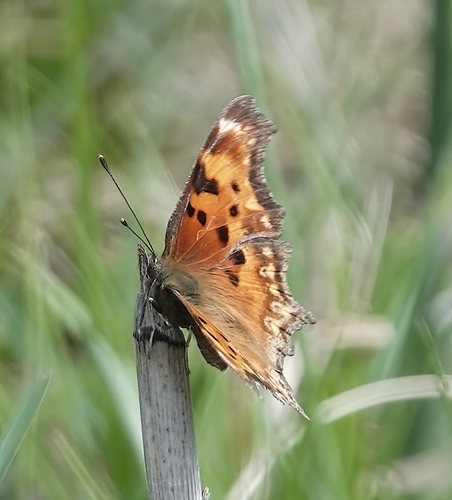
The Hoary Comma is a beautiful butterfly with orange and brown wings. It loves to flutter around in sunny spots and often rests on tree trunks, making it a fun find in nature!
Habitat: Forests
The Hoary Comma is a medium-sized butterfly with ragged-edged wings. Its upperwings are bright orange-brown with dark spots, while the undersides are mottled gray-brown, resembling dead leaves. A distinctive white, comma-shaped mark adorns each hindwing's underside, giving it its name.
Category
InsectsRarity
Common
Danger
1/5 · Very low
Snaps
5
Their caterpillars sport spines but are harmless to touch!
They often perch upside down, blending in perfectly with tree bark!
Unlike many butterflies, adult Hoary Commas prefer tree sap over flower nectar!
When startled, they might drop to the ground and play dead to fool predators!
Hoary Comma can survive freezing winters by entering a dormant state, allowing them to emerge and fly when spring arrives.
Hoary Comma has a long, coiled proboscis that helps them sip nutritious tree sap and nectar, fueling their flight.
Adults enjoy tree sap and rotting fruit, while caterpillars munch on leaves from various trees and shrubs.
Age differences: Larvae are herbivores, feeding on host plant leaves; adults are omnivores, primarily consuming tree sap and rotting fruit.
Salix bebbiana
Its caterpillars feed on the leaves.

Populus tremuloides
Larvae consume leaves for growth.
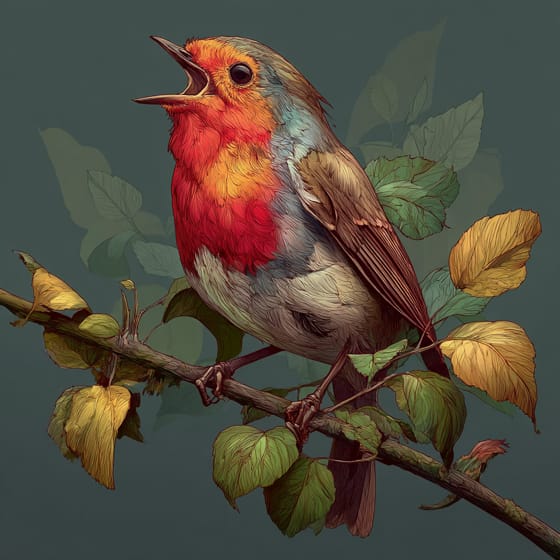
Turdus migratorius
Feeds on adult butterflies.
Solitary animals live alone for most of their lives, only interacting with others for mating or parental care.
Colorful describes organisms or objects displaying a wide range of bright and distinct colors.
This trait characterizes organisms whose diet consists entirely or primarily of plant material.
Describes plants that are particularly attractive and beneficial to a wide range of pollinating organisms.

Forest habitats are terrestrial environments dominated by dense tree cover, supporting a high diversity of plant and animal life.

Diurnal animals are primarily active during daylight hours, typically resting or sleeping at night.

Describes organisms that transfer pollen, enabling the fertilization and reproduction of plants.
No aliases listed yet.
Danger
1/5 · Very low
Butterflies are safe to observe, but be gentle and don't try to catch them.
The easiest way to identify Hoary Comma is to use the Snappit nature identifier app.
40-60 mm
15-25 mm
60-250 days
15 km/h
Adults enjoy tree sap and rotting fruit, while caterpillars munch on leaves from various trees and shrubs.
Forests
Foraging
Zoom in to split clusters and explore where this object has been snapped.
Apr 12, 2026
Sioux County CourthousePhoto attribution
(c) Colin Croft, some rights reserved (CC BY)
License: CC BY 4.0 ↗
Image may be shown cropped inside the card frame.

Washington, US
You might spot Whitebark Pine, Subalpine Larch, and White Pasqueflower.
View guide →

British Columbia, CA
You might spot Green Comma, Mourning Cloak, and Hoary Comma.
View guide →

California, US
You might spot American Pika, Yellow-Bellied Marmot, and Shasta Blue.
View guide →

Alaska, US
You might spot Dwarf Fireweed and Yellow Mountain-Avens.
View guide →

Nebraska, US
You might spot Nine-Spotted Lady Beetle and Convergent Lady Beetle.
View guide →

Colorado, US
You might spot Virginia Strawberry, Yarrow, and Pretty Jacob's-Ladder.
View guide →
Take the discovery with you
Snap it with Snappit to identify it, learn what makes it special, and add the discovery to your collection.







.jpg&width=800)


