_(7200288182).jpg&width=800)





Hobomok Skipper
Lon hobomok
The Hobomok Skipper is a small butterfly with beautiful brown wings. It loves to flutter around flowers and is often seen in sunny meadows during the warm months.
Habitat: Meadows
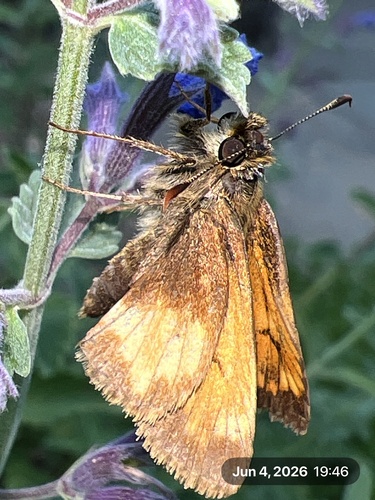
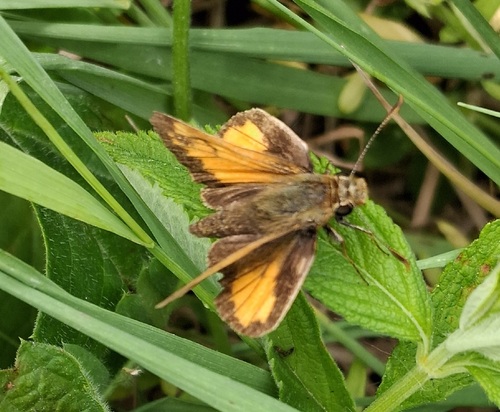
The Hobomok Skipper has an orange-brown body and wings, with darker borders and yellowish-orange spots on its forewings. Males display a prominent dark stigma. Females are often either bright orange like the males or a distinct dark brown, often called the "Pocahontas" form, with white-yellow spots.
Category
InsectsRarity
Common
Danger
1/5 · Very low
Snaps
16
A special patch on male wings, called a stigma, releases scents to attract female skippers.
Caterpillars spin a silk shelter between grass blades to hide and munch safely.
Some female Hobomok Skippers are called "Pocahontas Skippers" because of their unique dark color!
They get their name from a Native American word meaning "one who moves quickly."
Hobomok Skipper can evade predators with sudden, erratic flight bursts because of its powerful wing muscles that allow it to zig-zag rapidly.
Hobomok Skipper has a specialized proboscis that helps them reach deep into flowers to sip nectar, providing essential energy for their active life.
Hobomok Skipper females can appear in two distinct color forms, orange or dark brown, which helps them blend into different environments.
Adult Hobomok Skippers drink flower nectar, while their young caterpillars munch on various grasses.
Age differences: Larvae eat grass leaves, while adults exclusively feed on flower nectar.
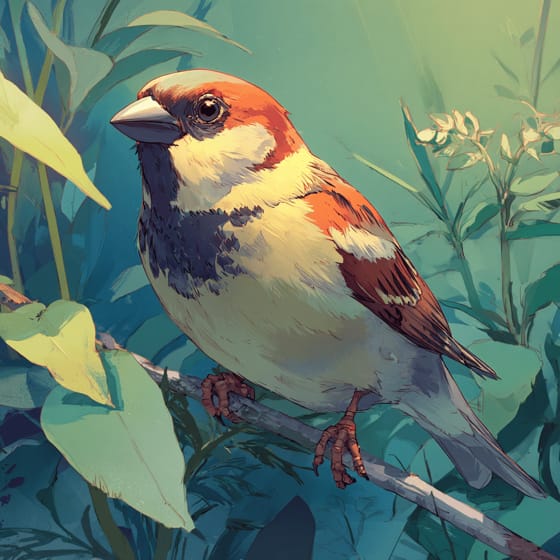
Passer domesticus
Birds hunt adult skippers for food.
Araneus diadematus
Spiders capture skippers in their webs.

Asclepias syriaca
Adult skippers help pollinate flowers while feeding.

Trifolium pratense
Sipping nectar aids in spreading pollen for plant reproduction.
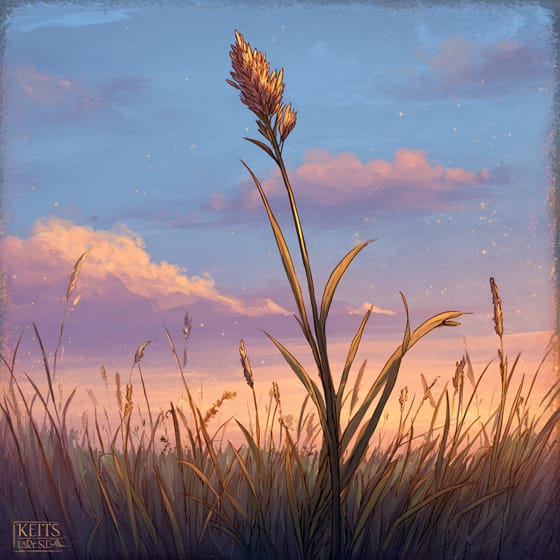
Andropogon gerardii
Skipper larvae feed on the leaves of this native grass.
Camouflaged describes organisms that possess coloring or patterns that allow them to blend into their environment.
Colorful describes organisms or objects displaying a wide range of bright and distinct colors.
Grassland habitats are terrestrial biomes dominated by grasses and herbaceous plants, supporting a variety of grazing animals.
This trait characterizes organisms whose diet consists entirely or primarily of plant material.

Describes plants that are particularly attractive and beneficial to a wide range of pollinating organisms.

Diurnal animals are primarily active during daylight hours, typically resting or sleeping at night.

This trait identifies organisms that exhibit exceptional swiftness in movement for hunting, escape, or travel.

Describes organisms that transfer pollen, enabling the fertilization and reproduction of plants.
No aliases listed yet.
Danger
1/5 · Very low
Butterflies are gentle and safe to watch. Just don't try to catch them!
The easiest way to identify Hobomok Skipper is to use the Snappit nature identifier app.
25-40 mm
15-20 mm
7-14 days
25 km/h
Adult Hobomok Skippers drink flower nectar, while their young caterpillars munch on various grasses.
Meadows
Foraging
Zoom in to split clusters and explore where this object has been snapped.
Jun 4, 2026
Bedford Village Historic DistrictPhoto attribution
(c) Healthy Yards, some rights reserved (CC BY)
License: CC BY 4.0 ↗
Image may be shown cropped inside the card frame.
May 31, 2026
Hickory Hill ParkPhoto attribution
(c) eeyipes, some rights reserved (CC BY)
License: CC BY 4.0 ↗
Image may be shown cropped inside the card frame.

Illinois, US
You might spot Common Eastern Bumble Bee and Brown-Belted Bumble Bee.
View guide →

Michigan, US
You might spot Eastern Gray Squirrel, Tree-Of-Heaven, and House Sparrow.
View guide →

Vermont, US
You might spot Asian Bittersweet, Alder Buckthorn, and Eastern Newt.
View guide →

Michigan, US
You might spot Monarch, Canada Goose, and Eastern Gray Squirrel.
View guide →

Michigan, US
You might spot Monarch, Canada Goose, and Eastern Gray Squirrel.
View guide →

Michigan, US
You might spot Monarch, Canada Goose, and Eastern Gray Squirrel.
View guide →
Take the discovery with you
Snap it with Snappit to identify it, learn what makes it special, and add the discovery to your collection.






.jpg&width=800)



