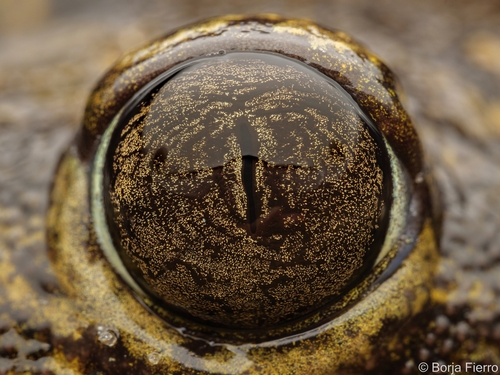


Iberian Spadefoot
pelobates cultripes
The Iberian Spadefoot is a fascinating, stocky amphibian native to the Iberian Peninsula and parts of western France. What makes this spadefoot truly remarkable is its highly specialized subterranean lifestyle; it is a master digger that spends a significant portion of its life buried safely underground. Equipped with sharp, hardened black "spades" on its hind feet, it can burrow backwards into sandy or loose soil in a matter of seconds to escape predators and survive dry Mediterranean summers. Only emerging under the cover of darkness during rainy periods, this secretive creature plays a vital role in its native ecosystems as both a predator of invertebrates and a food source for larger animals.
Habitat: Found in open landscapes with loose, sandy soils such as dunes, pine forests, and agricultural areas, always situated near temporary breeding pools.
Adult Iberian Spadefoots are medium-sized, typically measuring between 6 to 10 centimeters in length with a robust, rounded body shape and no distinct neck. Their smooth skin ranges in color from pale gray or beige to yellowish-green, heavily mottled with dark green, brown, or olive blotches. Their most striking features are their large, prominent eyes with vertical, cat-like pupils and the highly distinctive, hard black metatarsal tubercle (the "spade") located on the inner edge of each hind foot.
Category
AmphibiansRarity
Common
Danger
1/5 · Very low
Snaps
Be the first to snap!
The distinct garlic odor they release when handled is so strong that it has earned them the local nickname 'garlic toad' in several regions.
Their tadpoles are absolute giants, frequently reaching lengths of up to 15 centimeters before shrinking down during metamorphosis.
Unlike most European frogs and toads, they have vertical, slit-like pupils similar to those of a cat.
Using the sharp, keratinized black spades on its hind heels, this amphibian can dig vertically backwards into loose soil to quickly disappear from predators.
To survive the intense heat and drought of the Mediterranean summer, it can burrow deep underground and enter a dormant state for months.
When threatened or seized by a predator, it can secrete a noxious, garlic-scented substance from its skin glands to deter attackers.
Adults feed opportunistically at night on a wide variety of terrestrial invertebrates, while their large aquatic tadpoles graze on algae, organic detritus, and tiny water organisms.
Age differences: Tadpoles are primarily herbivorous and detritivorous, scraping algae from surfaces, whereas metamorphosed adults are strictly carnivorous insectivores.

Natrix maura
The viperine snake actively preys on spadefoot tadpoles and young metamorphs in temporary breeding pools.

Ciconia ciconia
Adult spadefoots emerging during wet nights are a key seasonal food source for white storks.
Procambarus clarkii
Invasive crayfish prey heavily on the eggs and larvae of the spadefoot, severely impacting local populations.
No trait badges are assigned for this object yet.
No aliases listed yet.
Collections for this object will appear here as more themes are added.
Danger
1/5 · Very low
No special safety notes yet.
Check the toe pads, leg length, eye markings, back pattern and body shape. Don't lean on color: some frogs change shade to match their surroundings. Frog Identifier: upload a photo and compare the visible details.
6+ cm
0.02+ kg
8+ years
Adults feed opportunistically at night on a wide variety of terrestrial invertebrates, while their large aquatic tadpoles graze on algae, organic detritus, and tiny water organisms.
Found in open landscapes with loose, sandy soils such as dunes, pine forests, and agricultural areas, always situated near temporary breeding pools.
Foraging
1000+
Zoom in to split clusters and explore where this object has been snapped.
Recent snaps will appear here as new observations are added.
Take the discovery with you
Snap it with Snappit to identify it, learn what makes it special, and add the discovery to your collection.