





Japanese Pagoda Tree
styphnolobium japonicum
The Japanese Pagoda Tree is known for its beautiful, fragrant flowers that bloom in the summer. Its broad leaves provide great shade for people and animals alike!
Habitat: It thrives in parks, gardens, and along streets in temperate regions.
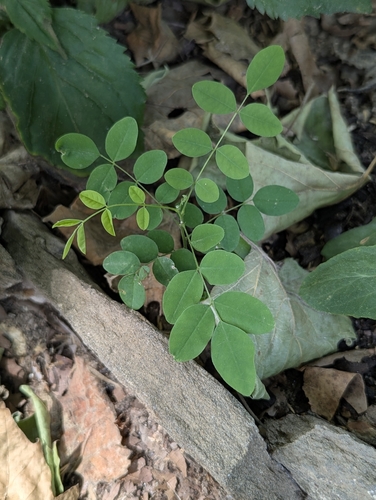
The Japanese Pagoda Tree has a broad, rounded canopy of dark green, compound leaves. It produces abundant creamy-white, pea-like flowers in large drooping clusters during late summer. Its most distinctive feature is the unique necklace-like seed pods, which are constricted between each seed and persist through winter.
Category
PlantsRarity
Common
Danger
0/5 · No known danger
Snaps
2
Ancient Chinese scholars often planted this tree as a symbol of wisdom!
Despite its name, this tree is actually native to China and Korea!
Its unique "necklace" pods can stay on the branches through winter!
The flowers and pods of this tree were once used to make yellow dye!
Japanese Pagoda Tree can survive dry spells because its deep roots help it find water, staying strong even when it's hot.
Japanese Pagoda Tree has tough leaves and a strong root system that help it thrive in city environments, shrugging off pollution.
Japanese Pagoda Tree can surprise you with late summer blooms, providing nectar for insects when other flowers have faded.
Apis mellifera
gathers nectar from its plentiful summer blooms.
Bombus impatiens
visits flowers for nectar, aiding pollination.
%2C_Parc_de_Woluw%C3%A9%2C_Brussels_(13042792905).jpg&width=800)
Parus major
builds nests in its sturdy branches and dense canopy.
Social animals live in organized groups, cooperating for survival benefits such as foraging, defense, and raising offspring.
This trait characterizes organisms whose diet consists entirely or primarily of plant material.
Forest habitats are terrestrial environments dominated by dense tree cover, supporting a high diversity of plant and animal life.
Diurnal animals are primarily active during daylight hours, typically resting or sleeping at night.

Describes organisms that transfer pollen, enabling the fertilization and reproduction of plants.
Danger
0/5 · No known danger
No special safety notes yet.
The easiest way to identify Japanese Pagoda Tree is to use the Snappit nature identifier app.
1000-2500 cm
1000-2000 cm
1-2 cm
Summer
No
Moderate
Perennial
Zoom in to split clusters and explore where this object has been snapped.
Jun 4, 2026
Curtis Hall ArboretumPhoto attribution
(c) Nelson Chu Pavlosky, some rights reserved (CC BY)
License: CC BY 4.0 ↗
Image may be shown cropped inside the card frame.

Pennsylvania, US
You might spot American Robin, Red-Winged Blackbird, and Lesser Celandine.
View guide →

Pennsylvania, US
You might spot Lesser Celandine, American Robin, and Garlic Mustard.
View guide →

Massachusetts, US
You might spot Grey Cross Spider, Common Milkweed, and Roses.
View guide →
Take the discovery with you
Snap it with Snappit to identify it, learn what makes it special, and add the discovery to your collection.








.jpg&width=800)



_001.jpg&width=800)




