





King colobus
Colobus polykomos
The King colobus is a beautiful monkey with long, fluffy fur and a special black and white coat. They love to swing through the trees in their forest homes and are very playful and social animals.
Habitat: Forests
The King colobus has a strikingly beautiful coat of glossy black fur, dramatically contrasted by a long, flowing white cape around its shoulders. It features a bright white tail tuft and white facial markings, making it instantly recognizable among other forest primates.
Category
MammalsRarity
Common
Danger
2/5 · Low
Snaps
Be the first to snap!
King colobus babies are born with pure white fur, but they quickly turn black as they grow!
King colobus spend most of their lives high up in the trees, rarely coming down to the ground!
These monkeys got their name 'colobus' because they have a very tiny, almost missing, thumb!
They communicate with each other using a variety of booming calls that echo through the forest.
King colobus can digest tough leaves because it has a specialized multi-chambered stomach, helping it get nutrients from food others can't.
King colobus has long, powerful limbs and a balancing tail that helps it swing and leap gracefully through high forest trees.
King colobus has a reduced thumb (vestigial) and strong fingers that help it grip branches tightly for incredible, silent leaps.
Mostly eats leaves, but also enjoys fruits, flowers, and seeds found high in the forest trees.
%2C_at_Ndumo_Nature_Reserve%2C_KwaZulu-Natal%2C_South_Africa_(28947411865).jpg&width=800)
Stephanoaetus coronatus
a primary aerial predator of young and adult colobus.
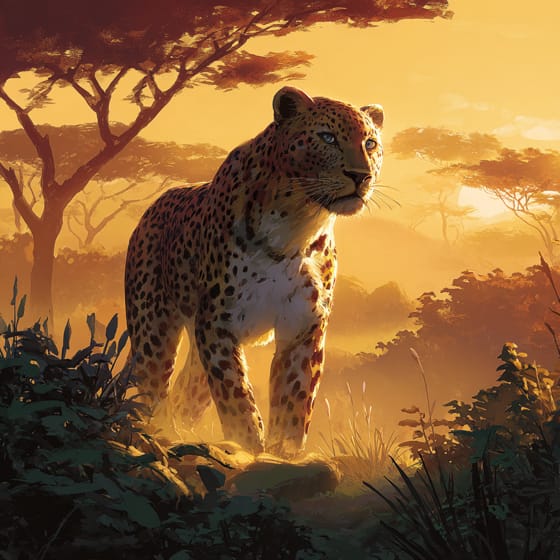
Panthera pardus
a significant ground predator in the colobus habitat.
Ficus exasperata
colobus consume its leaves and fruits, aiding seed dispersal.
Furry describes animals possessing a dense covering of soft hair or fur.
Social animals live in organized groups, cooperating for survival benefits such as foraging, defense, and raising offspring.
Arboreal animals live primarily in trees, utilizing them for shelter, food, and protection from predators.
This trait characterizes organisms whose diet consists entirely or primarily of plant material.

Forest habitats are terrestrial environments dominated by dense tree cover, supporting a high diversity of plant and animal life.

Diurnal animals are primarily active during daylight hours, typically resting or sleeping at night.

Endangered status indicates a species is at a very high risk of extinction in the wild in the near future.
Danger
2/5 · Low
Always watch from a distance and never try to touch wild animals like monkeys.
The easiest way to identify King colobus is to use the Snappit nature identifier app.
60-70 cm
6-14 kg
15-25 years
30 km/h
Mostly eats leaves, but also enjoys fruits, flowers, and seeds found high in the forest trees.
Forests
Foraging
Zoom in to split clusters and explore where this object has been snapped.
Recent snaps will appear here as new observations are added.

Illinois, US
You might spot Southern White Rhinoceros and Reticulated Giraffe.
View guide →
Louisiana, US
You might spot Tiger, North American River Otter, and Reticulated Giraffe.
View guide →

Florida, US
You might spot Macaques, Squirrel Monkeys, and Blackcap.
View guide →
Take the discovery with you
Snap it with Snappit to identify it, learn what makes it special, and add the discovery to your collection.




.jpg&width=800)

.JPG&width=800)


.jpg&width=800)
