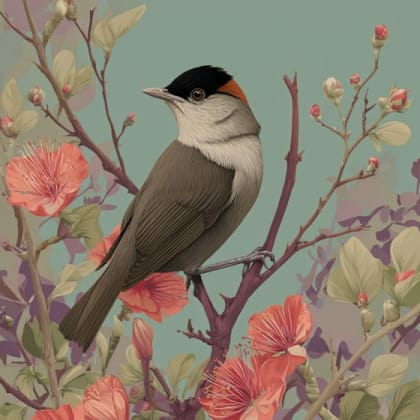





Blackcap

Monkey Jungle offers an immersive journey into a vibrant primate world.
Monkey Jungle offers an immersive journey into a vibrant primate world. This unique 30-acre zoological park in South Miami, Florida, flips the traditional zoo experience, allowing visitors to walk through enclosed pathways while hundreds of monkeys roam freely in semi-natural habitats. Established in 1933, it's celebrated for its distinctive approach, embodying its famous tagline: "Where humans are caged and monkeys run wild!". It stands as one of the few protected primate habitats in the United States and the only one publicly accessible in this engaging format.
The park is home to over 300 primates from various species, offering glimpses into diverse ecosystems across its key exhibits. Visitors can marvel at the Southeast Asian Java Macaques diving for treats in the Wild Monkey Swimming Pool & Trail, or observe King, the Western Lowland Gorilla, in the Cameroon Gorilla Forest. The Amazonian Rainforest, North America's only semi-natural tropical rainforest, teems with Squirrel Monkeys, Black-Capped Capuchins, and Howler Monkeys. Beyond primates, the Wings of Love sanctuary provides a haven for displaced tropical birds, and guests might also spot lemurs, sloths, turtles, tortoises, and even a Rhino Iguana.
Visiting Monkey Jungle is a memorable adventure that fosters a deep appreciation for wildlife and conservation. It provides a rare opportunity to observe primate behavior in a setting that closely mimics their natural environments, contributing to scientific research and education. The park's commitment to creating naturalistic habitats and offering unique up-close encounters, such as the special Rainforest Adventure tours where squirrel and capuchin monkeys might interact with guests, makes it an unforgettable destination for nature enthusiasts and curious minds alike. Unlock an interactive field guide for this spot: get the Snappit app to identify nature on the go.
Monkey Jungle was founded in 1933 by Joseph DuMond, an animal behaviorist with a vision to study endangered monkeys in semi-natural habitats. He initially released six Java Macaques into a dense subtropical forest in South Florida, mirroring their native environment. Due to a lack of government funding for his research, DuMond began charging admission to the public in 1935. The territorial nature of the free-roaming Java monkeys led to an innovative solution: instead of caging the primates, DuMond designed enclosed walkways and tunnels for human visitors, creating the park's distinctive "humans are caged" experience. Over the decades, Monkey Jungle expanded its mission to include conservation and education, becoming home to diverse primate species and establishing the Amazonian Rainforest exhibit with plants collected by DuMond's son, Frank, from Peru. The park also notably expanded the enclosure for King the Gorilla in 2001, following a campaign that garnered attention from primatologist Jane Goodall.
Walk through the unique mesh tunnels, observing monkeys and other animals roaming freely. Attend scheduled presentations and feeding shows. Participate in the special Rainforest Adventure Tour for a close-up interaction with squirrel and capuchin monkeys. Purchase designated food (like raisins) to feed certain primates via provided feeders.
South Florida experiences warm and humid weather year-round. The park's Amazonian Rainforest is maintained with an irrigation system to simulate its natural climate. Visiting during the cooler, drier months (roughly November to April) might be more comfortable. Early summer (June/July) can offer the chance to see baby squirrel monkeys.
The park primarily features enclosed walkways and trails. While specific details on full ADA compliance are not extensively published, the nature of the "caged walkways" and trails suggests a generally navigable path for most visitors. It is advisable to contact the venue directly for specific accessibility needs.
Witness Java Macaques diving for food in their naturalistic pool.
Explore North America's only semi-natural tropical rainforest, home to Squirrel Monkeys, Black-Capped Capuchins, and Howler Monkeys. Look for opportunities to participate in the Rainforest Adventure Tour for an immersive experience with these monkeys.
Observe King, the Western Lowland Gorilla.
A sanctuary housing a variety of displaced tropical parrots in free-flight domes.
Each card links to a full Explore page with photos, traits, and fun facts.
Start with the big picture, then zoom in to explore individual wildlife observations around this place.
Arrive Early
Get to the park soon after opening to experience fewer crowds and witness the animals at their most active.
Purchase Monkey Food
Enhance your experience by buying the designated monkey food (often raisins) at the entrance or from dispensers to feed monkeys through the provided chutes and cups.
Check Show Schedules
Consult the daily presentation schedule upon arrival to plan your visit around key feeding times and animal presentations, such as the Wild Monkey Swimming Pool show.
Wear Appropriate Footwear
Comfortable, closed-toe shoes are recommended, as some pathways are covered in cocoa mulch that may stain lighter footwear.
Secure Belongings
Be mindful of small or loose items, especially cameras or hats, as curious monkeys might try to grab them through the mesh, and items lost may not be retrievable.
Consider the Rainforest Adventure Tour
For a truly immersive experience, inquire about the guided Rainforest Adventure Tour, which offers a closer, interactive encounter with squirrel and capuchin monkeys.
Jul 17, 2024
Photo attribution
(c) ahaywood.geo, some rights reserved (CC BY)
License: CC BY 4.0 ↗
Image may be shown cropped inside the card frame.
Jun 1, 2026
Jun 1, 2026
Jun 1, 2026
Jun 1, 2026

Michigan, US
You might spot African Lion, Komodo Dragon, and Brown Bear.
View guide →
.jpg)
Municipal District of Cobh, IE
You might spot Ring-Tailed Lemur, Giraffes, and Cheetahs.
View guide →

Nouvelle-Aquitaine, FR
You might spot Greater Flamingo, Giraffes, and Red Panda.
View guide →

Texas, US
You might spot Giraffes, African Lion, and Eastern Black Rhinoceros.
View guide →
Take the discovery with you
Identify the wildlife you spot, learn as you go, and keep a collection of the adventure.