_Tipula_paludosa_on_Iris_leave.jpg&width=800)





Large Crane Flies
Tipulidae
Large crane flies are long-legged insects that look a bit like giant mosquitoes. They are harmless and often found near water, where they lay their eggs.
Habitat: Wetlands
The Large Crane Fly has a slender body and incredibly long, delicate legs, often twice its body length. They usually appear in shades of brown, grey, or yellow, lacking the scales of a mosquito. A distinctive V-shaped groove is visible on their back.
Category
InsectsRarity
Common
Danger
1/5 · Very low
Snaps
Be the first to snap!
Adult crane flies live only a few days, spending their time finding a mate.
If caught, they can shed a leg to escape, a trick called autotomy!
Many crane fly larvae live underground eating dead plants, helping soil stay healthy.
They look like giant mosquitoes but are totally harmless and cannot bite!
Large Crane Flies can shed a leg if caught by a predator, a trick called autotomy, helping them escape to safety.
Large Crane Flies larvae (leatherjackets) have strong mouthparts that help them munch on plant roots or decaying matter.
Large Crane Flies have a mosquito-like appearance that helps them avoid some predators, despite being completely harmless.
Adults sip nectar or don't eat, but larvae munch on decaying plants or plant roots.
Age differences: Larvae (leatherjackets) primarily feed on decaying organic matter or plant roots. Adults generally feed on nectar or not at all during their short lifespan.
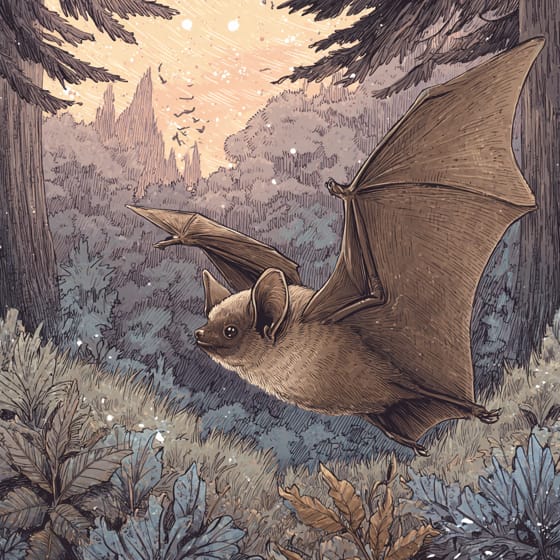
Myotis lucifugus
Hunts flying insects like crane flies at night.
Aranea diademata
Catches adults in its sticky web.

Poa pratensis
Larvae (leatherjackets) sometimes consume the roots.

Taraxacum officinale
Adults visit flowers for nectar, aiding pollination.
Solitary animals live alone for most of their lives, only interacting with others for mating or parental care.
This trait characterizes organisms whose diet consists entirely or primarily of plant material.
This habitat trait identifies species found in wetlands, which are areas of land saturated with water, either permanently or seasonally, including marshes, swamps, and bogs.
Diurnal animals are primarily active during daylight hours, typically resting or sleeping at night.

Giant describes organisms or objects of significantly larger size than average for their species or type.

Describes organisms that transfer pollen, enabling the fertilization and reproduction of plants.
No aliases listed yet.
Danger
1/5 · Very low
Crane flies are not dangerous, so you can watch them without worry!
The easiest way to identify Large Crane Flies is to use the Snappit nature identifier app.
25-65 mm
15-40 mm
5-15 days
5 km/h
Adults sip nectar or don't eat, but larvae munch on decaying plants or plant roots.
Wetlands
Foraging
Zoom in to split clusters and explore where this object has been snapped.
Recent snaps will appear here as new observations are added.
Take the discovery with you
Snap it with Snappit to identify it, learn what makes it special, and add the discovery to your collection.








.jpg&width=800)




