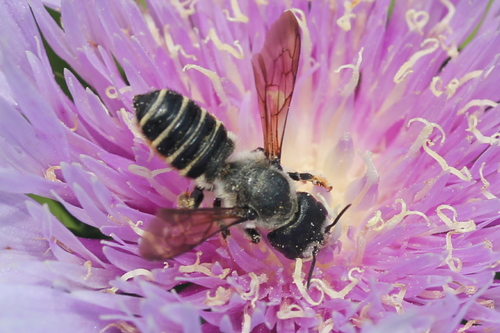





Leafcutter, Mortar, And Resin Bees
megachile
Leafcutter, mortar, and resin bees, belonging to the genus Megachile, are a fascinating group of solitary bees renowned for their architectural prowess. Instead of building massive wax hives, female Megachile bees use their robust jaws to snip perfect circles from leaves, petals, or collect plant resins to line their tubular nest cavities. As solitary insects, every female is a queen of her own domain, painstakingly foraging for pollen and nectar to provision individual brood cells for her offspring. These bees are incredibly efficient pollinators, often outperforming traditional honeybees on specific crops. Watching a leafcutter bee expertly scissor a piece of foliage and fly away with it tucked under her body is a delightful garden spectacle, highlighting the complex and varied survival strategies within the insect world.
Habitat: Found primarily in meadows, woodlands, and urban gardens, these bees nest in pre-existing cavities like hollow plant stems, dead wood, or abandoned beetle burrows.
Megachile bees are robust, medium-sized insects that typically measure between 0.5 and 2.0 centimeters in length. They generally have a black or dark-bodied appearance, often accented by pale, yellowish, or whitish bands of hair across their segmented abdomens. One of their most distinctive visual identifiers is the scopa, a dense brush of stiff hairs located on the underside of the female's abdomen used for carrying pollen, unlike honeybees which carry pollen on their hind legs. They possess noticeably large, powerful mandibles adapted for chewing and cutting plant material, and their wings are typically clear with a subtle brownish or smoky tint.
Category
InsectsRarity
Common
Danger
1/5 · Very low
Snaps
Be the first to snap!
A single alfalfa leafcutter bee can do the pollination work of up to 20 honeybees because their abdominal pollen collection method causes more pollen to brush off onto flowers.
Leafcutter bees do not have a queen or workers; every female is a fertile solitary bee that builds her own nest and provisions her own young.
Some species in this genus, known as resin bees, will collect sticky tree sap and use it as an antibacterial, waterproof glue to construct their brood cells.
When a female leafcutter bee finishes a nest tube, she uses thicker, more rigid circular leaf pieces to create a solid plug that defends the larvae against predators and parasites.
Females use their powerful, serrated mandibles to quickly snip perfectly circular or oval pieces from leaves and petals to construct their nests.
Unlike many bees that use their hind legs, leafcutters collect and transport pollen using a dense brush of specialized hairs called a scopa on the underside of their abdomen.
Certain species within the genus act as mortar or resin bees, utilizing mud, chewed plant fibers, or sticky tree resins to build and seal complex, weatherproof brood cells.
Adult Megachile bees feed on nectar for energy, while collecting both pollen and nectar to provision brood cells for their developing larvae.
Age differences: Larvae consume a provisioned mass of mixed pollen and nectar called bee bread, while adults primarily consume nectar for flight energy.

Medicago sativa
Megachile bees are exceptionally efficient pollinators for this important agricultural crop.
Coelioxys spp.
These cleptoparasitic bees sneak into Megachile nests to lay their own eggs on the provisioned pollen.

Misumena vatia
Crab spiders ambush and prey upon leafcutter bees while they forage on flowers.

Rosa multiflora
Frequently targeted by leafcutters for nesting materials due to their smooth, pliable leaves.
Furry describes animals possessing a dense covering of soft hair or fur.
Solitary animals live alone for most of their lives, only interacting with others for mating or parental care.
This trait characterizes organisms whose diet consists entirely or primarily of plant material.
Describes plants that are particularly attractive and beneficial to a wide range of pollinating organisms.
Diurnal animals are primarily active during daylight hours, typically resting or sleeping at night.
Describes a species whose presence and role have a disproportionately large effect on its environment.
This habitat trait indicates species that can coexist with humans in urban and suburban environments, utilizing man-made structures and green spaces.
Describes organisms that transfer pollen, enabling the fertilization and reproduction of plants.
No aliases listed yet.
Collections for this object will appear here as more themes are added.
Danger
1/5 · Very low
No special safety notes yet.
Compare the antennae, wings, waist, body hair and legs. Yellow and black stripes show up on bees, wasps and harmless mimics alike. Bee & Wasp Identifier: upload a photo and compare the visible details.
0-2 cm
1-3 cm
0.0001-0.0003 kg
1 years
24 km/h
Adult Megachile bees feed on nectar for energy, while collecting both pollen and nectar to provision brood cells for their developing larvae.
Found primarily in meadows, woodlands, and urban gardens, these bees nest in pre-existing cavities like hollow plant stems, dead wood, or abandoned beetle burrows.
Zoom in to split clusters and explore where this object has been snapped.
Recent snaps will appear here as new observations are added.
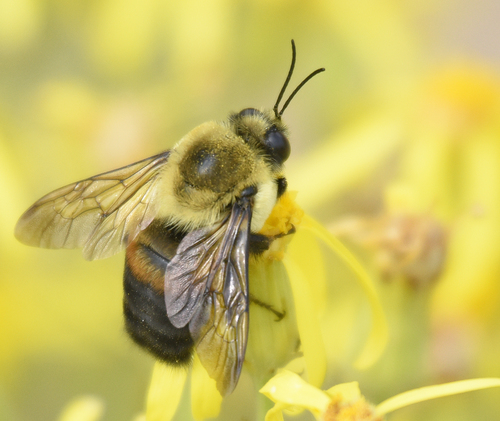
New York, US
You might spot Brown-Belted Bumble Bee and Eastern Gray Squirrel.
View guide →
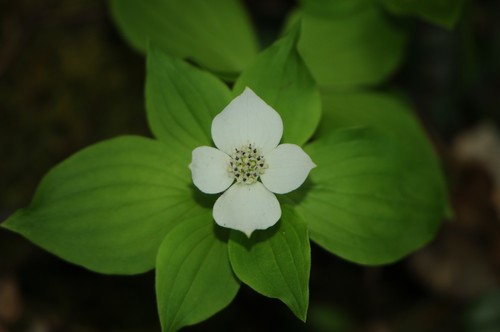
Maine, US
You might spot Canadian Bunchberry, Osprey, and Saltmarsh Greenhead Flies.
View guide →
Take the discovery with you
Snap it with Snappit to identify it, learn what makes it special, and add the discovery to your collection.