





multiflora rose
Rosa multiflora
Multiflora rose is a pretty plant with lots of small, colorful flowers. It grows in bushes and can be found in many places, making it a favorite for gardens and nature walks.
Habitat: Urban areas, fields, and gardens
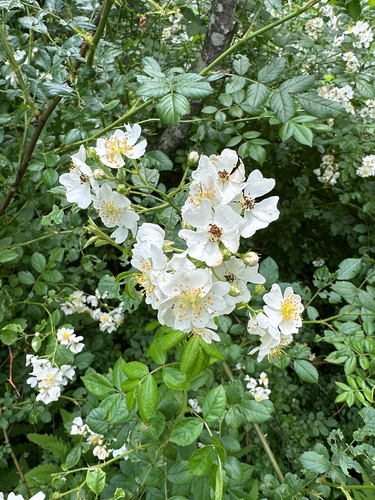
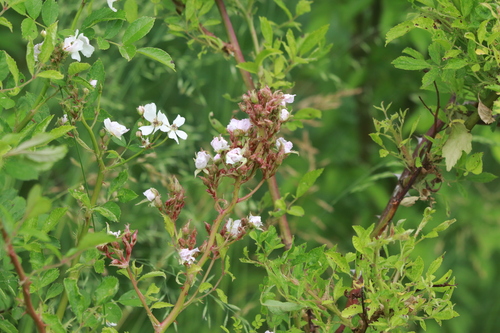
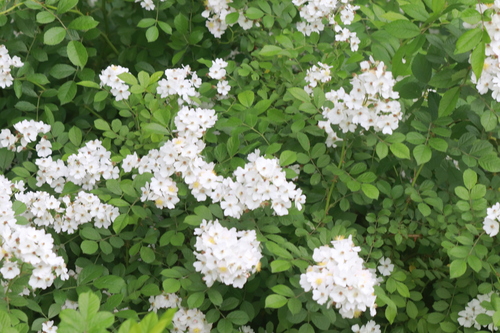
The multiflora rose is a dense, arching shrub with thorny stems and clusters of small, five-petaled white or pale pink flowers. Unlike many garden roses, its flowers are abundant and grow in dense groups along the branches, followed by tiny, bright red hips.
Category
PlantsRarity
Common
Danger
2/5 · Low
Snaps
134
A single multiflora rose bush can produce millions of tiny seeds, spreading easily!
It was brought to North America to help control erosion and create 'living fences'!
Its bright red fruit, called hips, are a superfood for birds in winter!
Some people make tasty jams and teas from its rose hips!
Multiflora rose has sharp, hooked thorns that protect its stems and leaves from hungry animals.
This rose can grow incredibly fast, quickly covering open ground and outcompeting other plants for space.
Its small, bright red hips contain many seeds that birds eat and then scatter far and wide.
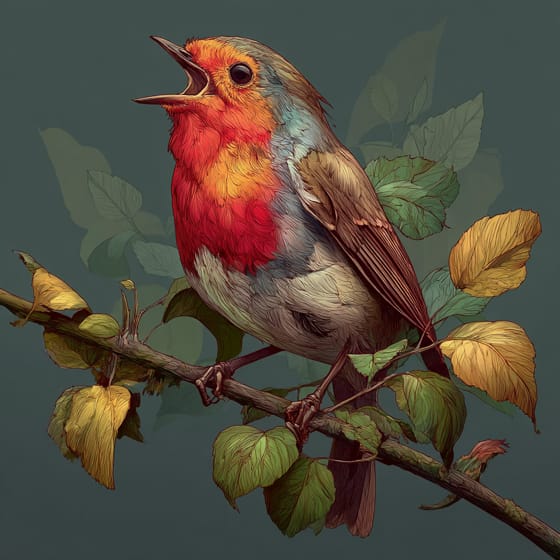
Turdus migratorius
Hips provide vital winter food for many bird species.
Apis mellifera
Bees and other insects gather nectar, aiding the plant's reproduction.
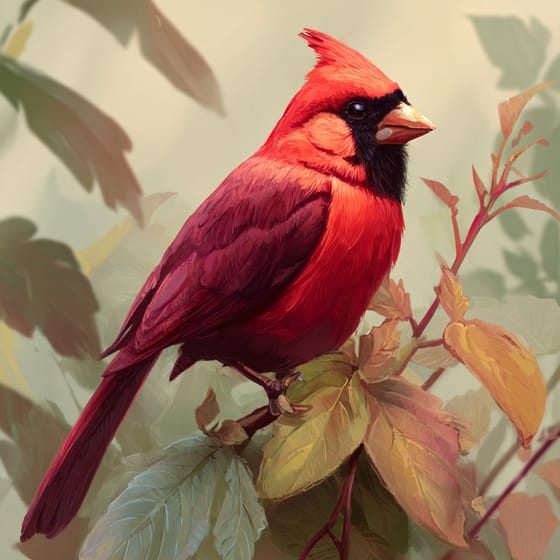
Cardinalis cardinalis
Dense, thorny thickets offer safe nesting and hiding places.

Odocoileus virginianus
Deer browse on the leaves, especially new growth.
Deciduous plants periodically shed all their leaves, typically during autumn or dry seasons.
Flowering plants are any plants that produce flowers as part of their reproductive cycle.
A shrub is a woody plant smaller than a tree, typically with multiple stems branching from or near the ground.
Summer blooming plants produce their flowers during the summer season, often providing vibrant color when many other plants have finished.

Fragrant flowers emit a pleasant aroma, often to attract pollinators or for defense.

Colorful describes organisms or objects displaying a wide range of bright and distinct colors.

Describes plants that are particularly attractive and beneficial to a wide range of pollinating organisms.

Rapid growing plants exhibit accelerated growth rates, quickly increasing in size and biomass within a short period.

This habitat trait indicates species that can coexist with humans in urban and suburban environments, utilizing man-made structures and green spaces.

Invasive species are non-native organisms that cause harm to the environment, economy, or human health.
Danger
2/5 · Low
Be careful when touching the plant, as it has thorns that can prick your skin.
The easiest way to identify multiflora rose is to use the Snappit nature identifier app.
300-500 cm
300-600 cm
1.5-4 cm
Late spring to early summer
Yes
None
Perennial
Zoom in to split clusters and explore where this object has been snapped.
Jun 19, 2026
Days Ferry Historic DistrictPhoto attribution
(c) Doug Suitor, some rights reserved (CC BY)
License: CC BY 4.0 ↗
Image may be shown cropped inside the card frame.
Jun 7, 2026
East Windsor Hill Historic DistrictPhoto attribution
(c) Mark Apgar, some rights reserved (CC BY)
License: CC BY 4.0 ↗
Image may be shown cropped inside the card frame.
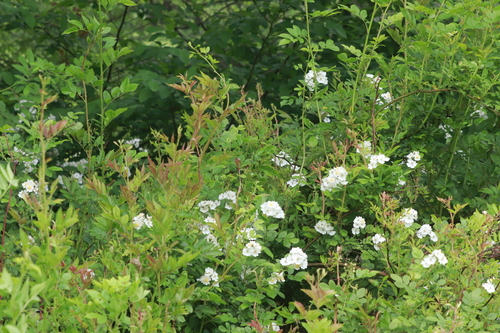
Jun 7, 2026
East Windsor Hill Historic DistrictPhoto attribution
(c) Mark Apgar, some rights reserved (CC BY)
License: CC BY 4.0 ↗
Image may be shown cropped inside the card frame.
Jun 6, 2026
East Windsor Hill Historic DistrictPhoto attribution
(c) Mark Apgar, some rights reserved (CC BY)
License: CC BY 4.0 ↗
Image may be shown cropped inside the card frame.

Rhode Island, US
You might spot Common Mugwort, Duck, and Azure Bluet.
View guide →

Rhode Island, US
You might spot Common Eastern Bumble Bee and Osprey.
View guide →

Rhode Island, US
You might spot Rugosa Rose and American Herring Gull.
View guide →
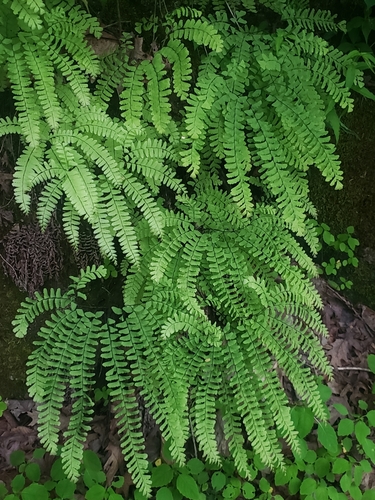
Iowa, US
You might spot Northern Maidenhair Fern and Wood Nettle.
View guide →

Ohio, US
You might spot Large White Trillium, Fire Pink, and Christmas Fern.
View guide →

Rhode Island, US
You might spot Spotted Lanternfly, Duck, and American Robin.
View guide →
Take the discovery with you
Snap it with Snappit to identify it, learn what makes it special, and add the discovery to your collection.







.jpg&width=800)

_001.jpg&width=800)




