Leafy Hornmouth
Ceratostoma foliatum
The Leafy Hornmouth is a special sea snail that looks like a tiny leaf! It has a unique shape and can blend in with its surroundings, making it hard to spot.
Habitat: Coastal areas
The Leafy Hornmouth is a master of disguise, featuring a flattened, bright green or mottled brown body that perfectly mimics a fresh or decaying leaf. It possesses two short, horn-like protrusions near its powerful mouthparts, giving it a unique, rugged appearance.
Category
InvertebrateRarity
Common
Danger
1/5 · Very low
Snaps
1
Baby Leafy Hornmouths are called nymphs and look like miniature, wingless versions!
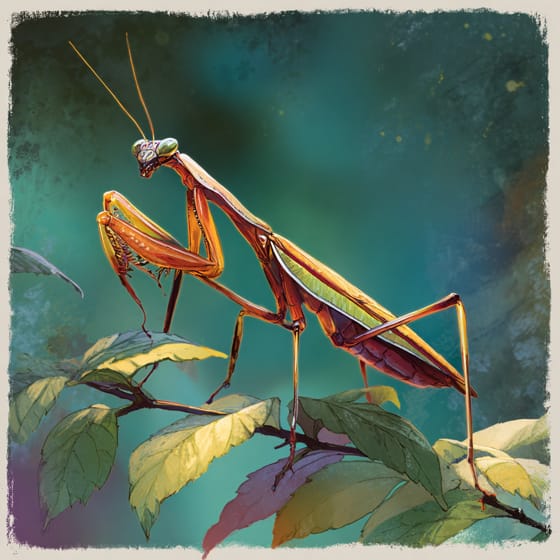
Its wings are so leaf-like, even experienced bug-spotters often miss it!
Some Leafy Hornmouths can even sway in the wind, just like a real leaf!
This insect moves incredibly slowly to avoid being detected by hungry birds.
The Leafy Hornmouth can perfectly blend into its leafy surroundings because of its flattened body and textured wings that resemble plant foliage, helping them hide from predators.
The Leafy Hornmouth has strong, horn-like mandibles that help them defend against small attackers or strip tough plant matter for food.
The Leafy Hornmouth can produce subtle vibrations through its legs and abdomen that helps them communicate warnings or attract mates without attracting predators.
This insect munches on leaves, buds, and soft plant stems, helping to keep forests tidy.
Solitary animals live alone for most of their lives, only interacting with others for mating or parental care.
Camouflaged describes organisms that possess coloring or patterns that allow them to blend into their environment.
Filter feeders obtain nutrients by straining suspended food particles and small organisms from water.
This trait characterizes organisms whose diet consists entirely or primarily of plant material.

Coastal habitats are dynamic environments located along the interface between land and sea, influenced by tides, waves, and saltwater.

This trait identifies organisms whose diet consists entirely or primarily of animal tissue.

Diurnal animals are primarily active during daylight hours, typically resting or sleeping at night.

Pertaining to species that are significantly smaller than typical or average for their kind.

Marine habitats encompass all saltwater environments of the Earth's oceans, supporting an immense diversity of aquatic life.
No aliases listed yet.
Danger
1/5 · Very low
Always look but don't touch sea creatures without asking an adult.
The easiest way to identify Leafy Hornmouth is to use the Snappit nature identifier app.
40-80 mm
25-50 mm
100-200 days
5 km/h
This insect munches on leaves, buds, and soft plant stems, helping to keep forests tidy.
Coastal areas
Foraging
Zoom in to split clusters and explore where this object has been snapped.
Take the discovery with you
Snap it with Snappit to identify it, learn what makes it special, and add the discovery to your collection.