




Legumes
Fabaceae
Legumes are special plants that grow in pods and can be found in many places. They are important for the soil and can help feed people and animals.
Habitat: Grasslands
The Legumes family encompasses plants with diverse forms, often featuring pinnately compound leaves. Many produce characteristic pea-like flowers, typically in shades of white, yellow, pink, or purple, and develop distinctive seed pods.
Category
PlantsRarity
Common
Danger
1/5 · Very low
Snaps
Be the first to snap!
Did you know a single peanut plant can grow up to 50 peanuts underground?
Some ancient legume seeds, like Arctic lupine, have sprouted after 10,000 years!
The amazing Mimosa pudica, a legume, can quickly fold its leaves when you touch them!
The pods of certain legumes, such as carob, are eaten and even used as a chocolate substitute!
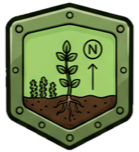
Legumes can house special bacteria in their roots that convert air's nitrogen into plant food.
Legumes develop unique seed pods that protect seeds and often split open to disperse them far away.
Legumes form a helpful partnership with bacteria, sharing food and making soil richer.
Rhizobium leguminosarum
fixes nitrogen in root nodules for legumes
Apis mellifera
visits legume flowers for their abundant nectar

Oryctolagus cuniculus
feeds on clover and other low-growing legumes
Orobanche minor
attaches to legume roots, drawing nutrients
Deciduous plants periodically shed all their leaves, typically during autumn or dry seasons.
Flowering plants are any plants that produce flowers as part of their reproductive cycle.
Describes organisms capable of converting atmospheric nitrogen into compounds usable by plants.
Drought-tolerant plants can survive and flourish in conditions with limited water availability.

This human use trait describes species cultivated or domesticated by humans for agricultural purposes, including crops and livestock.

Edible plants are those parts of a plant that are considered safe for human consumption.

Grassland habitats are terrestrial biomes dominated by grasses and herbaceous plants, supporting a variety of grazing animals.

Rapid growing plants exhibit accelerated growth rates, quickly increasing in size and biomass within a short period.

Describes a relationship between two different species where they live in close association, often benefiting one or both.

Describes a species whose presence and role have a disproportionately large effect on its environment.
Danger
1/5 · Very low
Always wash your hands after touching plants, and don't eat anything you find outside without asking an adult.
The easiest way to identify Legumes is to use the Snappit nature identifier app.
5-3000 cm
5-2000 cm
0.5-15 cm
Spring-summer
Yes
None
Perennial
Zoom in to split clusters and explore where this object has been snapped.
Recent snaps will appear here as new observations are added.
Take the discovery with you
Snap it with Snappit to identify it, learn what makes it special, and add the discovery to your collection.







.jpg&width=800)



_001.jpg&width=800)



