





lesser celandine
Ficaria verna
Lesser celandine is a bright yellow flower that blooms in spring. It grows close to the ground and loves to spread across gardens and fields, making them look sunny and cheerful.
Habitat: Woodlands
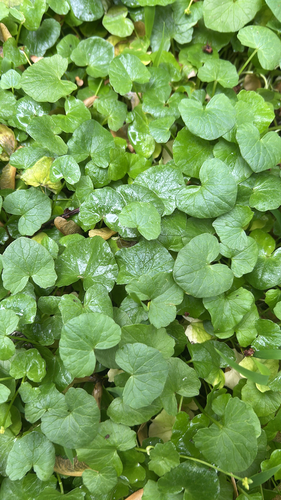
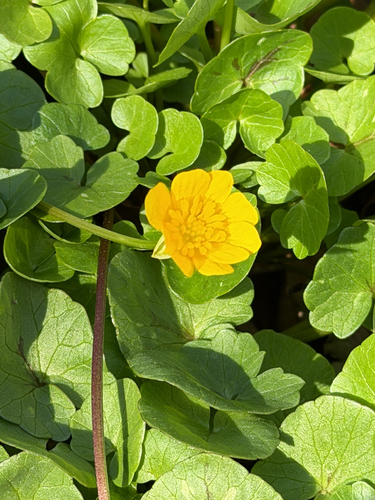
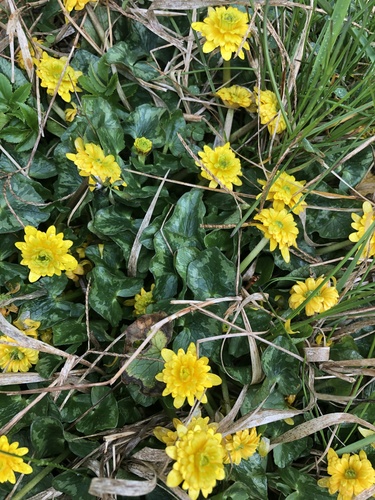
The lesser celandine has bright, glossy yellow flowers, typically with 8-12 petals that radiate around a central cluster of stamens. Its heart-shaped, dark green leaves are often shiny and grow low to the ground, forming dense carpets.
Category
PlantsRarity
Common
Danger
2/5 · Low
Snaps
43
It vanishes by early summer, waiting hidden underground for next spring's warmth!
It's one of spring's first flowers, sometimes blooming right through late snow!
Its glossy yellow petals act like tiny mirrors, reflecting light for early insects!
Its tiny roots swell like little figs, giving it part of its scientific name!
Lesser celandine can bloom very early, before trees grow leaves, helping it get lots of sun.
It has special tubers in its roots to store energy, helping it survive winter and regrow.
Lesser celandine can produce a mild toxin when fresh, which helps protect it from being eaten.
Bombus terrestris
visits flowers for nectar and pollen.
Apis mellifera
a vital source of early spring nectar.
Arion vulgaris
grazes on its leaves and flowers.
Flowering plants are any plants that produce flowers as part of their reproductive cycle.
Spring blooming plants produce their flowers during the spring season, often signifying the end of winter and the start of new growth.
Medicinal plants possess chemical compounds that can be used for therapeutic purposes to treat illnesses or maintain health.
Edible plants are those parts of a plant that are considered safe for human consumption.

Describes plants that are particularly attractive and beneficial to a wide range of pollinating organisms.

Rapid growing plants exhibit accelerated growth rates, quickly increasing in size and biomass within a short period.

Forest habitats are terrestrial environments dominated by dense tree cover, supporting a high diversity of plant and animal life.
Danger
2/5 · Low
Do not eat any part of the plant, as it can make you feel unwell.
The easiest way to identify lesser celandine is to use the Snappit nature identifier app.
5-20 cm
10-30 cm
2-3 cm
Late winter to early spring
No
Mild
Perennial
Zoom in to split clusters and explore where this object has been snapped.
May 6, 2026
Duke GardensPhoto attribution
no rights reserved
License: CC0 1.0 ↗
Image may be shown cropped inside the card frame.
Apr 13, 2026
South Mountain ReservationPhoto attribution
(c) Tom Pollard, some rights reserved (CC BY)
License: CC BY 4.0 ↗
Image may be shown cropped inside the card frame.
Apr 1, 2023
Morris ArboretumPhoto attribution
(c) Andrew Conboy, some rights reserved (CC BY)
License: CC BY 4.0 ↗
Image may be shown cropped inside the card frame.

Ohio, US
You might spot Widow Skimmer, Eastern Pondhawk, and Bee.
View guide →

New York, US
You might spot Allegheny Mountain Dusky Salamander.
View guide →

Ohio, US
You might spot Blue-Fronted Dancer, American Rubyspot, and Fowler's Toad.
View guide →

Tennessee, US
You might spot American Robin, Northern Cardinal, and Eastern Chipmunk.
View guide →

New Jersey, US
You might spot Monarch, Great Blue Heron, and American Robin.
View guide →
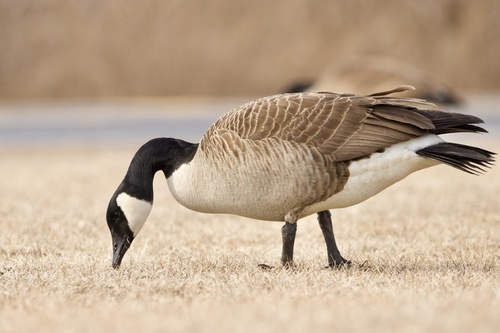
Illinois, US
You might spot Canada Goose, House Sparrow, and Rock Pigeon.
View guide →
Take the discovery with you
Snap it with Snappit to identify it, learn what makes it special, and add the discovery to your collection.







.jpg&width=800)



_001.jpg&width=800)



