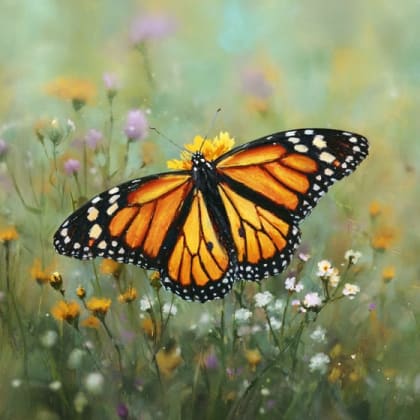





Monarch Butterfly

Duke Farms is a sprawling 2,740-acre estate in Hillsborough, New Jersey, transformed into a center for conservation science and a haven for nature lovers.
Duke Farms is a sprawling 2,740-acre estate in Hillsborough, New Jersey, transformed into a center for conservation science and a haven for nature lovers. It offers a unique opportunity to experience a diverse landscape of woodlands, meadows, wetlands, and trails, showcasing sustainable practices and inspiring visitors to become stewards of the land. It's a place where history and ecological innovation beautifully intertwine, making it a compelling destination for all ages.
While the original indoor "Duke Gardens" with their elaborate international displays closed in 2008, Duke Farms now focuses on its expansive outdoor "Living Habitats" and a remarkable Orchid Range. Visitors can explore 18 miles of trails, including paved and unpaved options, leading through varied ecosystems where native plants thrive and wildlife, such as bald eagles and great blue herons, can be observed. The Orchid Range, housed in a renovated conservatory, continues Doris Duke's horticultural legacy with nearly 2,000 orchids across 1,300 varieties, including the famous 'Phalaenopsis Doris'.
Duke Farms is more than just a beautiful park; it's a dynamic learning environment dedicated to a nature-positive, carbon-negative future. From its community gardens fostering organic practices to its ongoing habitat restoration efforts, every visit offers a chance to connect with nature, learn about sustainability, and be inspired by a powerful vision for environmental health. The combination of historical grandeur and modern ecological commitment creates a truly memorable and impactful experience. Planning to visit? Download the Snappit app to identify the wildlife you spot in real-time.
Duke Farms' origins trace back to the late 19th century when James Buchanan Duke, founder of the American Tobacco Company, began acquiring land along the Raritan River, eventually amassing 2,740 acres. He envisioned a grand estate, complete with artificial lakes, miles of roads, and millions of trees. After his death in 1925, his daughter, Doris Duke, inherited the property. Doris Duke continued to develop the estate, and from 1958 to 1963, she designed and installed the renowned "Duke Gardens," an elaborate collection of 11 indoor display gardens under glass, which opened to the public in 1964. However, in 2008, the Doris Duke Charitable Foundation decided to close and dismantle these indoor gardens to refocus the entire 2,740-acre property on environmental stewardship and education, transforming it into the Duke Farms we know today. After extensive reorganization and a $45-million renovation, Duke Farms officially reopened to the public on May 19, 2012, with a new mission to inspire environmental awareness and sustainable practices.
Walk or bike the extensive trails, explore the Orchid Range, learn about sustainable practices at the Farm Barn, observe birds and other wildlife, and enjoy a picnic amidst scenic landscapes. Educational programs and events are also regularly offered.
Spring: Bustling with awakening gardens and migratory birds.
Summer: Gardens are in full bloom with a variety of colors.
Fall: Crisp air and vibrant fall foliage, especially in November.
Winter: Peaceful and less crowded, with opportunities for winter walks and a warm escape in the Orchid Range.
Duke Farms is highly committed to accessibility. Over 15 miles of trails are flat, paved, and more than 36 inches wide. An Accessibility Shuttle runs from the Orientation Center to the Orchid Range (April-October) for visitors with mobility challenges, requiring pre-registration. The Farm Barn Orientation Center and Orchid Range have automatic door openers and accessible restrooms, including a private universal restroom. Duke Farms is also a KultureCity Sensory Inclusive™ certified venue, offering Sensory Inclusive™ Bags.
Home to nearly 2,000 orchids, including tropical and subtropical species, and the historic 'Phalaenopsis Doris'.
The starting point for most visits, offering educational exhibits, interactive displays, a café, and trail maps.
Over 18 miles of trails wind through meadows, woodlands, wetlands, and along lakes. 12 miles are bike-friendly, and 4 miles are paved and wheelchair accessible.
Where native plants are propagated for habitat regeneration.
Each card links to a full Explore page with photos, traits, and fun facts.





































Start with the big picture, then zoom in to explore individual wildlife observations around this place.
Bring your own water bottle
** Duke Farms is a zero single-use plastic site, with hydration stations available at the Farm Barn Café, Farm Barn vestibule, and Orchid Range.
Dress for the weather
The property is almost entirely outdoors, so wear comfortable, season-appropriate footwear and consider sunscreen, hats, and layered clothing.
Reserve Saturday parking passes in advance: If visiting on a Saturday between April and October, secure your free parking pass online, as they are required and released weekly.
Consider visiting on weekdays
Weekdays tend to be less crowded, offering a more tranquil experience.
Download the Duke Farms app
The app can provide turn-by-turn navigation, information on programming, and details about landmarks.
Pack a picnic
Picnics are welcomed, with many scenic spots to enjoy a meal. Remember to carry out everything you bring in.
Jun 19, 2026
Photo attribution
(c) Natalie Lemanski, some rights reserved (CC BY-SA)
License: CC BY-SA 4.0 ↗
Image may be shown cropped inside the card frame.
Jun 19, 2026
Photo attribution
(c) Natalie Lemanski, some rights reserved (CC BY-SA)
License: CC BY-SA 4.0 ↗
Image may be shown cropped inside the card frame.
Jun 16, 2026
Photo attribution
(c) Natalie Lemanski, some rights reserved (CC BY-SA)
License: CC BY-SA 4.0 ↗
Image may be shown cropped inside the card frame.
Jun 5, 2026
Photo attribution
(c) Natalie Lemanski, some rights reserved (CC BY-SA)
License: CC BY-SA 4.0 ↗
Image may be shown cropped inside the card frame.
May 6, 2026
Photo attribution
no rights reserved
License: CC0 1.0 ↗
Image may be shown cropped inside the card frame.

Maryland, US
You might spot White-Tailed Deer and Eastern Gray Squirrel.
View guide →
.jpg)
District of Columbia, US
You might spot Eastern Gray Squirrel, Duck, and House Sparrow.
View guide →

Illinois, US
You might spot American Robin, Canada Goose, and House Sparrow.
View guide →

Virginia, US
You might spot Spotted Lanternfly and Northern Cardinal.
View guide →
Take the discovery with you
Identify the wildlife you spot, learn as you go, and keep a collection of the adventure.