





Mantled Guereza
Colobus guereza
The Mantled Guereza, also known as the Black-and-white Colobus, is a playful monkey with beautiful black and white fur. They love to swing through trees and are often seen in groups, having fun together!
Habitat: Forests
The Mantled Guereza is a striking black-and-white monkey with a U-shaped mantle of long white fur flowing down its back. It has a fluffy white tail tuft and a bare, black face framed by white fur. This unique coat pattern makes it stand out from other forest primates.
Category
MammalsRarity
Common
Danger
2/5 · Low
Snaps
Be the first to snap!
Baby guerezas are born pure white, then grow their famous black and white fur!
Their booming calls can be heard up to a mile away in the forest!
Their fluffy white 'mantle' cape makes them look extra fancy!
They can sleep sitting upright in trees, even swaying in the wind!
Mantled Guerezas have a special multi-chambered stomach to break down tough leaves, helping them digest a diet most other monkeys can't.
Mantled Guerezas can leap incredible distances using powerful legs, which helps them move swiftly through the canopy for food and safety.
Mantled Guerezas make loud, booming calls to warn their group of predators, ensuring the safety of their family in the dense forest.
These monkeys are mostly vegetarians, happily munching on fresh leaves and fruits high in the trees.
%2C_at_Ndumo_Nature_Reserve%2C_KwaZulu-Natal%2C_South_Africa_(28947411865).jpg&width=800)
Stephanoaetus coronatus
A powerful bird of prey in their forest habitat.
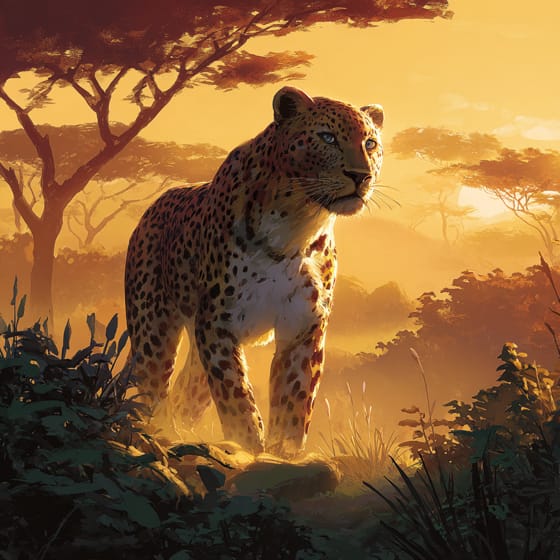
Panthera pardus
A top predator that hunts these monkeys from the ground.
Ficus sycomorus
They forage on the leaves and fruits of this common tree.
Celtis africana
They rest and sleep high in the branches of large canopy trees.
Furry describes animals possessing a dense covering of soft hair or fur.
Social animals live in organized groups, cooperating for survival benefits such as foraging, defense, and raising offspring.
Arboreal animals live primarily in trees, utilizing them for shelter, food, and protection from predators.
This trait characterizes organisms whose diet consists entirely or primarily of plant material.

Forest habitats are terrestrial environments dominated by dense tree cover, supporting a high diversity of plant and animal life.

Diurnal animals are primarily active during daylight hours, typically resting or sleeping at night.

This trait identifies organisms that exhibit exceptional swiftness in movement for hunting, escape, or travel.

Endangered status indicates a species is at a very high risk of extinction in the wild in the near future.
Danger
2/5 · Low
Always watch from a distance and never try to touch wild animals.
The easiest way to identify Mantled Guereza is to use the Snappit nature identifier app.
50-71 cm
6-14 kg
18-24 years
50 km/h
These monkeys are mostly vegetarians, happily munching on fresh leaves and fruits high in the trees.
Forests
Foraging
Zoom in to split clusters and explore where this object has been snapped.
Recent snaps will appear here as new observations are added.
Take the discovery with you
Snap it with Snappit to identify it, learn what makes it special, and add the discovery to your collection.





.jpg&width=800)

.JPG&width=800)


.jpg&width=800)
