





Marsh Thistle
Cirsium palustre
Marsh thistles are tall plants with spiky purple flowers that grow in wet areas. They are important for insects and can be found near ponds and marshes.
Habitat: Wetlands
The Marsh Thistle has a tall, slender, and distinctly spiny stem, often branching near the top. Its deep purple flower heads are smaller than many other thistles and grow in dense clusters. The leaves are deeply lobed and fiercely spiky.
Category
PlantsRarity
Common
Danger
2/5 · Low
Snaps
Be the first to snap!
It thrives in damp meadows, showing where water is close by.
Its feathery seed parachutes are called 'thistle-down'.
Marsh Thistle can grow taller than most kids!
This plant is a super magnet for bees and butterflies!
Marsh Thistle has sharp spines covering its leaves and stem that help it defend against hungry herbivores.
Marsh Thistle can grow in very waterlogged soils, thriving where many other plants would struggle to survive.
Marsh Thistle's seeds have feathery parachutes, allowing them to ride the wind and spread to new places.
Apis mellifera
collects nectar and pollen
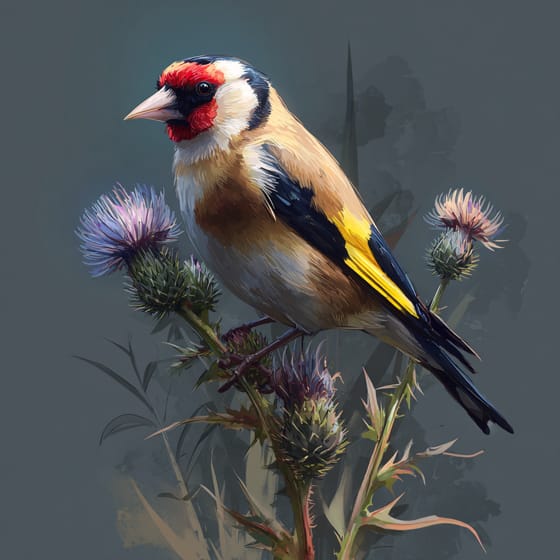
Carduelis carduelis
feasts on its seeds

Vanessa cardui
visits flowers for nectar
Flowering plants are any plants that produce flowers as part of their reproductive cycle.
Biennial plants complete their life cycle over two growing seasons, typically forming foliage in the first year and flowering/seeding in the second.
Summer blooming plants produce their flowers during the summer season, often providing vibrant color when many other plants have finished.
Describes plants that are particularly attractive and beneficial to a wide range of pollinating organisms.

Possessing sharp, pointed projections or spines on the body or surface.

This habitat trait identifies species found in wetlands, which are areas of land saturated with water, either permanently or seasonally, including marshes, swamps, and bogs.

Describes a species whose presence and role have a disproportionately large effect on its environment.

Describes organisms that transfer pollen, enabling the fertilization and reproduction of plants.
No aliases listed yet.
Danger
2/5 · Low
Be careful around thistles; their sharp leaves can prick your skin.
The easiest way to identify Marsh Thistle is to use the Snappit nature identifier app.
50-200 cm
30-60 cm
1-2 cm
Summer
No
None
Biennial
Zoom in to split clusters and explore where this object has been snapped.
Recent snaps will appear here as new observations are added.
Take the discovery with you
Snap it with Snappit to identify it, learn what makes it special, and add the discovery to your collection.








.jpg&width=800)



_001.jpg&width=800)




