





Mediterranean Gull
Ichthyaetus melanocephalus
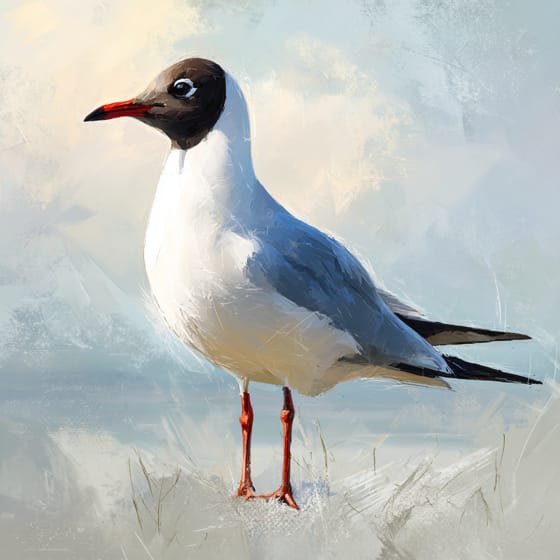
The Mediterranean Gull is a beautiful bird with a black head and a bright white body. It loves to live near the sea and can often be seen flying over beaches and coastal areas.
Habitat: Coastal areas
The Mediterranean Gull has a distinctive black head during breeding, bright red bill and legs, and pale grey upperparts. Unlike other gulls, its wingtips are entirely white, making it stand out visually.
Category
BirdsRarity
Common
Danger
1/5 · Very low
Snaps
Be the first to snap!
Despite its name, many now breed far from the Mediterranean Sea!
Their breeding range has expanded dramatically northwards in recent decades!
They often gather in huge flocks, sometimes thousands strong!
Young gulls take two years to grow their full black head feathering!
Mediterranean Gull has a unique 'laughing' call that helps them communicate across noisy environments.
Mediterranean Gull can find food in diverse habitats because of its flexible diet and keen eyesight.
Mediterranean Gull can perform agile aerial maneuvers because of its streamlined body and strong wings.
This gull enjoys a varied menu, from insects and worms to small fish and scraps!
Lumbricus terrestris
Consumes them from soil in fields.
Chroicocephalus ridibundus
Often nests in mixed colonies for collective defense.
Atherina boyeri
Preys on small schooling fish near coasts.
Triticum aestivum
Feeds on discarded grains in farm fields.
Feathered describes animals, primarily birds, possessing a covering of feathers.
Social animals live in organized groups, cooperating for survival benefits such as foraging, defense, and raising offspring.
Aerial creatures spend a significant portion of their lives airborne, utilizing flight for various activities such as hunting, migration, or nesting.
Colorful describes organisms or objects displaying a wide range of bright and distinct colors.

Piscivorous organisms are animals that primarily subsist on a diet of fish.

Coastal habitats are dynamic environments located along the interface between land and sea, influenced by tides, waves, and saltwater.

Diurnal animals are primarily active during daylight hours, typically resting or sleeping at night.

Marine habitats encompass all saltwater environments of the Earth's oceans, supporting an immense diversity of aquatic life.

Migratory animals undertake seasonal movements from one region to another, typically in response to changes in climate or food availability.
No aliases listed yet.
Danger
1/5 · Very low
Always watch birds from a distance and don't try to touch them.
The easiest way to identify Mediterranean Gull is to use the Snappit nature identifier app.
36-40 cm
90-100 cm
0.2-0.35 kg
10-15 years
50 km/h
This gull enjoys a varied menu, from insects and worms to small fish and scraps!
Coastal areas
Zoom in to split clusters and explore where this object has been snapped.
Recent snaps will appear here as new observations are added.
Take the discovery with you
Snap it with Snappit to identify it, learn what makes it special, and add the discovery to your collection.




.jpg&width=800)







