.jpg&width=800)





Menzies' Larkspur
Delphinium menziesii
Menzies' Larkspur is a beautiful flower that grows in the wild. It has tall stems and bright blue flowers that look like tiny stars. These flowers are loved by butterflies and bees!
Habitat: Mountain regions
The Menzies' Larkspur has slender, upright stems topped with loose clusters of striking deep blue to purple flowers, each with a distinctive spur at the back. Its deeply lobed leaves form a basal clump, making it stand out from surrounding green foliage.
Category
PlantsRarity
Common
Danger
2/5 · Low
Snaps
2
"Larkspur" comes from the flower's spur looking like a lark bird's claw!
Despite its beauty, eating any part of this plant is extremely dangerous!
Native American tribes historically used its crushed flowers to make a beautiful blue dye.
The plant's vibrant blue color acts like a "bee magnet" for hungry pollinators!
Menzies' Larkspur can produce deadly compounds that protect it from most hungry animals trying to eat its leaves.
Its uniquely spurred flowers act like a special landing pad, guiding long-tongued bumblebees directly to the hidden nectar.
Menzies' Larkspur has a robust taproot that reaches deep into the soil to find water during dry summer months.
Bombus appositus
drinks nectar and transfers pollen between flowers.
Bombus bifarius
collects nectar and pollen, aiding plant reproduction.
Nysius californicus
feeds on the seeds of various plants, including larkspur.
Aromatic plants produce and emit fragrant volatile organic compounds, often for defense or to attract pollinators.
Flowering plants are any plants that produce flowers as part of their reproductive cycle.
Biennial plants complete their life cycle over two growing seasons, typically forming foliage in the first year and flowering/seeding in the second.
Spring blooming plants produce their flowers during the spring season, often signifying the end of winter and the start of new growth.

Summer blooming plants produce their flowers during the summer season, often providing vibrant color when many other plants have finished.

Fragrant flowers emit a pleasant aroma, often to attract pollinators or for defense.

Colorful describes organisms or objects displaying a wide range of bright and distinct colors.

Describes plants that are particularly attractive and beneficial to a wide range of pollinating organisms.

This habitat trait identifies species found in mountainous regions, characterized by high elevation, steep slopes, and varying climate zones.

Describes organisms that transfer pollen, enabling the fertilization and reproduction of plants.

Endangered status indicates a species is at a very high risk of extinction in the wild in the near future.
No aliases listed yet.
Danger
2/5 · Low
Do not touch or eat any wildflowers without asking an adult first.
The easiest way to identify Menzies' Larkspur is to use the Snappit nature identifier app.
10-60 cm
2-4 cm
Spring to early Summer
No
Deadly
Perennial
Insect
Zoom in to split clusters and explore where this object has been snapped.

British Columbia, CA
You might spot Bald Eagle, Great Blue Heron, and Seal.
View guide →

Oregon, US
You might spot Rough-Skinned Newt and Pacific Banana Slug.
View guide →

British Columbia, CA
You might spot Broad-Leaved Stonecrop, Western Skunk Cabbage, and Salal.
View guide →
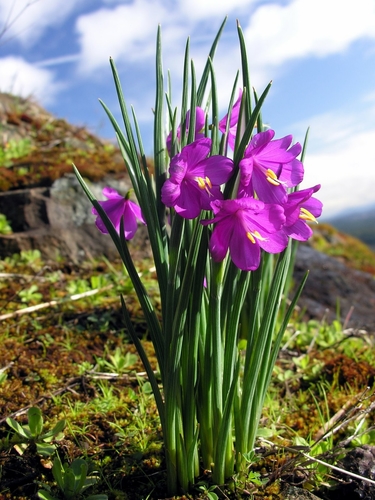
British Columbia, CA
You might spot Grasswidow and Broad-Leaved Stonecrop.
View guide →
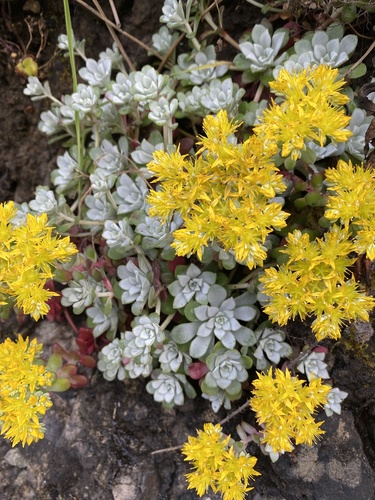
British Columbia, CA
You might spot Broad-Leaved Stonecrop and Western Rattlesnake Plantain.
View guide →
Take the discovery with you
Snap it with Snappit to identify it, learn what makes it special, and add the discovery to your collection.








.jpg&width=800)


_001.jpg&width=800)




