





Lanky Moss
Rhytidiadelphus loreus
Lanky Moss is a soft, green plant that grows in shady places like forests. It looks like a tiny carpet and helps keep the ground moist and cool.
Habitat: Forests
The Lanky Moss has distinctive, somewhat flattened branches that give it a sprawling, fern-like appearance. It forms dense, interwoven mats often shimmering with a vibrant yellowish-green to deep green hue. Its elongated stems are what give it its 'lanky' name.
Category
PlantsRarity
Common
Danger
1/5 · Very low
Snaps
1
Instead of seeds, Lanky Moss releases tiny spores that float on the wind to grow new moss.
Lanky Moss doesn't have true roots; it drinks water and nutrients directly through its leaves!
Look closely, and you might spot tiny insects or spiders living in its miniature green forest!
Mosses, like Lanky Moss, are ancient plants that lived on Earth before dinosaurs!
Lanky Moss can absorb and hold many times its weight in water, helping it survive dry spells and keep its forest home moist.
This moss has tiny root-like structures called rhizoids that help it cling tightly to rocks, logs, and even tree bark.
Lanky Moss grows in thick, interwoven mats, creating a miniature ecosystem that stabilizes soil and provides shelter for tiny creatures.
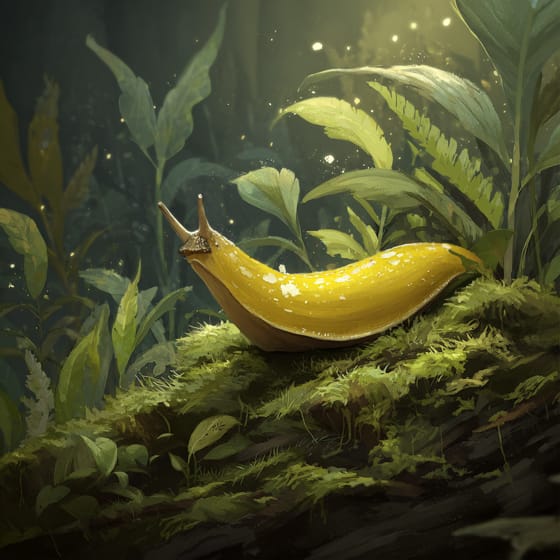
Ariolimax columbianus
Banana Slugs munch on Lanky Moss as a food source in damp forests.

Plethodon vehiculum
These salamanders hide and hunt among the damp, cool mats of Lanky Moss.

Regulus satrapa
Golden-crowned Kinglets use Lanky Moss to build soft, well-insulated nests.
Formica rufa
Some ant species, like the Red Wood Ant, build nests underneath or within moss carpets.
This trait characterizes plants lacking specialized vascular tissues (xylem and phloem) for transporting water and nutrients.
Grass-like plants are herbaceous plants that visually resemble true grasses, typically having long, narrow leaves.
Shade tolerant plants are adapted to grow and thrive in areas with low light levels, requiring less direct sunlight.
Spore-producing organisms reproduce by releasing small, often single-celled, reproductive units called spores.

Describes organisms that break down dead organic material, recycling nutrients back into the ecosystem.

Forest habitats are terrestrial environments dominated by dense tree cover, supporting a high diversity of plant and animal life.

This habitat trait identifies species found in wetlands, which are areas of land saturated with water, either permanently or seasonally, including marshes, swamps, and bogs.

Describes a species whose presence and role have a disproportionately large effect on its environment.
No aliases listed yet.
Danger
1/5 · Very low
It's safe to touch, but be gentle and don't pull it out of the ground.
The easiest way to identify Lanky Moss is to use the Snappit nature identifier app.
5-20 cm
10-50 cm
No
None
Perennial
Forests
Zoom in to split clusters and explore where this object has been snapped.
Take the discovery with you
Snap it with Snappit to identify it, learn what makes it special, and add the discovery to your collection.









.jpg&width=800)



_001.jpg&width=800)



