




Mesembrina latreillii
Mesembrina latreillii
Mesembrina latreillii, also known as the 'Golden Tortoise Beetle', is a shiny, colorful insect that can change its color! It loves to munch on plants and is often found in gardens.
Habitat: Urban areas, Gardens
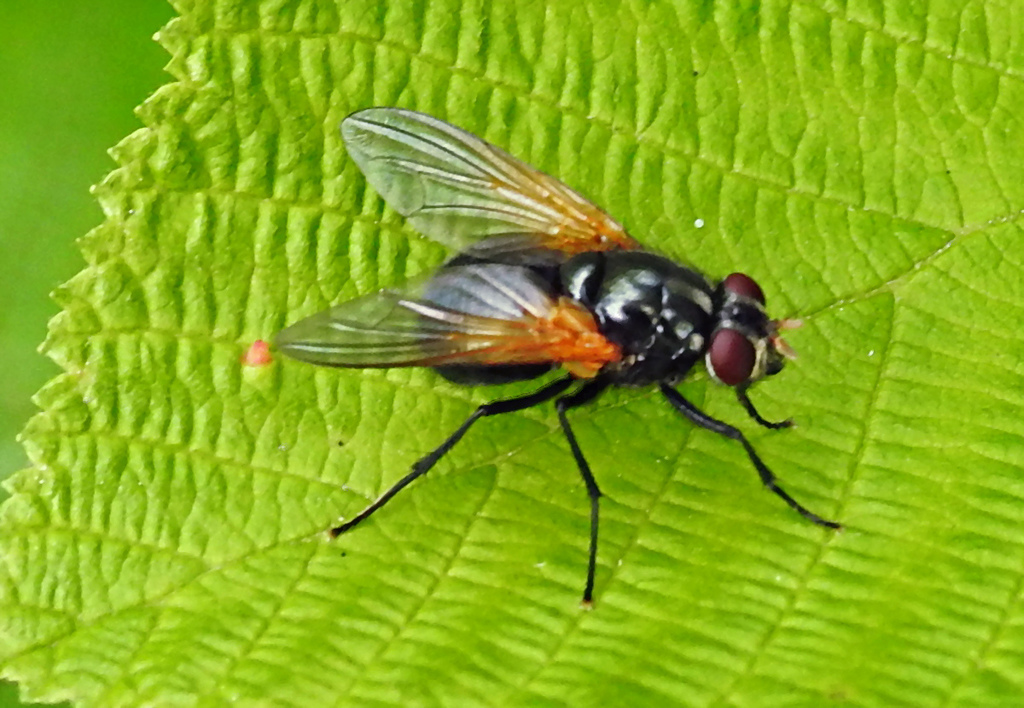
The Mesembrina latreillii is a striking fly with a metallic greenish-black head and thorax that shimmers in light. Its abdomen is a bright, contrasting orange-yellow or golden, making it easily distinguishable. It has large, reddish-brown compound eyes and dark legs.
Category
InsectsRarity
Common
Danger
1/5 · Very low
Snaps
Be the first to snap!
Despite its bold colors, it usually flies away swiftly if approached.
Its babies help clean up the environment by eating old animal dung.
Mesembrina latreillii often looks like a giant, colorful housefly.
This fly wears a shiny metallic green suit with a bright orange belt!
Mesembrina latreillii has a metallic, iridescent exoskeleton that helps it blend into varied green foliage or stand out to potential mates.
Mesembrina latreillii can fly rapidly and maneuver quickly, helping it evade predators like birds and capture mates.
Mesembrina latreillii larvae can break down decaying organic matter, which helps recycle nutrients back into the ecosystem.
Adults sip nectar from flowers, while their young munch on decaying organic matter to grow big!
Age differences: Larvae feed on decaying organic matter and animal dung, while adults drink nectar and feed on pollen from flowers.
Solitary animals live alone for most of their lives, only interacting with others for mating or parental care.
Colorful describes organisms or objects displaying a wide range of bright and distinct colors.
This trait characterizes organisms whose diet consists entirely or primarily of plant material.
Describes plants that are particularly attractive and beneficial to a wide range of pollinating organisms.
Describes a relationship between two different species where they live in close association, often benefiting one or both.
Armored describes animals protected by a hard, external covering or shell for defense.
Diurnal animals are primarily active during daylight hours, typically resting or sleeping at night.
This habitat trait indicates species that can coexist with humans in urban and suburban environments, utilizing man-made structures and green spaces.
Describes organisms that transfer pollen, enabling the fertilization and reproduction of plants.
No aliases listed yet.
Danger
1/5 · Very low
Be gentle and watchful when exploring gardens; some insects can bite.
Look for six legs, antennae, three body sections and the shape of the wings. Beetles have hardened front wings; flies have just one working pair. Tiny insects may need a close view before their group is clear. Insect Identifier: upload a photo and compare the visible details.
18-25 mm
8-12 mm
20-60 days
12 km/h
Adults sip nectar from flowers, while their young munch on decaying organic matter to grow big!
Urban areas, Gardens
Foraging
Zoom in to split clusters and explore where this object has been snapped.
Recent snaps will appear here as new observations are added.
Take the discovery with you
Snap it with Snappit to identify it, learn what makes it special, and add the discovery to your collection.