.jpg&width=800)





Metric Paper Wasp
Polistes metricus
The Metric Paper Wasp is a friendly insect that builds nests out of paper-like material. They are helpful because they eat pests like caterpillars and flies, making gardens healthier!
Habitat: Urban areas
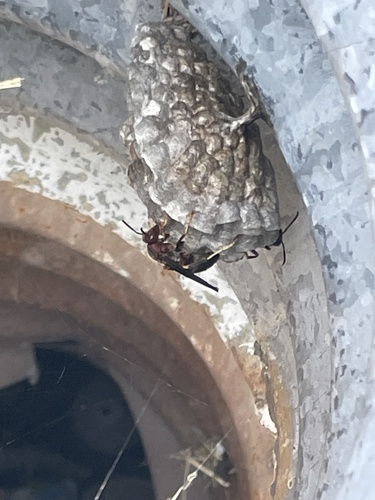
The Metric Paper Wasp has a slender, reddish-brown body with distinct yellow markings, particularly on its head and abdomen. It's identifiable by its unique way of folding its wings lengthwise when at rest, making them appear narrow and pointed.
Category
InsectsRarity
Common
Danger
2/5 · Low
Snaps
8
The tiny wasp larvae produce a sugary liquid that adult wasps love to drink!
They often build their umbrella-shaped paper nests under sheltered eaves or porch roofs!
Wasp queens can produce a special chemical to keep other females from laying eggs!
Worker wasps communicate danger to their sisters using vibrations and chemical signals!
Metric Paper Wasp can build intricate nests from chewed wood fibers and saliva, which helps them create a safe home for their young.
Metric Paper Wasp has a potent sting that helps them protect their colony from predators and perceived threats.
Metric Paper Wasp can hunt and paralyze caterpillars and other insect larvae, providing protein-rich food for its growing young.
Adults drink nectar, while larvae feast on chewy insects like caterpillars!
Age differences: Adults consume plant sugars; larvae are fed captured insects by worker wasps.
Malacosoma americanum
Prey for developing wasp larvae.
Manduca sexta
Common caterpillar prey for protein.
Araneus diadematus
Can be caught in spider webs.

Asclepias syriaca
Adults visit flowers for nectar.
Social animals live in organized groups, cooperating for survival benefits such as foraging, defense, and raising offspring.
This trait identifies organisms whose diet includes both plant and animal matter.
Colorful describes organisms or objects displaying a wide range of bright and distinct colors.
This trait identifies organisms whose diet primarily consists of insects and other small invertebrates.

Diurnal animals are primarily active during daylight hours, typically resting or sleeping at night.

Describes a species whose presence and role have a disproportionately large effect on its environment.

This habitat trait indicates species that can coexist with humans in urban and suburban environments, utilizing man-made structures and green spaces.

Describes organisms that transfer pollen, enabling the fertilization and reproduction of plants.
No aliases listed yet.
Danger
2/5 · Low
If you see a wasp, it's best to stay calm and not swat at it. Just watch from a distance.
The easiest way to identify Metric Paper Wasp is to use the Snappit nature identifier app.
25-35 mm
13-20 mm
30-60 days
20 km/h
Adults drink nectar, while larvae feast on chewy insects like caterpillars!
Urban areas
Foraging
Zoom in to split clusters and explore where this object has been snapped.
Jul 24, 2023
Photo attribution
(c) L.J. Lamera, some rights reserved (CC BY)
License: CC BY 4.0 ↗
Image may be shown cropped inside the card frame.

Kansas, US
You might spot American Robin, Monarch, and Italian Wall Lizard.
View guide →

South Carolina, US
You might spot Fiery Skipper, Clouded Skipper, and Carolina Satyr.
View guide →

Alabama, US
You might spot Gulf Fritillary, American Sweetgum, and Pearl Crescent.
View guide →

Illinois, US
You might spot Henbit Deadnettle, Metric Paper Wasp, and Dryad's Saddle.
View guide →

Illinois, US
You might spot Spring Blue-Eyed Mary and Dutchman's Breeches.
View guide →

North Carolina, US
You might spot Ring-Tailed Lemur, Black Bear, and Flies.
View guide →
Take the discovery with you
Snap it with Snappit to identify it, learn what makes it special, and add the discovery to your collection.








.jpg&width=800)


