





Milk Thistle
Silybum marianum
Milk Thistle is a spiky plant with beautiful purple flowers. It's known for its prickly leaves and white veins. Bees love to visit its flowers!
Habitat: Grasslands
The Milk Thistle has striking purple, globe-shaped flowers surrounded by sharp, spiny bracts. Its large, glossy green leaves are distinctively marbled with bright white veins, giving them a milky appearance. This spiky plant often grows quite tall.
Category
PlantsRarity
Common
Danger
2/5 · Low
Snaps
12
Ancient Greeks and Romans used Milk Thistle for its protective powers against various troubles!
Even though it's spiky, young Milk Thistle leaves and stems can be cooked and eaten like spinach!
One plant can produce thousands of seeds, ensuring new thistles sprout even after a tough year!
Some people believe its white leaf veins were inspired by milk from the Virgin Mary in an old legend!
Milk Thistle has sharp spines on its leaves and flower bracts that help it defend against hungry herbivores.
Milk Thistle can grow a very long taproot that helps it find water deep underground to survive dry spells.
Each seed has a feathery tuft that lets the wind carry it far away to new growing spots.
Apis mellifera
Visits flowers for nectar and pollen.
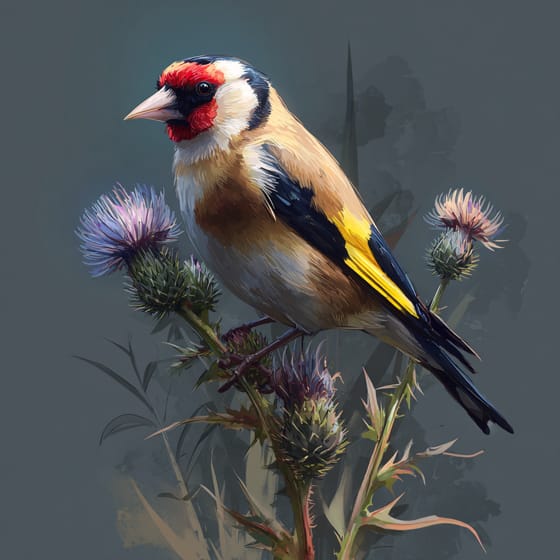
Carduelis carduelis
Feeds on its nutrient-rich seeds.
Uroleucon cirsii
Feeds on the sap from its stems and leaves.
Puccinia carduorum
A fungus that can infect Milk Thistle leaves.
Shade tolerant plants are adapted to grow and thrive in areas with low light levels, requiring less direct sunlight.
Fruit-bearing plants produce fruits, which are the mature ovaries of flowering plants containing seeds.
Medicinal plants possess chemical compounds that can be used for therapeutic purposes to treat illnesses or maintain health.
Night blooming plants open their flowers after sunset, often to attract nocturnal pollinators with their scent and appearance.

Grassland habitats are terrestrial biomes dominated by grasses and herbaceous plants, supporting a variety of grazing animals.

This trait characterizes organisms with an exceptionally long lifespan compared to others of their kind.
Danger
2/5 · Low
Enjoy looking at Milk Thistle from a safe distance to avoid its prickly leaves.
The easiest way to identify Milk Thistle is to use the Snappit nature identifier app.
60-200 cm
30-60 cm
4-12 cm
Summer, Fall
Yes
None
Biennial
Zoom in to split clusters and explore where this object has been snapped.

California, US
You might spot Western Fence Lizard and California Brittlebush.
View guide →

California, US
You might spot Warrior's Plume and Purple Owl's-Clover.
View guide →

California, US
You might spot Western Fence Lizard, Duck, and California Brittlebush.
View guide →

California, US
You might spot Sunburst Anemone, Ochre Sea Star, and Striped Shore Crab.
View guide →

California, US
You might spot Largemouth Bass and Birdcage Evening Primrose.
View guide →

Nouvelle-Aquitaine, FR
You might spot Greater Flamingo, Giraffes, and Red Panda.
View guide →
Take the discovery with you
Snap it with Snappit to identify it, learn what makes it special, and add the discovery to your collection.









.jpg&width=800)



_001.jpg&width=800)


