





mountain hemlock
Tsuga mertensiana
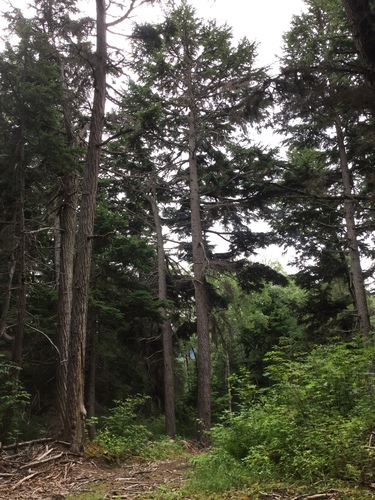
Mountain hemlocks are tall trees that grow in cool, shady places. They have soft, green needles and can live for a very long time, making them special friends to the forest.
Habitat: Mountain regions
The mountain hemlock has a distinctive drooping leader and short, flattened bluish-green needles, giving it a soft, feathery texture. Its small, oval cones are often purplish-brown, hanging like tiny ornaments.
Category
PlantsRarity
Common
Danger
1/5 · Very low
Snaps
7
Its small, purplish-brown cones hang like festive ornaments, often high in the branches.
Some mountain hemlocks can live for over 800 years, witnessing centuries of change!
This tough tree can grow where few others dare, right at the chilly alpine treeline!
When you roll a needle between your fingers, it feels slightly flattened, not round.
Mountain hemlock has a flexible, drooping top that helps it shed heavy snow, preventing branch breakage and damage.
Mountain hemlock can tolerate harsh subalpine conditions, with a sturdy root system anchoring it in rocky, windy slopes.
Mountain hemlock has excellent shade tolerance, allowing young trees to grow under the canopy of older, taller trees.
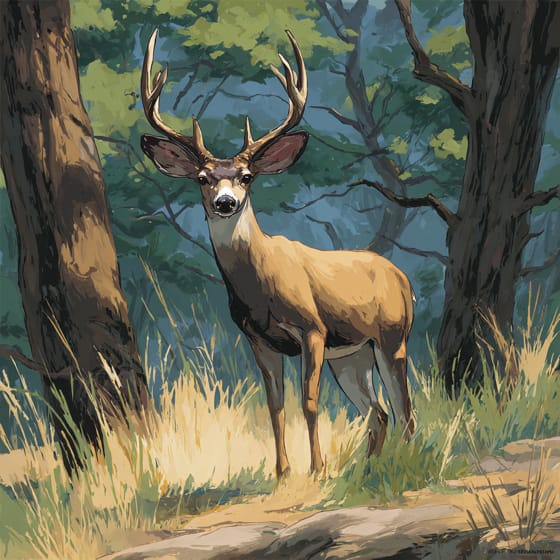
Odocoileus hemionus
Deer browse on its tender shoots and foliage.
.jpg&width=800)
Loxia curvirostra
Specialized bill extracts seeds from its purplish cones.
Picoides dorsalis
Provides nesting sites and foraging habitat in its bark.
Shade tolerant plants are adapted to grow and thrive in areas with low light levels, requiring less direct sunlight.
Broadleaf trees are angiosperms characterized by flat, wide leaves that are typically shed annually in temperate climates.
Coniferous plants are typically evergreen, bearing needles or scales and reproductive cones.
Evergreen plants retain their foliage throughout the year, never shedding all their leaves at once.
Timber refers to wood that has been prepared for use in building and carpentry.

This habitat trait identifies species found in mountainous regions, characterized by high elevation, steep slopes, and varying climate zones.

Forest habitats are terrestrial environments dominated by dense tree cover, supporting a high diversity of plant and animal life.

This trait characterizes organisms with an exceptionally long lifespan compared to others of their kind.

Describes a species whose presence and role have a disproportionately large effect on its environment.
No aliases listed yet.
Danger
1/5 · Very low
Stay on paths and don't climb trees without an adult.
The easiest way to identify mountain hemlock is to use the Snappit nature identifier app.
1500-4000 cm
600-900 cm
Spring
Yes
None
Perennial
Wind
Zoom in to split clusters and explore where this object has been snapped.
Jul 27, 2018
SunrisePhoto attribution
(c) Matt Bowser, some rights reserved (CC BY)
License: CC BY 4.0 ↗
Image may be shown cropped inside the card frame.

Oregon, US
You might spot White Pasqueflower and Clark's Nutcracker.
View guide →

Alaska, US
You might spot Beluga, North American Porcupine, and Meadow Buttercup.
View guide →

California, US
You might spot American Pika, Yellow-Bellied Marmot, and Shasta Blue.
View guide →

California, US
You might spot Purple Mountain-Heath, Mountain Hemlock, and Satin Lupine.
View guide →

Oregon, US
You might spot Clark's Nutcracker.
View guide →

Washington, US
You might spot White Pasqueflower, Pearly Everlasting, and Avalanche Lily.
View guide →
Take the discovery with you
Snap it with Snappit to identify it, learn what makes it special, and add the discovery to your collection.








.jpg&width=800)


_001.jpg&width=800)

