


Mountain Wood Fern
dryopteris campyloptera
The Mountain Wood Fern (Dryopteris campyloptera) is a robust and highly attractive perennial fern that graces the cool, damp understories of high-elevation forests in eastern North America. With its delicate, lacy-textured fronds that can grow up to nearly a meter in length, this species plays a vital role in stabilizing soil and providing ground cover for small forest creatures. Its presence often indicates a pristine, moist montane ecosystem. This species is highly valued by native plant enthusiasts for its elegant, arching growth habit and its ability to thrive in deep shade where few other plants can survive. It serves as a beautiful reminder of the complex and ancient lineage of non-flowering vascular plants that have inhabited our planet for millions of years.
Habitat: Typically found in cool, moist, high-elevation coniferous and mixed forests, often growing in rocky soils, ravines, or mountain slopes.
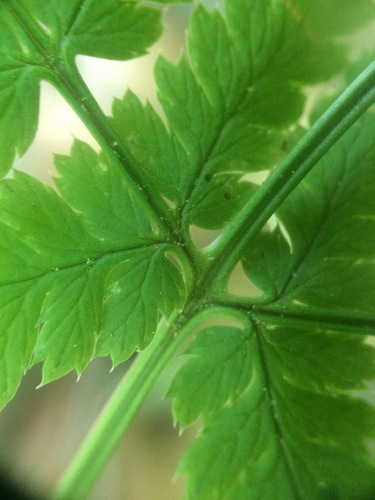
This fern features large, broadly triangular to lance-shaped fronds that are twice- to thrice-pinnate, giving them a highly divided, lacy appearance. The fronds are medium to light green, arching gracefully from a central crown. A key identification feature is the lowermost pair of leaflets (pinnae), which are asymmetrical with the downward-pointing subleaflets being significantly longer than the upward-pointing ones. The leaf stalks (stipes) are pale green to straw-colored and are covered with distinctive pale brown or reddish-brown scales, often featuring dark centers.
Category
PlantsRarity
Common
Danger
1/5 · Very low
Snaps
Be the first to snap!
The scientific name 'campyloptera' is derived from Greek words meaning 'curved wing,' which describes the distinctive asymmetrical shape of its lower leaflets.
This fern is known to hybridize readily with other wood fern species, creating sterile hybrids that can confuse botanists trying to identify them in the wild.
Unlike flowering plants, ferns reproduce using microscopic spores instead of seeds, releasing millions of them from small brown spots called sori on the undersides of their leaves.
Utilizes a specialized spring-loaded ring of cells called an annulus around its spore cases to violently launch mature spores into the wind when humidity drops.
Possesses highly adapted chloroplast arrangements in its broad, thin fronds to maximize photosynthesis in dense forest floor shade.
Survives freezing alpine winters by entering dormancy, with its underground rhizome protected by insulating snow cover and leaf litter.
As an autotrophic plant, the Mountain Wood Fern produces its own organic compounds through photosynthesis, utilizing sunlight, carbon dioxide, and water while drawing essential minerals from the soil.

Odocoileus virginianus
Provides cover and occasional browse, though typically avoided due to low palatability of mature fronds.
Pleurozium schreberi
Competes for space and resources on the damp forest floor.

Dryopteris intermedia
Naturally hybridizes with this species in overlapping habitats to form sterile hybrid offspring.
No trait badges are assigned for this object yet.
No aliases listed yet.
Collections for this object will appear here as more themes are added.
Danger
1/5 · Very low
No special safety notes yet.
Compare frond shape, how the leaflets are arranged, the stalk, and any spore clusters you can see. A single detached leaflet often hides the plant's overall growth pattern. Fern Identifier: upload a photo and compare the visible details.
30-90 cm
5-20 years
As an autotrophic plant, the Mountain Wood Fern produces its own organic compounds through photosynthesis, utilizing sunlight, carbon dioxide, and water while drawing essential minerals from the soil.
Typically found in cool, moist, high-elevation coniferous and mixed forests, often growing in rocky soils, ravines, or mountain slopes.
Zoom in to split clusters and explore where this object has been snapped.
Recent snaps will appear here as new observations are added.
Take the discovery with you
Snap it with Snappit to identify it, learn what makes it special, and add the discovery to your collection.


















