.jpg&width=800)





intermediate wood fern
Dryopteris intermedia
The intermediate wood fern is a lovely green plant that grows in shady places. Its fronds are feathery and can be very tall, making it look like a little forest on the forest floor.
Habitat: Forests
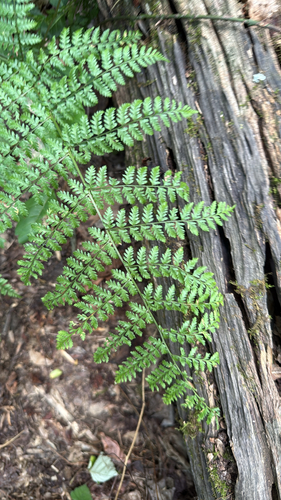
The intermediate wood fern has elegant, dark green fronds with a delicate, lacy texture. Its fronds are often bipinnate-pinnatifid, appearing very feathery. Brownish scales cover its leaf stalks, making it distinct from similar ferns.
Category
PlantsRarity
Common
Danger
1/5 · Very low
Snaps
27
Instead of seeds, it creates millions of super tiny, dust-like spores on the underside of its leaves.
Its 'fiddleheads' are curled young fronds, named because they look like a violin's scroll!
Some ferns have existed for hundreds of millions of years, even before the dinosaurs walked the Earth!
This fern got 'intermediate' in its name for looking like a mix of two other fern species.
The intermediate wood fern can release tiny spores from its fronds, letting the wind carry them far to start new ferns.
It has semi-evergreen fronds that stay green late into fall, allowing it to keep making food when other plants stop.
This fern thrives in low-light, damp forest floors, efficiently using what little sunshine reaches it for growth.

Odocoileus virginianus
Browsed occasionally, especially young fronds.

Plethodon cinereus
Hides beneath its dense fronds from predators.
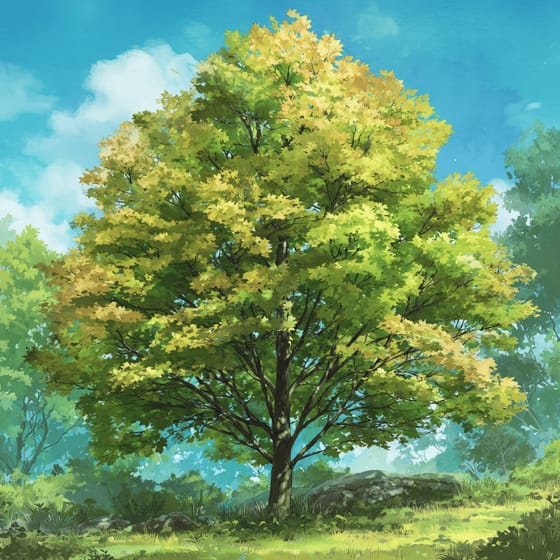
Acer saccharum
Relies on its canopy for essential shade and moisture.

Arion ater
Slugs and snails may feed on its fronds.
Feathered describes animals, primarily birds, possessing a covering of feathers.
Deciduous plants periodically shed all their leaves, typically during autumn or dry seasons.
This trait characterizes plants lacking specialized vascular tissues (xylem and phloem) for transporting water and nutrients.
Shade tolerant plants are adapted to grow and thrive in areas with low light levels, requiring less direct sunlight.

Spore-producing organisms reproduce by releasing small, often single-celled, reproductive units called spores.

This trait signifies organisms belonging to a very old evolutionary group with ancestors dating back millions of years.

Forest habitats are terrestrial environments dominated by dense tree cover, supporting a high diversity of plant and animal life.
No aliases listed yet.
Danger
1/5 · Very low
Always look but don't touch plants unless you know they're safe.
The easiest way to identify intermediate wood fern is to use the Snappit nature identifier app.
30-90 cm
30-60 cm
No
None
Perennial
Forests
Zoom in to split clusters and explore where this object has been snapped.
Jun 19, 2026
Cleveland ParkPhoto attribution
no rights reserved
License: CC0 1.0 ↗
Image may be shown cropped inside the card frame.

Massachusetts, US
You might spot Maidenhair Spleenwort and Red Trillium.
View guide →

Pennsylvania, US
You might spot Pinesap, Great Rhododendron, and Mountain Laurel.
View guide →

Massachusetts, US
You might spot Eastern Newt, Purple Pitcher Plant, and Hobblebush.
View guide →

Ohio, US
You might spot Large White Trillium, Fire Pink, and Christmas Fern.
View guide →

Vermont, US
You might spot Japanese Knotweed and Red-Bellied Woodpecker.
View guide →

New York, US
You might spot American Toad and Intermediate Wood Fern.
View guide →
Take the discovery with you
Snap it with Snappit to identify it, learn what makes it special, and add the discovery to your collection.







.jpg&width=800)



_001.jpg&width=800)



