





mountain woodsorrel
Oxalis montana
Mountain woodsorrel is a lovely little flower that grows in shady places. Its heart-shaped leaves and pretty pink flowers make it a special sight in the woods.
Habitat: Forests
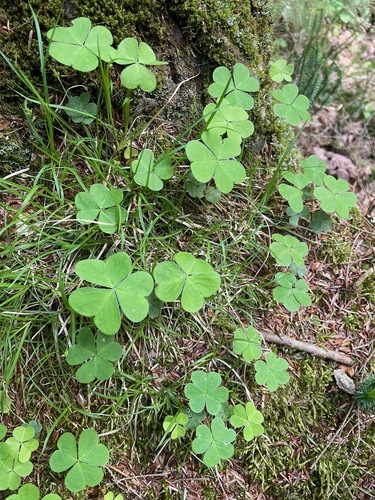
The mountain woodsorrel has bright green, clover-like leaves, each with three heart-shaped leaflets. Its delicate, five-petaled flowers are white or pale pink, often veined with darker pink or purple. It forms a low-growing, carpet-like mat on the forest floor.
Category
PlantsRarity
Common
Danger
1/5 · Very low
Snaps
13
Its leaves taste tangy and lemon-like, making it a delicious forest snack!
Some people call its leaves 'false shamrocks' because they look so similar.
The plant's scientific name 'Oxalis' comes from the Greek word for 'sour.'
The tiny flowers attract bees and other insects with their sweet nectar.
Mountain woodsorrel can fold its leaves like tiny umbrellas to protect itself from too much sun or close them up tightly at night.
Mountain woodsorrel has tiny seed pods that burst open when ripe, flinging their seeds far away to spread new plants.
Mountain woodsorrel can spread using underground stems called rhizomes, helping it form wide, green mats.
Apis mellifera
helps transfer pollen
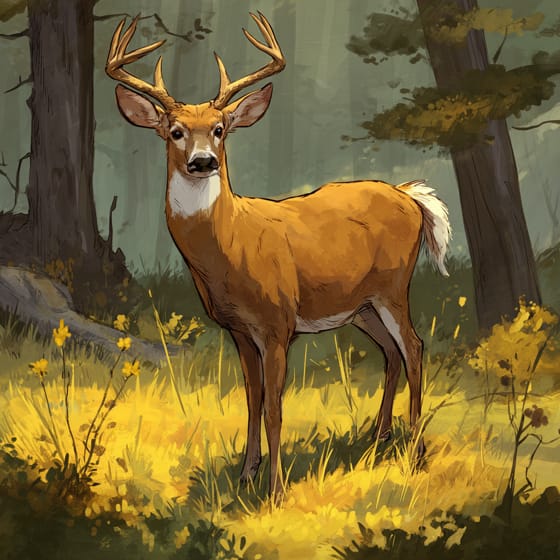
Odocoileus virginianus
browses its leaves

Arion ater
feeds on tender leaves
Flowering plants are any plants that produce flowers as part of their reproductive cycle.
Ornamental plants are cultivated primarily for their aesthetic appeal, enhancing landscapes and gardens with their attractive foliage, flowers, or form.
Shade tolerant plants are adapted to grow and thrive in areas with low light levels, requiring less direct sunlight.
Spring blooming plants produce their flowers during the spring season, often signifying the end of winter and the start of new growth.

Fragrant flowers emit a pleasant aroma, often to attract pollinators or for defense.

Edible plants are those parts of a plant that are considered safe for human consumption.

Forest habitats are terrestrial environments dominated by dense tree cover, supporting a high diversity of plant and animal life.
No aliases listed yet.
Danger
1/5 · Very low
Always look but don't touch flowers without asking an adult first.
The easiest way to identify mountain woodsorrel is to use the Snappit nature identifier app.
5-20 cm
10-30 cm
1-2 cm
Late spring to summer
Yes
Mild
Perennial
Zoom in to split clusters and explore where this object has been snapped.
May 29, 2026
Kents Corner Historic DistrictPhoto attribution
(c) Tom Scavo, some rights reserved (CC BY)
License: CC BY 4.0 ↗
Image may be shown cropped inside the card frame.

New York, US
You might spot American Toad and Intermediate Wood Fern.
View guide →

New York, US
You might spot American White Waterlily, Buttonbush, and Common Milkweed.
View guide →

Pennsylvania, US
You might spot Steeplebush, Elk, and Eastern Newt.
View guide →

Connecticut, US
You might spot Hobblebush, Pink Lady's Slipper, and Red Trillium.
View guide →

Massachusetts, US
You might spot Eastern Newt and Eastern Red-Backed Salamander.
View guide →

New Hampshire, US
You might spot Eastern White Pine, Eastern Hemlock, and American Beech.
View guide →
Take the discovery with you
Snap it with Snappit to identify it, learn what makes it special, and add the discovery to your collection.







.jpg&width=800)


_001.jpg&width=800)


