





Pentanthera
Pentanthera
Pentanthera is a beautiful flowering plant that loves to grow in sunny places. Its bright flowers attract butterflies and bees, making gardens lively and colorful.
Habitat: Gardens
The Pentanthera is a deciduous shrub boasting clusters of showy, often fragrant, trumpet-shaped flowers. Its vibrant blooms, ranging from fiery oranges to soft pinks and whites, appear before or with its leaves, creating a stunning visual display.
Category
PlantsRarity
Common
Danger
1/5 · Very low
Snaps
Be the first to snap!
Ancient Greek writer Xenophon wrote about soldiers getting sick from Pentanthera honey!
Its sweet nectar can oddly make some bees act dizzy, but it doesn't harm them!
Pentanthera are often called 'flame azaleas' due to their spectacular fiery-colored blooms!
Some Pentanthera flowers are actually known to change their color as they get older!
Pentanthera uses its brightly colored, trumpet-shaped flowers to attract specific bees and butterflies, ensuring successful pollination.
Pentanthera can shed its leaves in autumn, allowing it to conserve energy and survive cold winters, re-emerging in spring.
Pentanthera produces toxic compounds in its leaves and nectar, which deters most animals from eating or browsing on it.
Bombus impatiens
Feeds on nectar, aiding plant reproduction.
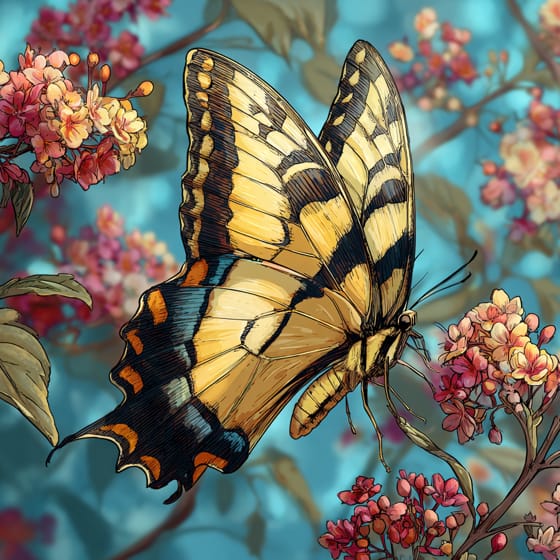
Papilio glaucus
Sips nectar, transferring pollen between flowers.

Odocoileus virginianus
Browses foliage, though often deterred by toxicity.
Laccaria laccata
Forms mycorrhizal association for nutrient uptake.
Flowering plants are any plants that produce flowers as part of their reproductive cycle.
Ornamental plants are cultivated primarily for their aesthetic appeal, enhancing landscapes and gardens with their attractive foliage, flowers, or form.
Spring blooming plants produce their flowers during the spring season, often signifying the end of winter and the start of new growth.
Fragrant flowers emit a pleasant aroma, often to attract pollinators or for defense.

Colorful describes organisms or objects displaying a wide range of bright and distinct colors.

Describes plants that are particularly attractive and beneficial to a wide range of pollinating organisms.

Rapid growing plants exhibit accelerated growth rates, quickly increasing in size and biomass within a short period.

This habitat trait indicates species that can coexist with humans in urban and suburban environments, utilizing man-made structures and green spaces.
No aliases listed yet.
Danger
1/5 · Very low
Always ask an adult before touching or picking flowers.
The easiest way to identify Pentanthera is to use the Snappit nature identifier app.
50-300 cm
50-250 cm
3-8 cm
Spring_early_summer
No
High
Perennial
Zoom in to split clusters and explore where this object has been snapped.
Recent snaps will appear here as new observations are added.
Take the discovery with you
Snap it with Snappit to identify it, learn what makes it special, and add the discovery to your collection.









.jpg&width=800)


_001.jpg&width=800)




