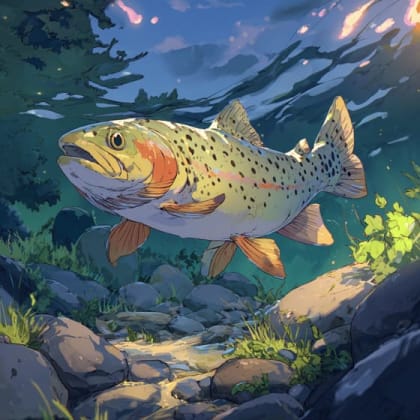
Mummichog
fundulus heteroclitus
The mummichog is a small fish that swims in the shallow waters of marshes and estuaries. These colorful little fish are fun to watch as they dart around looking for food!
Habitat: Mummichogs live in coastal marshes, estuaries, and tidal flats.
The Mummichog has a stout body, typically olive-green to brown on top with a yellowish belly. Males display dark vertical bars and bright yellow-orange fins during breeding season, setting them apart from the more uniformly blotched females.
Category
FishRarity
Common
Danger
0/5 · No known danger
Snaps
9
Female Mummichogs lay their eggs in nests hidden within marsh grass!
Mummichogs are tough fish, often used by scientists to study pollution effects!
These fish can change their body color to blend perfectly with their surroundings!
They can briefly breathe air using their skin, if they jump out of water!
Mummichogs can survive in water temperatures from near-freezing to over 38°C because of their amazing physiological adaptations.
Mummichogs can burrow into the mud when tide pools dry up or conditions are harsh, helping them escape extreme heat or drought.
Mummichogs can live in water with very low oxygen levels because their gills are highly efficient at extracting oxygen from poor water.
These small fish are omnivores, munching on tiny insects, crustaceans, and even plant bits in shallow waters.
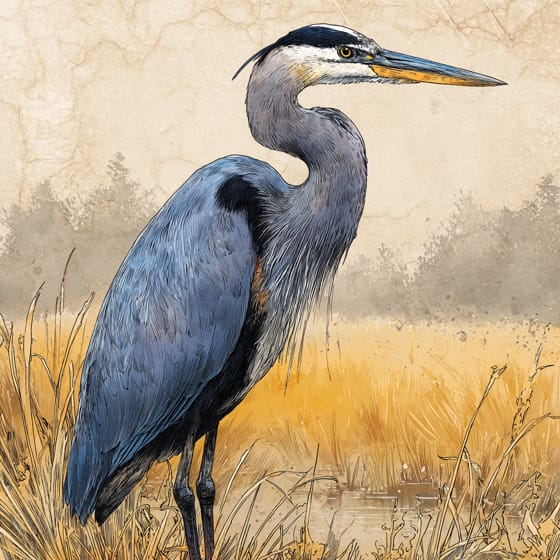
Ardea herodias
Herons frequently hunt Mummichogs in shallow marsh waters.
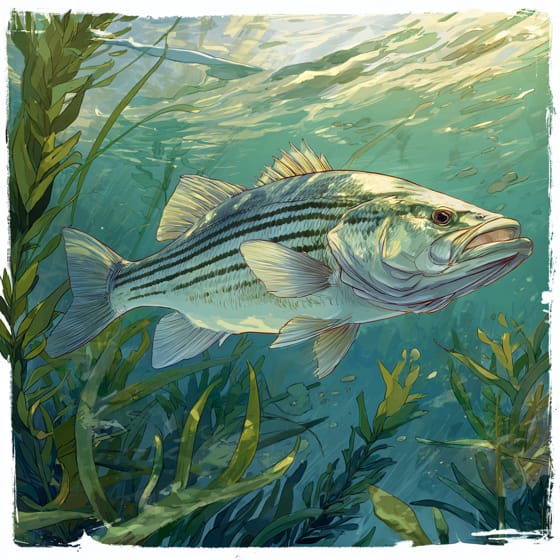
Morone saxatilis
Larger fish like Striped Bass prey on Mummichogs.
Gammarus oceanicus
Mummichogs actively forage for small crustaceans like scuds.
Chironomus plumosus
Mummichogs consume larvae of various insects, including midges.
Social animals live in organized groups, cooperating for survival benefits such as foraging, defense, and raising offspring.
Colorful describes organisms or objects displaying a wide range of bright and distinct colors.
Diurnal animals are primarily active during daylight hours, typically resting or sleeping at night.
Aquatic habitats encompass environments where organisms live predominantly in water, including oceans, rivers, lakes, and wetlands.

Marine habitats encompass all saltwater environments of the Earth's oceans, supporting an immense diversity of aquatic life.
Danger
0/5 · No known danger
No special safety notes yet.
The easiest way to identify Mummichog is to use the Snappit nature identifier app.
7.5-15 cm
0.005-0.03 kg
2-5 years
These small fish are omnivores, munching on tiny insects, crustaceans, and even plant bits in shallow waters.
8 km/h
Mummichogs live in coastal marshes, estuaries, and tidal flats.
Foraging
Zoom in to split clusters and explore where this object has been snapped.

Maryland, US
You might spot Osprey, Duck, and Spotted Lanternfly.
View guide →

District of Columbia, US
You might spot Spotted Lanternfly and Eastern Gray Squirrel.
View guide →

District of Columbia, US
You might spot Duck, Eastern Gray Squirrel, and House Sparrow.
View guide →

District of Columbia, US
You might spot Eastern Gray Squirrel, Spotted Lanternfly, and Duck.
View guide →

District of Columbia, US
You might spot Eastern Gray Squirrel, Spotted Lanternfly, and Duck.
View guide →

District of Columbia, US
You might spot Spotted Lanternfly and Eastern Gray Squirrel.
View guide →
Take the discovery with you
Snap it with Snappit to identify it, learn what makes it special, and add the discovery to your collection.