.jpg&width=800)





New England aster
Symphyotrichum novae-angliae
The New England aster is a beautiful purple flower that blooms in late summer and fall. It attracts butterflies and bees, making gardens lively and colorful!
Habitat: Meadows
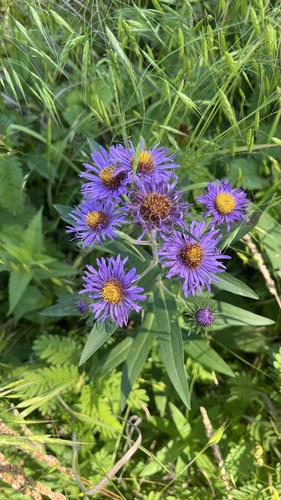
The New England aster has vibrant purple-pink ray petals surrounding a sunny yellow-orange central disk, creating a daisy-like appearance. Its sturdy, hairy stems are covered in lance-shaped green leaves, often appearing bushy and upright.
Category
PlantsRarity
Common
Danger
1/5 · Very low
Snaps
9
Its fluffy seed heads look like tiny white dandelion puffs after blooming!
Native Americans used its leaves to make a soothing tea.
Some butterflies travel thousands of miles to find these late-season flowers!
This aster's roots help clean the soil and can even stop erosion.
New England aster can attract many pollinators with its bright purple flowers, ensuring successful reproduction.
New England aster has late-season blooms that provide vital nectar for insects preparing for winter or migration.
New England aster has strong, fibrous roots that help it withstand various soil conditions and droughts.
Apis mellifera
collects nectar and pollen
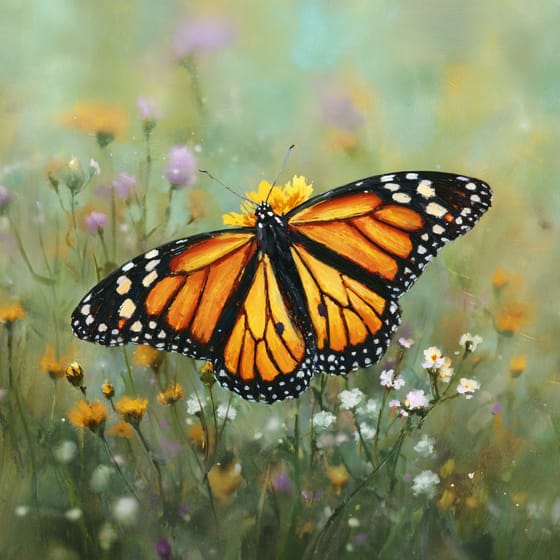
Danaus plexippus
fuels migration with nectar
Bombus impatiens
active during its late bloom

Melanoplus differentialis
feeds on leaves and stems
Deciduous plants periodically shed all their leaves, typically during autumn or dry seasons.
Flowering plants are any plants that produce flowers as part of their reproductive cycle.
Summer blooming plants produce their flowers during the summer season, often providing vibrant color when many other plants have finished.
Colorful describes organisms or objects displaying a wide range of bright and distinct colors.

Fall color refers to the seasonal change in foliage pigmentation, primarily in deciduous plants, displaying vibrant hues.

Grassland habitats are terrestrial biomes dominated by grasses and herbaceous plants, supporting a variety of grazing animals.

Describes plants that are particularly attractive and beneficial to a wide range of pollinating organisms.
Danger
1/5 · Very low
Always look but don't touch flowers in the wild, as some may be delicate.
The easiest way to identify New England aster is to use the Snappit nature identifier app.
90-180 cm
30-90 cm
2-5 cm
Late summer to fall
Yes
None
Perennial
Zoom in to split clusters and explore where this object has been snapped.
Jun 3, 2026
Shaw Nature ReservePhoto attribution
(c) diana schwartz, some rights reserved (CC BY)
License: CC BY 4.0 ↗
Image may be shown cropped inside the card frame.

Kansas, US
You might spot American Robin, Monarch, and Italian Wall Lizard.
View guide →

Ohio, US
You might spot Wild Bergamot, Rattlesnake Master, and Eastern Pondhawk.
View guide →

Missouri, US
You might spot Painted-Cup Paintbrush and Great Spangled Fritillary.
View guide →

Ohio, US
You might spot Common Eastern Bumble Bee, Rudbeckia, and Bee.
View guide →

New Hampshire, US
You might spot Common Shiner, Tree Lungwort, and Creek Chub.
View guide →

New Jersey, US
You might spot Wild Teasel, Monarch, and Large Milkweed Bug.
View guide →
Take the discovery with you
Snap it with Snappit to identify it, learn what makes it special, and add the discovery to your collection.







.jpg&width=800)



_001.jpg&width=800)




