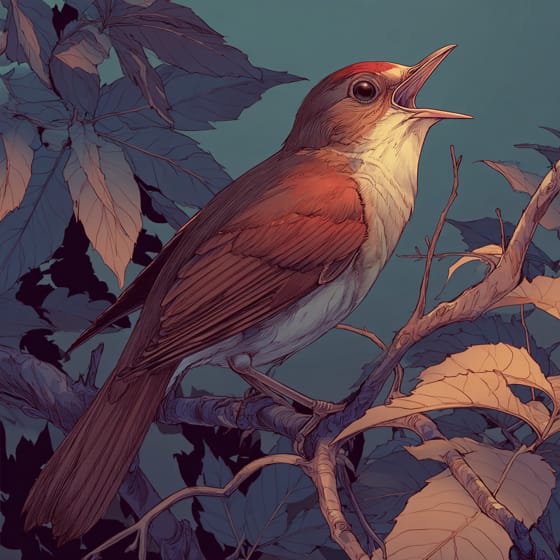





Nightingale
Luscinia megarhynchos
The nightingale is a small bird known for its beautiful singing voice. It sings sweet melodies in the night, filling the air with music. Its brown feathers help it blend into the trees where it lives.
Habitat: Forests
The Nightingale is a rather plain-looking bird with reddish-brown plumage above and dull grayish-white underneath. It has a distinctive reddish-brown tail, often held cocked, and large dark eyes, blending well into its bushy habitats.
Category
BirdsRarity
Rare
Danger
1/5 · Very low
Snaps
Be the first to snap!
Despite their plain look, nightingales have one of the most celebrated songs in the animal kingdom.
Only male nightingales sing to attract mates, enchanting the night with their powerful melodies.
Some nightingales can learn hundreds of different song phrases, making their tunes unique.
They often sing loudest at dawn and dusk, not just at night as their name suggests!
Nightingale can produce an incredibly complex and varied song because of its specialized vocal cords, allowing for communication over long distances.
Nightingale can migrate thousands of kilometers because of its innate sense of direction, helping it find wintering grounds in Africa.
Nightingale has subtle brown and grey feathers that help it blend perfectly into dense undergrowth, hiding from predators.
Nightingale can expertly snatch insects from leaves and the ground because of its sharp eyesight and quick movements.
Nightingales mainly feast on small insects and other invertebrates found on the ground and in shrubs.
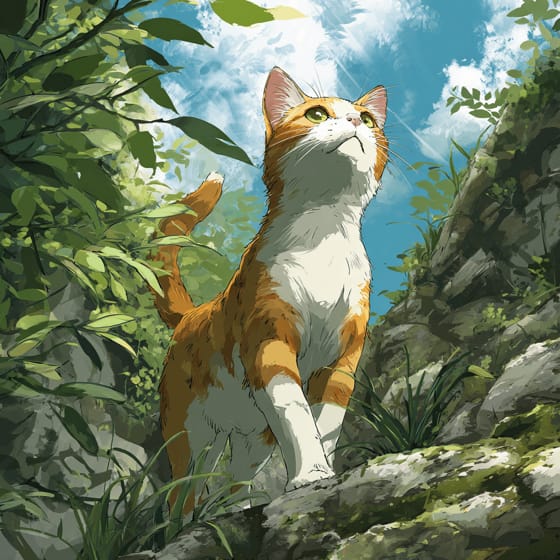
Felis catus
A common predator, especially near human settlements.

Accipiter nisus
This bird of prey hunts nightingales in woodlands.
Lumbricus terrestris
A primary food source, foraged from the ground.
Formica rufa
Nightingales consume various ant species.
Araneus diadematus
Spiders are a regular part of its insectivorous diet.
Social animals live in organized groups, cooperating for survival benefits such as foraging, defense, and raising offspring.
Singing animals produce complex vocalizations, often for purposes of attracting mates, defending territory, or communicating within their species.
Camouflaged describes organisms that possess coloring or patterns that allow them to blend into their environment.
This trait identifies organisms whose diet primarily consists of insects and other small invertebrates.

This trait signifies organisms belonging to a very old evolutionary group with ancestors dating back millions of years.

Forest habitats are terrestrial environments dominated by dense tree cover, supporting a high diversity of plant and animal life.

Migratory animals undertake seasonal movements from one region to another, typically in response to changes in climate or food availability.

Nocturnal animals are primarily active during the nighttime hours, typically resting or sleeping during the day.
Danger
1/5 · Very low
Enjoy listening to nightingales from a distance to not disturb them in their natural habitat.
The easiest way to identify Nightingale is to use the Snappit nature identifier app.
15-17 cm
23-26 cm
0.018-0.027 kg
1-5 years
35 km/h
Nightingales mainly feast on small insects and other invertebrates found on the ground and in shrubs.
Forests
Zoom in to split clusters and explore where this object has been snapped.
Recent snaps will appear here as new observations are added.
Take the discovery with you
Snap it with Snappit to identify it, learn what makes it special, and add the discovery to your collection.




.jpg&width=800)









