





nipplewort
Lapsana communis
Nipplewort is a cheerful little plant with bright yellow flowers. It often grows in gardens and along paths, bringing a splash of color to our world.
Habitat: Urban areas
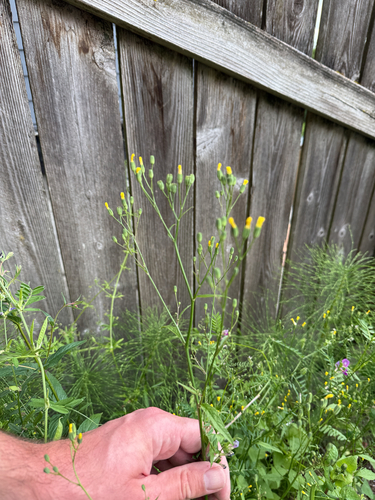
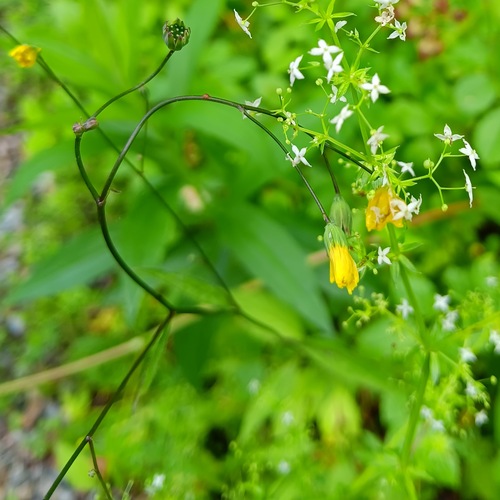
The nipplewort has slender, branching stems and small, bright yellow, dandelion-like flowers, typically with 8-13 ray florets. Its lower leaves are lobed, while the upper ones are smaller and often untoothed, giving it a somewhat delicate appearance.
Category
PlantsRarity
Common
Danger
1/5 · Very low
Snaps
9
Ancient people used this plant for its soothing properties.
Its tiny seeds are dispersed by wind, allowing it to travel far!
The tiny yellow flowers usually close up in the afternoon!
This plant loves growing in gardens and even cracks in pavements.
Nipplewort can quickly grow and produce many seeds, helping it spread fast in disturbed areas.
Nipplewort has flowers that can self-pollinate, ensuring it makes seeds even without many insect helpers.
Nipplewort can be an annual or biennial, completing its life cycle to suit different environmental conditions.
Apis mellifera
Visits flowers for nectar
Bombus terrestris
Collects pollen and nectar

Helix aspersa
Feeds on its leaves

Arion ater
Consumes its foliage
Flowering plants are any plants that produce flowers as part of their reproductive cycle.
Spring blooming plants produce their flowers during the spring season, often signifying the end of winter and the start of new growth.
Summer blooming plants produce their flowers during the summer season, often providing vibrant color when many other plants have finished.
Edible plants are those parts of a plant that are considered safe for human consumption.

Describes plants that are particularly attractive and beneficial to a wide range of pollinating organisms.

This habitat trait indicates species that can coexist with humans in urban and suburban environments, utilizing man-made structures and green spaces.
No aliases listed yet.
Danger
1/5 · Very low
Always check with an adult before touching or picking any plants.
The easiest way to identify nipplewort is to use the Snappit nature identifier app.
30-120 cm
20-50 cm
1-2 cm
Summer to fall
Yes
None
Annual
Zoom in to split clusters and explore where this object has been snapped.
Jun 6, 2026
Chinatown-International DistrictPhoto attribution
no rights reserved
License: CC0 1.0 ↗
Image may be shown cropped inside the card frame.
Jun 24, 2024
Chenango County Courthouse DistrictPhoto attribution
(c) Dominic McLean, some rights reserved (CC BY)
License: CC BY 4.0 ↗
Image may be shown cropped inside the card frame.

Massachusetts, US
You might spot Hemlock Woolly Adelgid, Eastern Newt, and Red Trillium.
View guide →

Washington, US
You might spot Rock Pigeon, American Crow, and Pigeon Guillemot.
View guide →

Pennsylvania, US
You might spot Spotted Lanternfly, White-Tailed Deer, and American Robin.
View guide →

New York, US
You might spot White-Tailed Deer, Common Mugwort, and Garlic Mustard.
View guide →

Oregon, US
You might spot Bald Eagle, Golden Eagle, and Snowy Owl.
View guide →

New York, US
You might spot Northern Cardinal and Eastern Gray Squirrel.
View guide →
Take the discovery with you
Snap it with Snappit to identify it, learn what makes it special, and add the discovery to your collection.








.jpg&width=800)



_001.jpg&width=800)



