





Noctules
Nyctalus
Noctules are special bats that fly at night! They have big ears and can catch insects in the dark. These little creatures help keep our skies clear of pesky bugs.
Habitat: Forests
The Noctule has sleek, reddish-brown fur on its back and paler fur on its belly. It has broad, dark wings and distinct mushroom-shaped ear flaps called tragi, which help it stand out from other bats.
Category
MammalsRarity
Common
Danger
1/5 · Very low
Snaps
Be the first to snap!
Some Noctules migrate hundreds of kilometers between their summer and winter homes!
Some young humans can actually hear the high-pitched calls of Noctule bats!
They are expert aerial hunters, snatching fast-moving beetles and moths right out of the sky!
They often roost in hollow trees, sometimes sharing their homes with birds!
Noctules can navigate and hunt in complete darkness by sending out high-pitched sounds and listening for echoes.
Noctules has long, narrow wings that help them achieve fast, direct flight high above the tree canopy to catch prey.
Noctules can enter torpor, lowering body temperature and heart rate to conserve energy during cold weather or food shortages.
These speedy bats mainly munch on flying insects they catch in the air.

Strix aluco
Preys on bats during emergence or return to roosts.
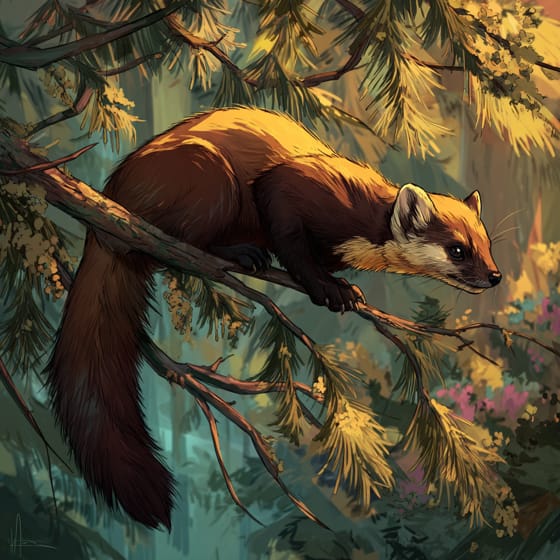
Martes martes
Can access tree cavities to prey on roosting bats.

Quercus robur
Mature oak trees provide essential roosting sites in cavities.

Melolontha melolontha
A large beetle that is a primary food source for Noctules.
Furry describes animals possessing a dense covering of soft hair or fur.
This trait identifies organisms whose diet primarily consists of insects and other small invertebrates.
Echolocation is a biological sonar used by animals to navigate, hunt, and communicate by emitting sound waves and interpreting the echoes.
Forest habitats are terrestrial environments dominated by dense tree cover, supporting a high diversity of plant and animal life.

This trait identifies organisms whose diet consists entirely or primarily of animal tissue.

This trait identifies organisms that exhibit exceptional swiftness in movement for hunting, escape, or travel.

Nocturnal animals are primarily active during the nighttime hours, typically resting or sleeping during the day.
Danger
1/5 · Very low
If you see a bat, watch quietly from a distance. They are shy and prefer to be left alone.
The easiest way to identify Noctules is to use the Snappit nature identifier app.
6-8.5 cm
32-40 cm
0.018-0.04 kg
4-12 years
50 km/h
These speedy bats mainly munch on flying insects they catch in the air.
Forests
Zoom in to split clusters and explore where this object has been snapped.
Recent snaps will appear here as new observations are added.
Take the discovery with you
Snap it with Snappit to identify it, learn what makes it special, and add the discovery to your collection.




.jpg&width=800)


.JPG&width=800)



.jpg&width=800)
