





Northern Flatid Planthopper
Flatormenis proxima
The Northern Flatid Planthopper is a small, colorful insect that loves to hop around in gardens and fields. Its flat body helps it blend in with leaves, making it a little sneaky!
Habitat: Grasslands
The Northern Flatid Planthopper has a distinctive wedge-shaped, flattened body, typically lime green to greenish-white. Its broad, leaf-like wings are held flat against its body, making it blend perfectly with plant foliage.
Category
InsectsRarity
Common
Danger
1/5 · Very low
Snaps
5
Planthopper babies look like fuzzy white alien creatures!
Some planthoppers produce sweet honeydew, a sugary treat for ants!
These insects sip plant sap using a mouth like a tiny straw!
They wear their wings like a tiny, perfectly tailored cape!
Northern Flatid Planthopper can jump powerfully with its strong hind legs, allowing them to escape danger quickly.
Northern Flatid Planthopper nymphs produce fluffy white wax filaments that protect them like a cozy, camouflaged blanket.
Northern Flatid Planthopper can send tiny vibrations through plant stems, allowing them to 'talk' to other planthoppers.
These tiny insects use their straw-like mouths to drink sugary sap from various plants.
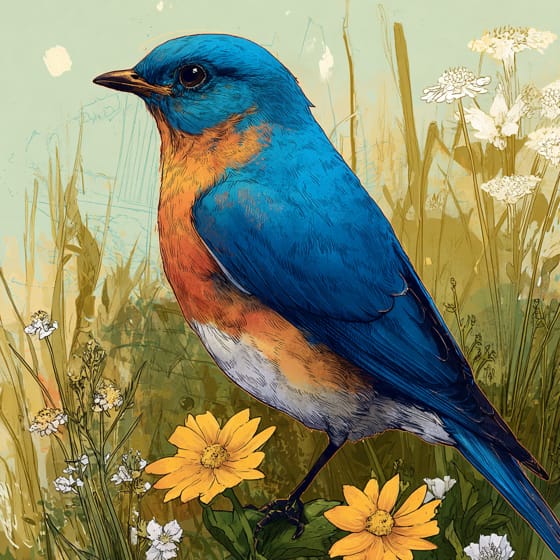
Sialia sialis
Birds often prey on these plant-dwelling insects.
Aranaeus diadematus
Spiders catch planthoppers in their intricate webs.

Acer rubrum
Planthoppers feed on the sugary sap from maple trees.

Prunus serotina
They extract nutrients by feeding on cherry tree sap.
Solitary animals live alone for most of their lives, only interacting with others for mating or parental care.
Camouflaged describes organisms that possess coloring or patterns that allow them to blend into their environment.
Colorful describes organisms or objects displaying a wide range of bright and distinct colors.
Grassland habitats are terrestrial biomes dominated by grasses and herbaceous plants, supporting a variety of grazing animals.

This trait characterizes organisms whose diet consists entirely or primarily of plant material.

Describes plants that are particularly attractive and beneficial to a wide range of pollinating organisms.

Diurnal animals are primarily active during daylight hours, typically resting or sleeping at night.

This trait identifies organisms that exhibit exceptional swiftness in movement for hunting, escape, or travel.

Describes organisms that transfer pollen, enabling the fertilization and reproduction of plants.
No aliases listed yet.
Danger
1/5 · Very low
These insects are harmless, but it's best to watch them from a distance.
The easiest way to identify Northern Flatid Planthopper is to use the Snappit nature identifier app.
12-18 mm
6-9 mm
30-90 days
These tiny insects use their straw-like mouths to drink sugary sap from various plants.
Grasslands
Foraging
6
Zoom in to split clusters and explore where this object has been snapped.

Alabama, US
You might spot Anole, Eastern Gray Squirrel, and Asian Lady Beetle.
View guide →

Alabama, US
You might spot Anole, Eastern Gray Squirrel, and Asian Lady Beetle.
View guide →

Alabama, US
You might spot Anole, Eastern Gray Squirrel, and Asian Lady Beetle.
View guide →

Georgia, US
You might spot Asian Lady Beetle, Anole, and Joro Spider.
View guide →

Alabama, US
You might spot Eastern Gray Squirrel and Asian Lady Beetle.
View guide →

Alabama, US
You might spot Anole and Eastern Carpenter Bee.
View guide →
Take the discovery with you
Snap it with Snappit to identify it, learn what makes it special, and add the discovery to your collection.






.jpg&width=800)



