





northern green-and-gold
Chrysogonum virginianum
The northern green-and-gold is a bright yellow flower that blooms in spring. It loves to grow in shady places and can often be found in gardens and forests.
Habitat: Forests
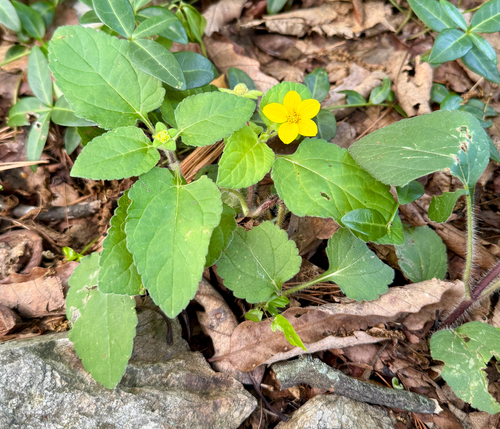
The northern green-and-gold is a low-growing plant with vibrant yellow, star-shaped flowers, often featuring five petals. Its deep green leaves are oval to heart-shaped, forming a dense carpet. The bright blooms stand out against the foliage.
Category
PlantsRarity
Common
Danger
1/5 · Very low
Snaps
3
Even though it loves the shade, it produces more flowers when it gets some morning sun!
It's sometimes called a "golden star" because of its five-petaled, star-like flowers.
Its bright blooms can create a golden "carpet" effect on the forest floor.
The scientific name, Chrysogonum, means "golden-born" or "golden knee" in Greek.
northern green-and-gold has a strong tolerance for partial shade, allowing it to thrive where many sun-loving plants struggle.
northern green-and-gold produces bright yellow flowers that act as a strong visual signal to attract busy bees and butterflies.
Apis mellifera
Collects nectar and pollen.

Bombus impatiens
Visits flowers for nectar.
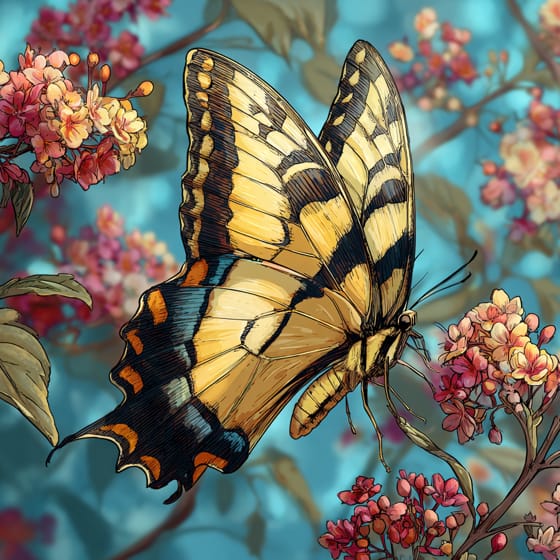
Papilio glaucus
Feeds on nectar, aiding pollination.
Deciduous plants periodically shed all their leaves, typically during autumn or dry seasons.
Flowering plants are any plants that produce flowers as part of their reproductive cycle.
Shade tolerant plants are adapted to grow and thrive in areas with low light levels, requiring less direct sunlight.
Spring blooming plants produce their flowers during the spring season, often signifying the end of winter and the start of new growth.

Describes plants that are particularly attractive and beneficial to a wide range of pollinating organisms.

Rapid growing plants exhibit accelerated growth rates, quickly increasing in size and biomass within a short period.

Forest habitats are terrestrial environments dominated by dense tree cover, supporting a high diversity of plant and animal life.

Describes organisms that transfer pollen, enabling the fertilization and reproduction of plants.
No aliases listed yet.
Danger
1/5 · Very low
Always look but don't pick flowers, so everyone can enjoy them!
The easiest way to identify northern green-and-gold is to use the Snappit nature identifier app.
15-30 cm
30-60 cm
1-2 cm
Spring to early summer, sometimes fall
No
None
Perennial
Zoom in to split clusters and explore where this object has been snapped.
May 30, 2026
Roanoke City Market Historic DistrictPhoto attribution
(c) Walker Scott, some rights reserved (CC BY)
License: CC BY 4.0 ↗
Image may be shown cropped inside the card frame.

North Carolina, US
You might spot Common Watersnake, Fowler's Toad, and Fire Pink.
View guide →

Virginia, US
You might spot Spotted Lanternfly, American Robin, and Amur Honeysuckle.
View guide →

Ohio, US
You might spot American Rubyspot, Blue-Fronted Dancer, and Stream Bluet.
View guide →

Massachusetts, US
You might spot Eastern Gray Squirrel, Eastern Hemlock, and Duck.
View guide →
Take the discovery with you
Snap it with Snappit to identify it, learn what makes it special, and add the discovery to your collection.






.jpg&width=800)



_001.jpg&width=800)



