





Northern Paper Wasp
Polistes fuscatus
The Northern Paper Wasp is a friendly insect that makes its home in paper-like nests. They are important for helping flowers grow by spreading pollen while they search for food.
Habitat: Urban areas
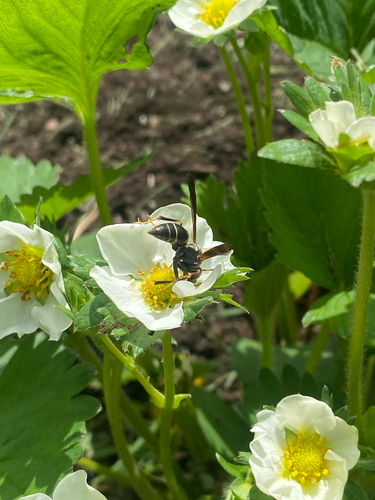
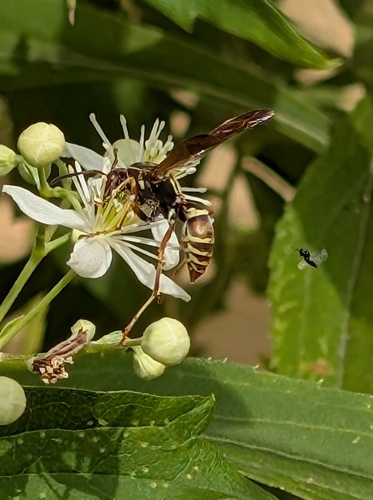
The Northern Paper Wasp has a slender, dark reddish-brown to black body with distinct yellow bands on its abdomen. Its long legs hang down during flight, making it visually distinct from bees or yellowjackets. Its face may have variable yellow markings.
Category
InsectsRarity
Common
Danger
2/5 · Low
Snaps
15
A single queen paper wasp starts a new colony all by herself each spring!
Adult wasps drink flower nectar and sweet honeydew for a quick energy boost!
They hang their umbrella-shaped nests by a tiny single stalk, often under eaves!
Wasp larvae are fed a protein-rich diet of chewed-up caterpillars and insects!
Northern Paper Wasps can build impressive umbrella-shaped nests from chewed wood fibers mixed with their saliva, which protects their young.
Northern Paper Wasps have a potent sting used to defend their colony and paralyze prey, making them formidable defenders.
Northern Paper Wasps can recognize individual nest mates by their unique facial patterns, which helps maintain social order.
Adults sip sweet nectar for energy, while their young feast on chewy insects.
Age differences: Adults primarily consume carbohydrates (nectar, honeydew), while larvae are fed protein-rich chewed insects by foraging adults.
Malacosoma americanum
Wasps hunt these caterpillars to feed their developing larvae.

Pica hudsonia
Birds like magpies may raid wasp nests for eggs, larvae, or adults.
Solidago canadensis
Adult wasps visit goldenrod flowers to collect nectar, aiding pollination.
Marked with parallel bands or lines of color.
Social animals live in organized groups, cooperating for survival benefits such as foraging, defense, and raising offspring.
This trait identifies organisms whose diet includes both plant and animal matter.
Colorful describes organisms or objects displaying a wide range of bright and distinct colors.

Describes plants that are particularly attractive and beneficial to a wide range of pollinating organisms.

Diurnal animals are primarily active during daylight hours, typically resting or sleeping at night.

Describes a species whose presence and role have a disproportionately large effect on its environment.

This habitat trait indicates species that can coexist with humans in urban and suburban environments, utilizing man-made structures and green spaces.

Describes organisms that transfer pollen, enabling the fertilization and reproduction of plants.
No aliases listed yet.
Danger
2/5 · Low
If you see a wasp, watch it from a distance and don’t bother its nest.
The easiest way to identify Northern Paper Wasp is to use the Snappit nature identifier app.
25-35 mm
15-20 mm
20-365 days
20 km/h
Adults sip sweet nectar for energy, while their young feast on chewy insects.
Urban areas
Foraging
Zoom in to split clusters and explore where this object has been snapped.
May 27, 2026
Plainfield Village Historic DistrictPhoto attribution
(c) Erik E, some rights reserved (CC BY)
License: CC BY 4.0 ↗
Image may be shown cropped inside the card frame.
Aug 14, 2025
Lake Superior ZooPhoto attribution
(c) Tom and T Herman, some rights reserved (CC BY)
License: CC BY 4.0 ↗
Image may be shown cropped inside the card frame.

Virginia, US
You might spot Pharaoh Cicada, Lesser Celandine, and Eastern Box Turtle.
View guide →

Iowa, US
You might spot Common Eastern Bumble Bee and North American Luna Moth.
View guide →
Virginia, US
You might spot American Toad and Lesser Celandine.
View guide →

Illinois, US
You might spot American Robin, Monarch, and Duck.
View guide →

Wisconsin, US
You might spot Common Eastern Bumble Bee, Bee, and Monarch.
View guide →

New York, US
You might spot Pine Grosbeak, Hydrangea Leaftier Moth, and Brown Trout.
View guide →
Take the discovery with you
Snap it with Snappit to identify it, learn what makes it special, and add the discovery to your collection.








.jpg&width=800)


